Showing posts with label MARCH 2011. Show all posts

Thursday, March 10, 2011

WHAT WE DID TODAY #2-27: THURSDAY; MARCH 10, 2011

GENERAL MUSIC PERIODS 2,3,6

COMPOSER: BACH Violin Concerto in A Minor 3rd movement 
OBJECTIVE: MUSICAL THEATRE "OLIVER"
1. QUOTE AUTHOR: Nadia Boulanger famous teacher of music composition in early 20th Century 
2. Checked quotes for the week.
.....a. Students will be responsible for 4 this week; anyone who did 5 will be given extra credit for the extra quote.
3. MUSICAL: OLIVER
.....a. Passed out musical report forms
..........1)Reviewed the first part of the musical "Oliver" by filling in some some of the information asked for on the form
..........2)Main characters we met so far: Oliver and Mr. Bumble
..........3)Names of songs listened to: "Food Glorious Food" / "Oliver" / "Boy for Sale"
..........4)Wrote down... musical's title: "Oliver" / novel the musical was based on: "Oliver Twist / novel's author: Charles Dickens / musical's composer/lyricist: Lionel Bart / date of musical composition: 1960 / country that the story of the musical takes place in: London, England
.....b. Today we heard the song "Consider Yourself" and met another main character called the Artful Dodger (PLEASE SEE THE "OLIVER MUSICAL REPORT" ON THIS BLOG FOR DETAILS)
(Next week we will continue to fill-in the report as a class.)
(Period 2 and 6 still need to finish the end of song "Consider Yourself")

BEGINNING VIOLIN PERIOD 5:
OBJECTIVE: FINGERING DO-RE-MI/DO-RE-MAY (MAJOR and MINOR)
1. TUNE
2. HOLIDAY PROGRAM SONG: COVENTRY CAROL
.....a. This is an open string, right hand pizzicato, harmony part and will be played with the advanced violins (from the period 4 class) playing the melody at the concert.
.....b. Listened to the recorded accompaniment and teacher demonstration.
.....c. Reviewed terms and symbols in music
..........1)uarter notes and rests
..........2)Double bar and two dots (repeat signs)
..........3)meter/time signature
..........4)Importance of the silence in each rest
.....d. The class read/sang the open string notes as teacher pointed.
.....e. In regular pizzicato position we plucked the notes as we sang out loud with the recorded accompaniment
.....f. After the song ended we stopped and because the music was new and played at its performing speed, some students found it helpful to write the letter names under the notes.
.....g. We replayed it being careful not to play on the quarter note rests.
..........1)The silences in rests are are difficult to play as a whole group at once because if a single person plays during one the rest is no longer silent.
3. DOUBLE STOPPING
.....a. Open string bowings: Using the 7 different arm levels: G, GandD, D, DandA, A, Aand E, and E
.....b. There are 4 basic bow levels but also 3 more levels which places the bow on two strings at one time.

..........1)Playing 2 different strings at once called DOUBLE STOPPING
..........2)We started to learn these extra levels first by applying the silent bow-arm rocking tecnique (we rocked the bow at the middle or MB)
..........3)Then we practiced all the 7 levels from lowest G to highest E, 4x each combination using the UH of bow.

Coming Up:

we will be replaying DO-RE-MI songs: Mary and Hot Cross Buns on the G, D, and A strings but adding the next higher open string with it [example playing Mary (DO-RE-MI) on the "D" string but bowing open A with the D string at the same time]. By adding the neighboring (next highest) open string while playing the melody on the lower string, harmony is produced. Using this technique on these DO-RE-MI songs helps students to listen for intonation because it is easier to hear a finger going out of tune when there is another note harmonizing with it.

ADVANCED VIOLIN PERIOD 4:

OBJECTIVE: Preparation for Harvest Day performance on October 28th
1. TUNE
2. Orange Blossom Special.....a. Again having trouble coordinating harmony and melody parts.
..........1)We rehearsed having the violins play all alone with the accompaniment to see if they were able to keep the beat steady which they were.
..........2)Then the cellos were added and the beat was still steady.
..........3)When the electric guitar was addedit was a little too loud and the beat started to get lost. When the sound was turned down the accompaniment beat was easier to hear.
..........4)We had amped the keyboard because it could not be heard when all the others were playing with the accompaniment but, like the electric guitar, I think the keyboard amp also needed to be adjusted down. I don't think the keyboardist could hear the other parts well enough to keep the beat steady because of that.
...........5)Also, when making mistakes while playing in a group the players need to disregard the errors and keep going. If the player slows down even just a little bit due to the frustration of making the error, the beat will be lost.
3. Hoedown
.....a. Reviewed briefly.

4. Be prepared next week we need to get out the music stands in preparation of the Harvest Festival Performance
.....a. There are 13 practice sessions (days left) before the concert
.....b. We will be performing on the outside stage in the early part of the festival
.....c. When we are finished we can put our instruments away in the room and enjoy rest of the festivities
.....d. More information to follow when I get it.

Wednesday, March 9, 2011

WHAT WE DID TODAY #2-26: WEDNESDAY; MARCH 9, 2011

GENERAL MUSIC PERIODS 2,3,6

COMPOSER: BACH Violin Concerto in A Minor 1st Movement 


Played by violinist Stern
1. Compare with this rock version 

OBJECTIVE: MUSICAL ALPHABET and FINGERING ON KEYBOARDS
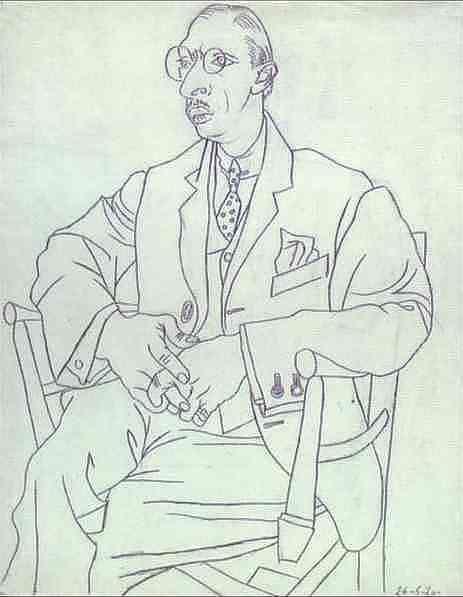
1. QUOTE AUTHOR: Igor Stravinsky
.....a. He was a famous composer (born in Russia) of the 20th Century who wrote very contemporary music that, in the early stages of his career, shocked some audiences.
http://www.veoh.com/collection/music-documentary/watch/v6331492grzWM5M4,
http://en.wikipedia.org/wiki/Igor_Stravinsky


.....b. Etching by the famous artist Pablo Picasso, his friend: 


.....c. On the picture below, Picasso is 2nd from the left and Stravinsky is standing next to him on the right
.....d. Discussed Stravinsky's quote about how composers often borrow melodic patterns from one another. If too much of a melodic pattern is borrowed, at what point is that considered plagiarism (stealing someone else's idea)
2. SOLFEGE DO RE MI (while checking the quotes)
3. FINISHED NOTE READING BY STEPS worksheets (2 pages worth 1 point each page)
.....a.Teacher checked for understanding
4. Students to keyboards: (Procedures given to follow first/students to go through in order and when finished move on to the next one)
.....a. Locate "D" key then find B,A,G
..........1)Play songs Mary and Hot Cross Buns from handout given out last week
.....b. Pentatonic (black key songs) on reverse side of the same worksheet:
..........1)Try to play some songs by ear from the list of songs given on the sheet (1st notes or starting notes are given)
.....c. Pass out new keyboard music: Playing songs by finger numbers
.........1)These songs used to establish proper hand placement and blocking techniques before actual note reading begins. 
.........2)The idea is to be able to place the hand and fingers down on the keys in preparation to the playing of a song so that the eyes don't have to watch the fingers while playing
.........3)Also helps to develop muscle coordination and sense of touch

BEGINNING VIOLIN PERIOD 5:
OBJECTIVE: FINGERING DO-RE-MI/DO-RE-MAY (MAJOR and MINOR)
1. TUNE
2. OPEN STRING BOWING
.....a. Using a bow leader so everyone's bows stay together (up and down and at the same part of the bow) 
..........1)Bow leaders are called in the orchestra either concert master (male) or concert mistress (female)
.....b. Separate bows UH 4x each string;
.....c. My sis-ter marc-y RHYTHM 2x each string(bow speed) UH bow,
.....d. Discussed using the bow at thje LH (Lower Half) or frog to middle (triangle to square)
..........1)Need to lighten up the pressure of the bow on the string when at the heaviest part of the
bow sort-of like a marionette puppet (attached by strings)
..........2)Separate bows 4x LH (frog to middle) with proper articulation (click-like) sound
3. MARY HAD A LITTLE LAMB (MAJOR-HAPPY: DO RE MI)
.....a. Sang the finger numbers while fingering silently
..........1)Guitar position for those who feel a need to use their eyes while fingering
..........2)Regular position (violin held at the neck) for those who don't need to look at their fingers
.....b. Played the song with right pizzicato while singing the finger numbers
..........1)Same procedures as above
..........2)The use of the bow (UH) were for those whose fingers can now move with ease and automatically.
.....c. Played Mary on each string in the cycle of strings
4. MARY HAD A SAD LAMB (MINOR-SAD: DO-RE-MAY)
......a. Demonstrated how to make Mary had a little lamb (happy/major) into mary had a sad little lamb (sad/minor)
......b. Asked students to observe me play both example and asked them to explain what I did to make the music go from happy to sad.
...........1)Students noticed that the left 2nd finger (MI) was placed a space above the 1st finger (RE) when the music as happy but w
...........2)When the finger tips (sides of the fingertip pads) of the fingers 1 and 2 were placed together (MAY)instead of apart, ("tip to tip" or as I like to say "feel the skin of each other") the music seemed to be sad which we call in music "minor."
.....c. We played Mary had a Sad Lamb on each string using the cycle of strings

ADVANCED VIOLIN PERIOD 4:
OBJECTIVE: Preparation for Harvest Day performance on October 28th/Hoedown music
1. TUNE

2. De Colores
.....a. Worked to coordinate De Colores and balance the sound between the electric and acoustic instruments.
.....b. Violinists were given choices to play either melody or harmony parts
.....c. Worked with all the violins who are playing melody parts
.....d. Strenghtened the understanding of the violin harmony parts while melody parts were playing
.....e. Added all parts together
3. Hoedown
.....a. Still having trouble eith the coordination of the 16th note passages (same passages that are in Orange Blossom Special) with piano accompaniment

.....b. Piano needs to perform small accents on strong beats so as not to lose the steady pulse.
Be prepared next week we need to getout music stands

Tuesday, March 8, 2011

WHAT WE DID TODAY (SEMESTER #2-25): TUESDAY; MARCH 8, 2011

GENERAL MUSIC PERIODS 2,3,6
COMPOSER: BACH CELLO SUITE PRELUDE Bach of Suite No. 1 in G major, BWV 1007 

1. Defined the term SUITE:
.....a. An instrumental composition, especially of the 17th or 18th century, consisting of a succession of dances in the same or related keys.
.....b. An instrumental composition consisting of a series of varying movements or pieces.

2. Short demonstration on the cello
OBJECTIVE: RECORDER NOTE READING BY LETTERS
1. QUOTE AUTHOR: John Phillip Sousa
.....a. A famous American band director and band composer opera the late 19th to the early 20th Century.
.....b. One of his most famous pieces was called "The Stars and Strips Forever"
.....c. He was known for his patriotic music. (I like to remember that fact about him this way: Sousa.)
.....d. He is also known as the inventor of a marching tuba (the instrument goes around the player making it easier to carry and play while marching) and the instrument called the Sousaphone was named after him.
2. Reviewed note reading by step
.....a. Explained and showed what line and space notes look like on the musical staff
.....b. Explained and showed what notes moving by step (up and down) look like on the musical staff.
...........1)A step is when a note moves from a line to the very next space (or vice versa) either up or down
...........2)These steps can be thought of like stairs you walk up and down on.
3. Notes that move by skip
.....a. Counting the lines and spaces in between the notes that move by skip
4. How to determine the name of one note on the staff so you can figure out all the other note names from it by using the musical alphabet concept

BEGINNING VIOLIN PERIOD 5:
OBJECTIVE: FINGERING DO-RE-MI
1. TUNE

2. FINGERING DO-RE-MI (Students are to remember to keep the 1st finger down when placing down the 2nd finger)
....a.    Using the guitar position (for practice purposes only) students reviewed and practiced plucking the strings using the right thumb over the 
          fingerboard while they fingered the DO, RE, MI notes using the left fingers.
.....b.  We practiced DO, RE, MI on each string in the CYCLE OF STRINGS and students were instructed to retry again with the objective of being 
          able to place the fingers down without using their eyes; I want them to use their sense of touch and their sense of hearing.
.....c.  When able to perform this task they are then ready to try placing the violin up in its regular position and pluck the same sounds, again using 
          right pizzicato.
.....d.  We re-did the exercise again using a DO, RE, MI, MI, RE, DO pattern (placing fingers down and then removing them in order).
.....e.  We started to use the DO, RE, MI patterns in songs; our first one to start on: "HOT CROSS BUNS" (This is to be played on each string in                 the CYCLE OF STRINGS)
..........1)First sing the solfege to get the tune in the mind first (you cannot play anything well on an instrument unless you can sing it in your head 
             first).
..........2)While in guitar position, sing again; this time singing the finger numbers as students place the proper fingers down (silent fingering).
..........3)Again in guitar position, sing the fingering and/or solfege while fingering on the left and plucking on the right.
..........4)If the last step can be done with ease, then try re-doing it in the proper holding position at the neck.
..........5)Once the left hand fingering is memorized and has become what I term an "automatic reflex" (movements that are performed without overtly 
             thinking because they have become a reaction) then the bow can be tried in replacement of the pizzicato.
..........6)Having the left fingering memorized allows the brain to focus only on the use of the bow; if the left fingers have not learned the movements 
             as an automatic reflex and the bow is used too soon with the left fingers, then the brain is forced to have to concentrate on two completely 
             different movements at the same time... that is very difficult to do and it will take longer to get the song learned.
..........7)Continue to use the UH (upper half ) of the bow only in playing the song and work toward articulating the beginnings of each separate bow 
             stroke.
.....f. We also started another DO-RE-MI song: Mary had a Little Lamb (using same practicing format)
Tomorrow Mary had a SAD lamb open string bowing try out open string holiday song if time

ADVANCED VIOLIN PERIOD 4:
OBJECTIVE: Preparation for Harvest Day performance on October 28th/Hoedown music
1. TUNE
2. Hoe Down
.....a. Worked on section B trying to get all the notes to stay together on the violins
.....b. Practiced cello, guitar, piano part separately and they learned to stay together
.....c. Violins need to accent the first note of every 4 in the 16th note passages
........1)Need to sit properly in the seat with feet on the floor so you can use the feet to help make the accent
........2)We do not play these instruments with only the upper parts of our bodies
3. Orange Blossom Special
.....a. Violins stayed together but the piano, guitar parts still need to keep steady beats (will work on that next lesson)

Friday, March 4, 2011

WHAT WE DID TODAY #2-28: FRIDAY; MARCH 11, 2011

GENERAL MUSIC PERIODS 2,3,6

COMPOSER: BACH 


Nigel Kennedy - Bach - BWV 1042 - I - Allegro

OBJECTIVE: Keyboard muscle/finger coordination; songs by number
1. QUOTE AUTHOR: Robert Schumann
.....a. Schumann Documentary:


2. SOLFEGE DO-RE-MI(while checking for finishing quotes)
3. KEYBOARDS: TEACHER WILL BE GOING AROUND TO CHECK STUDENTS FOR:
.....a. Understanding how to "D" on the keyboards
.....b. Demonstrating how to play a "B" "A" "G" song (Mary or Hot Cross Buns)
.....c. Ear training on one pentatonic (black key note song)
.....d. Understanding on how to start reading songs by number on the keyboard (used to teach the "frame" position of the hands and also to be able to use the sense of touch rather than the eyes looking at the keys while playing).
This lesson will continue into tomorrow.


BEGINNING VIOLIN PERIOD 5:
OBJECTIVE: PREPARATION FOR HOLIDAY PERFORMANCE/FINGERING DO-RE-MI (MAJOR)
1. TUNE
2. Passed out packets of holiday music to each student without colors on them
.....a.Students are to color in the notes (colors stand for which string the notes are played on) for Coventry Carol but wait for directions before coloring in the notes on the next songs until we have a chance to go over the music in class)
3. HOLIDAY PROGRAM SONG: COVENTRY CAROL
4. HOLIDAY PROGRAM SONG: HAVA NAGILA
.....a. This is an open string, bowing (arco) harmony part and will be played with the advanced violins (from the period 4 class) playing the melody at the concert.
.....b. Listened to the recorded accompaniment and teacher demonstration.
.....c. Explained about whole notes, half notes, and quarter notes (using money as examples: whole note=4 quarters; half note=2 quarters; quarter note =1 quarter
.....d. The class read the open string notes as teacher wrote the letters down on the chart.
.....e. Instructions were given to use the boe (UH) if comfortable; if not, can first learn the song using pizzicato in guitar and/or regular position.
5. MARY (DO-RE-MI SONG) played on each string in the cycle of strings with bow (UH)

Coming Up:

we will be replaying DO-RE-MI songs: Mary and Hot Cross Buns on the G, D, and A strings but adding the next higher open string with it [example playing Mary (DO-RE-MI) on the "D" string but bowing open A with the D string at the same time]. By adding the neighboring (next highest) open string while playing the melody on the lower string, harmony is produced. Using this technique on these DO-RE-MI songs helps students to listen for intonation because it is easier to hear a finger going out of tune when there is another note harmonizing with it.

ADVANCED VIOLIN PERIOD 4:

OBJECTIVE: Preparation for Harvest Day performance on October 28th
1. TUNE
2. WE USED MUSIC STANDS and PASSED OUT MUSIC BINDERS TO THE VIOLINS THAT WILL BE USED IN THE PERFORMANCE
.....a. These binders are to remain in class at all times
.....b. Music to remain in plastic sleeves at all times
3. DE COLORES

.....a. Read through with music on the stands instead of on posters
.....b. Worked for balance of harmony and melody.
.....c. Worked for independence of harmony parts.
4. HOEDOWN
.....a. Ran through the music a few times.
.....b. Electric guitar was able to stay on the beat with the violins; I think the amp was adjusted better the guitar and violins could hear each other better.
.....c. Keyboard did not play so we will have to see if we can secure the same sound blend (where everyone can hear one another) tomorrow
5. ORANGE BLOSSOM SPECIAL.....a. Again, music was on the stands and played without posters.
.....b. The volume was turned up a little on the recorded accompaniment which allowed both harmony and melody parts
to stay together
.....c. Again the electric quitar seemed to have the amp more in balance which helped considerably so everyone could hear each other to stay together.
.....d. The keyboard part was not in the mix so (as in the other piece) we will have to see if the accompaniment will be able to be heard by him as well.
4. Preparation for the Harvest Festival Performance
......a. There are 12 practice sessions (days left) before the concert
......b. We will be performing on the outside stage in the early part of the festival
......c. When we are finished we can put our instruments away in the room and enjoy rest of the festivities
......d. More information to follow when I get it.
WHAT WE DID TODAY (SEMESTER #2-23): FRIDAY; MARCH 4, 2011

GENERAL MUSIC PERIODS 2,3,6

OBJECTIVE:
1. NO QUOTE/START OF MUSICAL REPORT ON "OLIVER"
.....a. Review first few sections of information on the report (title, composer, short summary of story, etc.)
.....b. Wrote down and discuss names of main characters we have met so far
.....c. Wrote down the names of songs we have heard so far
2. Watch the next section of the film

BEGINNING VIOLIN PERIOD 5:
OBJECTIVE:
1. TUNE
2. SONG: YEAR WITHOUT RAIN
3. SONG: CIELITO LINDO
.....a. Worked on combining harmony and melody parts together

ADVANCED VIOLIN PERIOD 4:
OBJECTIVE:
1. TUNE
2. SONG: NUMB
.....a. Worked on some difficult rhythmic passages
..........1)Subdivided rhythm by counting eighth notes instead of quarter notes
..........2)Placed the beat numbers under each note
..........3)Circled the starting eighth note beat (number) of each rhythmic note
..........4)Counted the numbers out loud while clapping on those circled numbers (eighth note beat)
..........5)Repeat again only a little faster then keep repeating and speeding up
..........6)Change the numbers to a sound (like "tah") and continue to clap on the circled eighth beats speeding up until am automatic reflex is produced

The object of this exercise is to first intellectualize (think through) a difficult rhythmic passage and then to completely learn it by transfering the knowledge from the thinking side of the brain to the reflex side (memory). I have previously taught the concept of "subdivision of the beat" setting the ground work for the use of this technique in learning difficult rhythmic passages. Not only does this technique help learn difficult rhythmic passages it will drastically reduce the amount of practice time spent learning them.

WHAT WE DID TODAY #2-29:

GENERAL MUSIC PERIODS 2,3,6 

COMPOSER: BACH: Violin Concerto in E Major 3rd movement 

OBJECTIVE: Keyboard muscle/finger coordination; songs by number
1. QUOTE AUTHOR: George Crumb 

One of his famous pieces is called "The Ancient Voices of Children" 

1. KEYBOARDS: TEACHER WILL BE GOING AROUND TO CHECK STUDENTS FOR:
.....a. Understanding how to "D" on the keyboards
.....b. Demonstrating how to play a "B" "A" "G" song (Mary or Hot Cross Buns)
.....c. Ear training on one pentatonic (black key note song)
.....d. Understanding on how to start reading songs by number on the keyboard (used to teach the "frame" position of the
         hands and also to be able to use the sense of touch rather than the eyes looking at the keys while playing).
         This lesson was continued from yesterday.
Today's quote is worth 1 extra credit point.


BEGINNING VIOLIN PERIOD 5: 
OBJECTIVE: PREPARATION FOR HOLIDAY PERFORMANCE/DOUBLE STOPPING 
1. TUNE
1. DOUBLE-STOPPING
.....a. Silent bow rocking: 7 bow levels at MB
.....b. Separate Bows (UH) 4x at each bow level
.....c. Silent bow rocking: 7 bow levels at FROG
.....d. Separate Bows (LH) 4x at each bow level
.....e. Mary Had a Little Lamb
.........1)Using 2 strings: finger the melody on the lower of the 2 strings but use the bow not only on that string but also on the 
             next open string higher (Double-Stopped)
.........2)To be played on G with open D, D with open A, A with open E, and then the melody alone on the E string
2. HOLIDAY PROGRAM SONG: HAVA NAGILA
.....a. Review from yesterday
.....b. Work for continuity; training the performer how to play through mistakes in a performance with others

Coming Up: More holiday songs putting fingers down on strings

ADVANCED VIOLIN PERIOD 4: 

OBJECTIVE: Preparation for: Harvest Day performance on October 28th/Holiday Program December 9th
1. TUNE
2. MUSIC STANDS WERE SET-UP
3. REVIEW SONGS FOR THE HARVEST FESTIVAL
.....a. HOEDOWN
.....b. ORANGE BLOSSOM SPECIAL
.....c. DE COLORES
4. GREENSLEEVES
.....a. Listen to the accompaniment with string harmony part
.....b. Everyone plays harmony part together (later to separate into melody and harmony parts)
..........1)Playing the harmony part is important even for those who will be playing the melody because harmony helps the ear 
          with intonation, the counting is different, and also because it is good for everyone in the group to know how their part 
          fits together with the the others.
7. Preparation for the Harvest Festival Performance
......a. There are 11 practice sessions (days left) before the concert
......b. We will be performing on the outside stage in the early part of the festival
......c. When we are finished we can put our instruments away in the room and enjoy rest of the festivities
......d. More information to follow when I get it.

Thursday, March 3, 2011

WHAT WE DID TODAY (SEMESTER #2-22): THURSDAY; MARCH 3, 2011

GENERAL MUSIC PERIODS 2,3,6
COMPOSER: BACH DOUBLE VIOLIN CONCERTO 


Movement 1
Performed by Menuhin and Oistrakh


Movement 2


Movement 3


OBJECTIVE: MUSICAL "OLIVER"
1. QUOTE AUTHOR: GIAN CARLO MENOTTI
.....a. A composer from the 20th Century who was famous for writing modern operas.
.....b. One of his most famous operas was called "Amahl and the Night Visitors" about the Christmas story of the 3 kings 


Amahl and the Night Visitors PART 1

Amahl and the Night Visitors PART 2


Amahl and the Night Visitors PART 3


First Hallmark Hall of Fame: Amahl and the Night Visitors


Amahl and the Night Visitors: An Opera Preview

.....c. He recently passed away; he was in his nineties
2. SOLFEGE: DO-RE-MI
.....a. Each student sings the pattern and hand signs to...
teacher: "Did you finish your quote/" Student reply, "Yes I did."
3. MUSICAL OLIVER: OVERVIEW(see detailed information on this BLOG)
.....a. Musical written by Lionel Bart
.....b. Story based on novel by 19th Century English author: Charles Dickens called "OLIVER TWIST"
.....c. We discussed living conditions in England during the time period the story took place
..........1)Poor versus rich and educated versus non educated
..........2)Laws that did not protect children's rights (including working conditions for children: workhouses, orphanages, the selling of children for slave labor )
..........3)Social attitudes and morals; how they differ from today
..........4)Lack of sanitary living conditions and poor medical care (especially for the poor)
..........5)Communication devices and the speed of the transfer of information
..........6)The importance of this novel; how a piece of literature can change a society
.....d. Discussed the term overture
..........1)orchestra playing an introduction made up of short, instrumental and musically connected excerpts or passages from the melodies that will be heard later.
.....e. We watched the beginning of the musical (we heard the first 3 songs)
...........1)GRUEL: a term heard in the film...I explained what it was; please see section in this BLOG about this and there is also a recipe if someone would like to try making it.

DUE TO THUNDERSTORM AND RESULTANT TIME CHANGES IN PERIOD 3 I WILL NOT REQUIRE THE WRITTEN QUOTE ON FRIDAY TO BE DONE. ANYONE WHO DID IT WILL RECEIVE EXTRA CREDIT. SO, THIS WEEK THERE ARE 3 REQUIRED QUOTES COUNTED TOWARD THE GRADE.

BEGINNING VIOLIN PERIOD 5:
OBJECTIVE: Bowing on Open Strings
1. TUNE
2. SILENT BOW ROCKING for arm levels at the MB (middle bow)

3. CYCLE OF STRINGS 4x each string UH
4. CYCLE OF STRINGS 4x each string 8x UH
5. CYCLE OF STRINGS 2x each string to rhythm: "My sis-ter Marc-y" (slow-fast-fast-slow-slow) using same amount of bow for each syllable but bow speed changes UH
3. CYCLE OF STRINGS 4x each string lifted, short down bows MB then at UH (tip) for articulation practice
4. "OPEN STRING WALTZ" open string note reading piece in 3/4 time

.....a. Explained about half notes (2 beats) and dotted half notes (3 beats) by relating them to money
..........1)half note=half dollar, 50 cents, or 2 quarters
..........2)dotted half note=half dollar and a quarter, 75 cents, or 3 quarters)
..........3)RULE OF THE "DOT": a dot placed next to the right side of a note adds half the value on to that note; so if a half note is worth 2 beats, 
            the dot added to it will be worth 1 beat, so a dotted half note is worth 3 beats 
....b. Reviewed note names and sang them with the recorded music
....c. Played song on violin while singing notes out loud (bowing at UH)
....d. Learned a new bow technique called "tremolo" and played it on the last note of the song.
5. "BLAST OFF" review song and tremolo technique from yesterday
.....a. Reviewed that at the repeat students need to "LIFT" the bow and restart the repeated section "DOWN" bow
5. Reviewed "Little Bitty"
.....a. Reviewed that there are many LIFTED DOWN bows in this piece; bows to be lifted where indicated (during the quarter rests)
.....b. Reminded them of the term RITARDANDO (Italian meaning to retard or slow down "RIT." for short) written into the music

ADVANCED VIOLIN PERIOD 4:
OBJECTIVE: Preparation for Harvest Day performance on October 28th/Hoedown music
1. TUNE

2. MIDDLE SCHOOL BAND NIGHT IS TONIGHT: I passed back the permission slips given me and students need to take them with them to the high school in order to go on the bus

3. DE COLORES
.....a. Started working on melody parts with the violins

..........1)We sight read through the part
..........2)We circled passages that were similar and chose certain passages to practice on first
..........3)The passages we worked on were played while the recorded accompaniment was on but the parts we had not worked on yet were left out and 
             just watched. This is a practice technique which teaches continuity (being able to play the parts you know and not letting the parts you don't    
             know throw your focus off).           
.....b. Reviewed harmony parts with cellos, guitar, and piano
.....c. Started the process of connecting the parts together.
QUIZ ON THE DIFFICULT 4-NOTE PASSAGE OF ORANGE BLOSSOM SPECIAL POSTPONED UNTIL I RE-ANNOUNCE IT