Showing posts with label string quartet. Show all posts

Thursday, October 15, 2015

THURSDAY, OCTOBER 15, 2015

QUOTE:
"I have my own particular sorrows, loves, delights; and you have
  yours. But sorrow, gladness, yearning, hope, love, belong to all
  of us, in all times and in all places. Music is the only means
  whereby we feel these emotions in their universality."

AUTHOR: H. A. Overstreet
MEANING OF THE QUOTE:
"Although each person is unique what unites us are
  the emotions we all share and can feel through music."


COMPOSER:
ANTONIN DVORAK

STRING QUARTET NO. 1
IN A MAJOR OP. 2
http://www.thecultureconcept.com/circle/the-culture-concept-circle-october-2012-musenews-editorial
STRING QUARTET NO. 1
IN A MAJOR OP. 2
Prager Quartet
I. Andante - Allegro 0:00
II. Adagio affettuoso ed appassionato 17:21
III. Allegro scherzando - Trio 29:47
IV. Finale: Allegro animato 35:07
Composed in March of 1862, the String Quartet
in A major is a one of the 21-year-old Dvorak's
highly accomplished early attempts at compos-
ing chamber works and it was the first of
Dvorak's series of fourteen string quartets.
The composition was dedicated to the
director of the Prague Conservatory,

Josef Krejčí, who was Dvorak's teacher of 
music theory at the Prague Organ School.
Prague Organ School

Antonin Dvorak began his musical career
not as a composer, but as a performer,
a violist, organist, and pianist. In these
capacities, the young musician was exposed
to a wealth of music and a huge variety of
musical styles: the Schubert- Mendelssohn-
Brahms strain of Germanic music, and the
Lisztian-Wagnerian strain, French opera,
Italian opera, Czech folk music, and more.
According to music critic David Hurwitz,

David Hurwitz
"Like Mozart, Dvorak was a human sponge,
soaking up inspiration wherever he found it
and melding it into his own idiom."
Studying Dvorak's first compositions is
sort-of a history of his musical evolution
as a composer; how he melt all the elements
he was soaking up. Some of Dvorak's
earliest chamber music pieces are nearly
Mozartean in their classicism, others
thoroughly Wagnerian in their chromaticism,
while still others sound more like Schubert
and Mendelssohn than anything else; at the
same time it can be heard that there is not
always a complete mastery of the materials
at hand. When it comes to Dvorak's later
compositions, the mastery is evident; though
there is stylistic variety, everything sounds
like Dvorak, and all is skillfully crafted.
The original version of the first quartet is an
interesting case, a combination of youth and
mastery. This piece was written after he had
just avoided being drafted into the Austrian
army and was thrilled about it; so much
so that he even wrote about it upon
the score of this quartet:
"Thanks be to God! Composed in 1862, in March
after the call-up of conscripts. Ant. Leop. Dvorak," 
This joyful exuberance is also expressed
in the character of his music. He attempts to
move away from the restrictions of typical
Classical forms by using a quotation from the
introduction of the first movement and repeat-
ing it in the final movement near the very end
of the finale as an endeavor to unify the entire
piece. This is a Mendelssohnian technique
which Dvorak would make his own. Also, in the
trio of the scherzo, Dvorak does something for
the first time which would later become very
typical for him: he writes a furiant,
a Czech dance-form
AN EXAMPLE OF
A FURIANT
Myslivecký Bál
alternating between duple and triple meter.
However, Dvorak's youthful (21-year-old)
inexperience shows through in the work's
extreme length: this original version being
full of extra modulations and wander-
ings that may often be found in any
young composer's writing.
Like many of Dvorak's works from his earlier
days, when the young and still inexperienced
composer was openly responding to stimuli
from his musical surroundings and excitedly
adopting new compositional techniques,
this one lay forgotten (and un-
published) for a long period.
In 1887, at age forty-six, about twenty-
five years after first composing this, when
planning to have some of his early works
performed, Dvorak decided to rework this
long forgotten quartet into the version
which is nearly always performed today.

For this version he revised the quartet,
radically shortening it by removing a good
deal of what he considered the unnecessary
"filler" in the original version by cutting the
outer movements by a quarter and the sec-
ond movement by a whole third. Retain-
ed from the original version is a long
breathed Schubertian lyricism, beautifully
idiomatic string writing, and moments
that would feel perfectly at home in a
Mendelssohn string quartet.
Dvorak expert
Hartmut Schick
Hartmut Schick
has noted a thematic similarity
in the first movement with
Mendelssohn's Scottish Symphony,
FELIX MENDELSSOHN
SYMPHONY NO. 3 "SCOTTISH"
Movement I:
Andante con moto -
Allegro un poco agitato
Riccardo Muti, Conductor
New Philharmonia Orchestra
and points out Dvorak's use here
of the pentatonic scale.
Example of a Pentatonic Scale
This scale, which appears in the
"American" Quartet, is usually ex-
plained in that work as the influence
of Native American music however its
appearance in this early quartet, written
long before Dvorak came to America,
would seem to suggest otherwise as much
of the folk music that the composer
was exposed to and influenced by
from his own country was built
upon a pentatonic melodic structure.
No actual performance of this concerto
has been documented until 1888, when
the revised version of the work was
included on the program for a concert
organized by the artists' association
Umělecká Beseda Arts Discussion
Group/Forum: an artistic association
which has brought together many
famous Czech artists since 1863)
at the Rudolfinum in Prague
Praha - Rudolfinum
Rudolfinum in Prague
on January 6, 1888. The performers were
members of the orchestra of the National
Theatre: violinist Karel Ondříček,
(orchestra leader and younger
brother of the violinist František
Ondříček), violinist Jan Pelikán,
violist Petr Mareš, and cellist
Alois Neruda (brother of violinist

At the time, the Czech composer, ped-
agogue, writer, and music reviewer,
wrote of his impression of the work in the
Czech daily newspaper (a newspaper
published between the years
1861-1941) Narodni listy:
"This quartet is the product of a fresh imagination and
confidence in the use of musical form; however, in a few
places, we did sense the diffidence of the juvenile composer."
This was the only opportunity Dvorak ever had
to hear this work for the next performance took
place almost thirty years later, on October 29, 1917
(Dvorak died in 1904) in Obecni dum in Prague.
Praha - Obecní dům
Obecní dům (1917)

Tuesday, May 12, 2015

TUESDAY, MAY 12, 2015

QUOTE:
"Jazz came to America three

  hundred years ago in chains."
AUTHOR: Paul Whiteman

MEANING OF THE QUOTE:
"Jazz music originated as an
  expression of suffering people."


COMPOSER
GERSHWIN
http://www.simonbielman.com/wp-content/uploads/2011/02/Coffee_Quartet.jpg

LULLABY

FOR STRING QUARTET

The quartet version was first published in 1968.

Mischa Lefkowitz, Violin
Robin Olsen, Violin
Thomas Hall, Viola
Richard Treat, Cello

LULLABY

FOR STRINGS
Dimitri Kitayenko, Conductor

Moscow Philharmonic Orchestra

Harry Herman Roseland: Mother and Child

LULLABY

FOR STRINGS

Harry Herman Roseland: The Light of the Home
LULLABY
A lullaby (cradle song, berceuse)
is a soothing song, usually sung to children
before they go to sleep. The idea is that the
song sung by a familiar and beautiful voice
will lull the child to sleep. Lullabies can be
found in every human culture, often very
ancient. Lullabies written by established
classical composers are often given the form-
name berceuse, which is French
for lullaby, or cradle song.
Berthe Morisot: The Cradle
STRING QUARTET
is music for written for an ensemble of
2 violins, viola, and cello.

It is often also called
chamber music.
Klimt: Cradle
ARTICLE FROM:
LULLABY
FOR STRING QUARTET
A Piece in One Movement
Blog Post by Walter Rimler
It was in 1923 that Gershwin, having failed
to prepare a harmony exercise for his third
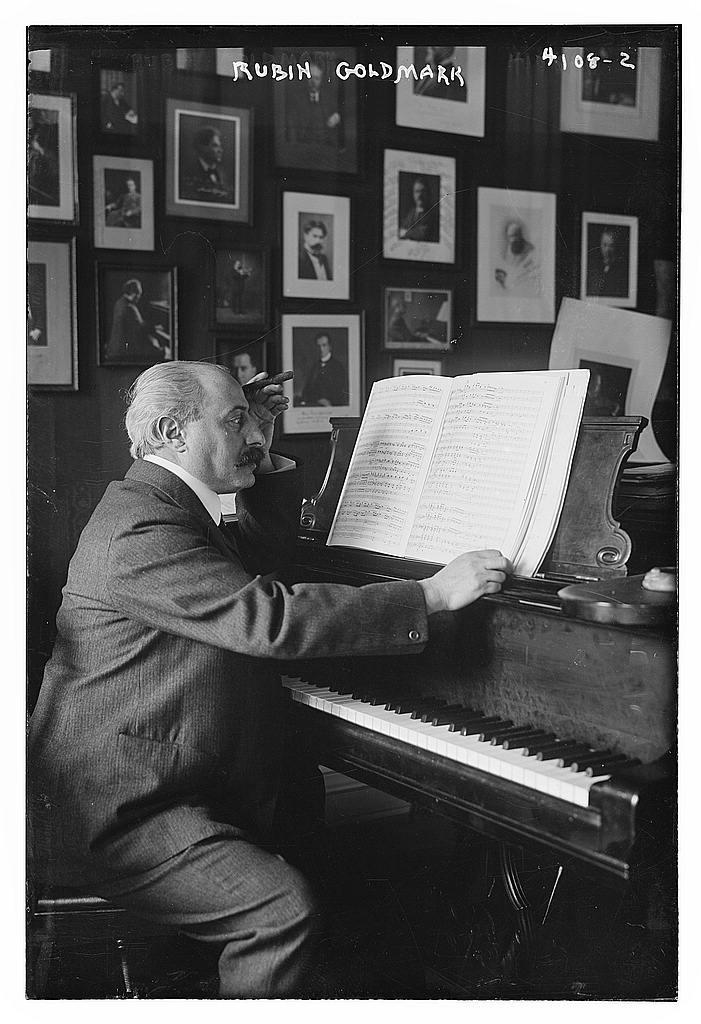
lesson with Rubin Goldmark
Rubin Goldmark
(nephew of Hungarian
composer
Karl Goldmark
Karl Goldmark
and a pupil of Antonin Dvořák),
Dvorak

turned in this composition, written several
years earlier. As Gershwin later told it with
some glee, Goldmark, upon looking at
Lullaby, told the young composer,
"It's plainly to be seen that you have already
learned a great deal of harmony from me!"
This, as it turned out, was Gershwin's last
lesson with that particular teacher.
Lullaby was actually written in 1919 or 1920
as a harmony exercise for Edward Kilenyi.

Gershwin wrote it both as a string quartet and
a piano piece, although as a piano work, it
remained unfinished and had not
been published.
Francis Day: Lullaby
LULLABY
(Piano Version)

In the months following its
composition it was played as a string
quartet by the composer's friends at private
musicales. But it was not until 1922 that
any of the music was heard publicly.
The occasion was Gershwin's
one-act opera Blue Monday,
Blue Monday (Opera a la Afro-American) is

considered to be the first piece of symphonic
jazz, and the first attempt to join classical
music forms with jazz and the African-Harlem.
It is a one-act jazz opera set in Harlem
and based on the story of the opera Pagliacci.
which turned the main idea of Lullaby into an
aria entitled "Has Anyone Seen My Joe?"
BLUE MONDAY
(Part 2)
"Has Anyone Seen My Joe?"
(First Song on this video)
Hans Leenders, Conductor
Codarts Vocal and Instrumental Ensemble
For the next forty years,

Lullaby remained unheard except
in revivals of Blue Monday.
In 1962 harmonica virtuoso

mentioned to
Ira Gershwin

that, in recording a
film score, he was going
to overdub himself four times.
The word "four" reminded Ira of Lullaby
and he showed the manuscript to Adler.
On August 29, 1963, Adler premiered his
transcription of the piece for harmonica
and string quartet in an appearance with
the Edinburgh String Quartet at the
Edinburgh Festival. He later recorded
Morton Gould's


arrangement for
harmonica and string
orchestra. On October 29, 1967
Lullaby was finally performed publicly
as Gershwin had written it.
The occasion was a concert by the
Juilliard String Quartet
The members of the first Juilliard Quartet resident at the Library of Congress, in a 1962 photo, from left: Robert Mann, Isidore Cohen, Claus Adam and Raphael Hillyer
The members of the first Juilliard Quartet resident at the Library of Congress,
in a 1962 photo
, from left:
Robert Mann, Isidore Cohen, Claus Adam and Raphael Hillyer - Clemens Kalischer
at the Library of Congress.
Library of Congress Building
As to its place in the Gershwin canon, Ira
Gershwin, upon publication of the
score in 1968, wrote,
"It may not be the Gershwin of Rhapsody in Blue,
Concerto in F, and his other concert works, but
I find it charming and kind."
1381516_677705282241974_920435898_n
Leon-Emile Caille: Her Pride and Joy
ARTICLES FROM:
LULLABY ANALYSIS
True to its name, the piece moves
slowly and softly, constantly muted
("con sordini") with hypnotic repetition
of beats creating a sense of a gentle
and comfortable ‘swing.’ Delicate
harmonics in the first violin introduce
the limping figure that becomes the
cello’s accompaniment to the step-
wise, chordal theme in the upper
voices. The colorful harmonies and
syncopated rhythms are somewhat
bluesy and suggestive of ragtime.
Changes in texture (higher registers
and different accompaniment) add
interest to the repetitions. A middle
section develops thematic ideas,
keeping the syncopated motion,
except for brief "recitative" solos in
the violin and cello. Even though the
return of the first section is strong
(con fuoco), it soon ends delicately
with harmonics in all voices and
airy pizzicatos.
IRA GERSHWIN,
IN HIS OWN WORDS,
WRITES ABOUT
 "LULLABY"
"Sometime in 1919 or 1920 my brother George tried
his hand at a short piece for string quartet and called
it "Lullaby." (Possibly he originally intended it as a
piano solo, in an unfinished manuscript of his I still
have.) As a quartet it was played in the next several
months at a number of private musicales of his many
musician friends before - sometimes after - they'd get
down to the more serious business of classical
quartets and quintets. I attended three of these
intimate sessions and could see and hear that
'Lullaby' was invariably welcomed."
"In 1922 George and lyricist B. G. DeSylva had
practically finished the score for that year's Scandals
when producer George White suddenly decided he
wanted them to go ahead with Blue Monday, a one-
act opera the collaborators had once mentioned they'd
like to do. There were only five days left before the
Scandals rehearsals were to begin, so my brother had
an upright put into his bedroom, and there he and
Buddy holed themselves up until the score was finished.
I can't recall why George borrowed the opening theme
of his string quartet for the beginning of an aria in Blue
Monday. Maybe it was the urgency of the assignment,
or perhaps by then George had Come to regard 'Lullaby'
as merely an exercise. But borrow the opening bars he
did, and that, so far as the composer was concerned,
was the end of the string quartet, as I've no recollection
of his ever mentioning it again."
"Forty years later, in 1962, when Larry Adler, the
harmonica virtuoso, was commissioned to do a film
score, he told me one night he expected to use
harmonicas in some sections of the underscoring:
He'd play all four parts himself and then synchronize
the tapes. The word 'four' suddenly reminded me of 
'Lullaby' lying among a number of George's
manuscripts in my upstairs workroom. I showed it
to Larry who asked if he could borrow it. The notion
was that he'd make a transcription for harmonica and
string quartet which he would premiere at the Edinburgh
Festival with the Edinburgh Quartet. On August 29,
1963 their performance was warmly received. Recently,
in a new arrangement by Morton Gould for harmonica
and string orchestra, Gould and Adler included the piece
(called there 'Lullaby Time') in an RCA Victor album
titled Discovery."
"But it was not until October 29, 1967 that 'Lullaby' was
publicly performed as the quartet George had written
nearly half a century earlier. Following Adler and
Gould's interest I had mentioned the composition to
of Congress, and an authority on George's concert work.
Dr. Spivacke felt that the Juilliard String Quartet might
welcome the piece. And indeed after they had given it a
first reading they scheduled it for their October concert at
the Library of Congress, a concert widely broadcast."
"Now 'Lullaby' is published from my brother's manuscript.
It may not be the Gershwin of Rhapsody in Blue,
Concerto in F, and his other concert works,
but I find it charming and kind."
~Ira Gershwin, April 1968~
LINKS
Jessie Wilcox Smith: Rocking Baby Doll to Sleep