Everything music from a perspective of a public
school music teacher with subject integration
(especially art, history, and literature) as a focus
to help teach the Common Core Curriculum.
QUOTE: "Music, when soft voices die, Vibrates in the memory" AUTHOR: Percy Bysshe Shelley MEANING OF THE QUOTE: “Music resides in your memory long after it is heard."
The Overture in E major, Op. 21, was written in 1826 by Mendelssohn at 17 years and 6 months old near the start of his career. It was written as a concert overture and originally not associated with any performance of the play. The Overture was written after Mendelssohn had read a German translation of the Shakespeare
play A Midsummer Night's Dream. In 1842, only a few years before his death, he received a commission from King Frederick William IV of Prussia to write some music for a Potsdam production of the play of A Midsummer Night's Dream to which he wrote incidental music (Op. 61) into which he incorporated the earlier existing Overture. The incidental music includes the world-famous Wedding March. The German title reads Ein Sommernachtstraum
It wasn't until Jan. 25, 1858, that the march first appeared in a royal wedding as a recessional (commonly performed as the bridal party files out at the end of the service) used by princess Victoria, The Princess Royal (the oldest child of Queen Victoria) when she married Prince Frederick William of Prussia. The event was enough to set a standard for ages to come and after this it became popular at weddings.
Princess Victoria Royal Marriage January 25,1858
Queen Victoria and her husband Albert were very fond of Mendelssohn and loved to spend afternoons playing the composer's "Songs Without Words" and singing selections from his oratorios. Mendelssohn often used to play for the royal family while on his visits to Britain.
Prince Albert played the organ in the Old Library in Buckingham Palace in the presence of Queen Victoria and Felix Mendelssohn (1842)
Incidental Music from A Mid Summer Nights Dream Op. 61 (complete)
.......a. FINISHED THE NEXT NOTE READING TREBLE CLEF PUZZLE
02. VIOLIN
.......a. LEFT PIZZICATO SONG: CRIPPLE CREEK
.............1. LOOKED OVER MUSIC NOTATION OF OPEN STRINGS ..................a. OPEN STRING NOTES COLORIZED TO AID IN LEARNING ..................b. REVIEWED TREBLE CLEF NOTE READING ..................c. MADE CONNECTION BETWEEN NOTES and OPEN STRINGS ..................d. CLASS SANG LETTER NOTE NAMES AS THEY LISTENED TO THE RECORDED ACCOMPANIMENT ..................e. STUDENTS REPEATED THE ABOVE and ALSO USED LEFT HAND PIZZICATO TO PLUCK THE NOTES THEY WERE SINGING
ADV. STRINGS
SPRING CONCERT (THURSDAY; MAY 30TH) PREPARATION JUNE 5th 5:00 PM (4:30 CALL TIME) DEDICATION FOR PATRICK'S GARDEN VOLUNTARY PARTICIPATION TO PLAY "STAIRWAY TO HEAVEN" 01. REVIEWED DIRECTIONS FOR THURSDAY'S CONCERT and REHEARSAL 02. TOOK EQUIPMENT TO THE CAFETERIA FOR SET-UP TOMORROW
BEG. STRINGS
SPRING CONCERT (THURSDAY; MAY 30TH) PREPARATION 01. REVIEWED DIRECTIONS FOR THURSDAY'S CONCERT and REHEARSAL
02. TOOK EQUIPMENT TO THE CAFETERIA FOR SET-UP TOMORROW
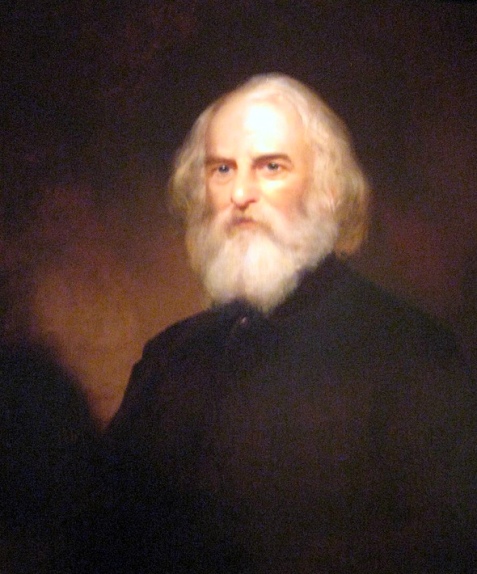
QUOTE: "Music is the universal language of mankind. AUTHOR: Henry Wadsworth Longfellow MEANING OF THE QUOTE: “No matter what language you speak you can still communicate to anyone your feelings through music."
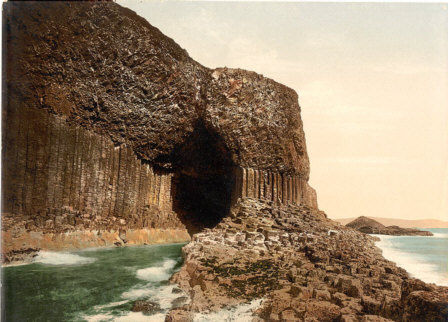
Mendelssohn visited the Hebrides, islands off the west coast of Scotland, in 1829 as part of a summer vacation. One of the attractions there was a huge cavern on the island of Staffa, Fingal's cave. Upon his return to Germany he began writing the overture and completed it in 1832. It was premiered with the London Philharmonic Society with Thomas Attwood conducting and received great reviews from the critics. Even Richard Wagner, one of Mendelssohn's biggest critics, later described the work as "one of the most beautiful pieces we possess." It should be noted that the purpose of the work was not to be a tone poem, but rather as a reaction to an event, as in the Beethoven "Pastoral" symphony.
The overture opens with lower strings and bassoons playing the main theme, which is evocative of the waves of the sea. This theme is repeated in the violins. A second theme is introduced in the cellos and clarinets as a variant to the main theme. Dialogue between the strings and winds of the main theme leads back to the opening texture. The piece ends with a calm subsiding of the orchestra to silence, as if the motion of the sea itself has come to a rest.
J. M. W. Turner(artist) Staffa, Fingal's Cave, 1832
The poet John Keats
visited Staffa, Fingal's Cave in 1818 (Mendelssohn went in 1829) and he wrote a poem about it called 'Staffa.' The following is a section of the poem describing the natural music made by the power of nature heard in the cave:
This was architectur'd thus
By the great Oceanus! -
Here his mighty waters play
Hollow organs all the day;
Here by turns his dolphins all,
Finny palmers great and small,
Come to pay devotion due -
Each a mouth of pearls must strew.
Many a mortal of these days,
Dares to pass our sacred ways,
Dares to touch audaciously
This Cathedral of the Sea!
I have been the pontiff-priest
Where the waters never rest,
Where a fledgy sea-bird choir
Soars for ever; holy fire
I have hid from mortal man;
Proteus is my Sacristan.
GENERAL MUSIC
01. THEORY
.......a. STARTED THE NEXT NOTE READING PUZZLE (TO FINISH TOMORROW)
02. MAKING MUSICAL INSTRUMENTS PROJECT
.......a. COMPLETED LAST OF PRESENTATIONS
03. VIOLIN
.......a. LEFT PIZZICATO
.............1. CYCLE OF STRINGS PLUCKING EACH STRING 4X WITH EACH FINGER OF LEFT HAND
.............2. EXERCISE USED TO DEVELOP LEFT VIOLIN ANGLE, LEFT ARM UNDER THE VIOLIN, and
TO STRENGTHEN THE LEFT HAND FINGERS
ADV. STRINGS
SPRING CONCERT (THURSDAY; MAY 30TH) PREPARATION JUNE 5th 5:00 PM (4:30 CALL TIME) DEDICATION FOR PATRICK'S GARDEN VOLUNTARY PARTICIPATION TO PLAY "STAIRWAY TO HEAVEN" 01. REVIEWED DIRECTIONS FOR THURSDAY'S CONCERT and REHEARSAL
BEG. STRINGS
SPRING CONCERT (THURSDAY; MAY 30TH) PREPARATION 01. REVIEWED DIRECTIONS FOR THURSDAY'S CONCERT and REHEARSAL
History: In 1922, USC dental student Milo Sweet composed the song and entered it in a school spirit contest. It was officially adopted in the mid-1920s.
Factoid: If you’ve seen a USC fan raise what appears to be a peace sign and wondered why a war-torn Trojan would, the “V” is actually for “Victory.” Fans and alumni greet each other with the gesture.
"Fight On USC", University of Southern California For a city that hates the NFL, Los Angeles has the market cornered on the college version, and one of the keenest rivalries in the nation. The bands and fight songs are right in there with the football teams. The tune "Salute To Troy" played between plays gets old quickly, but the fight song is simple, fresh and well written. It gives the casual Trojan observer a nice feel for USC, the reverse of what "Troy" does, which is drive you crazy at times if you aren't a USC fan.
This song is usually played after first downs and touchdowns. The music for USC's fight song, "Fight On," was composed in 1922 by USC dental student Milo Sweet (with lyrics by Sweet and Glen Grant) as an entry in a Trojan spirit contest. In addition to inspiring generations of Trojan fans and players, the song has been used in numerous recordings and movies. Legend has it that during World War II in the Pacific, an American task force attacked an island held by the Japanese. As the Americans stormed the beach, "Fight On" blared from the deck of one of the transports. The U.S. men let out a tremendous roar and eventually won the island.
"Sons of Westwood", UCLAThis is one of the most nationally underrated fight songs in the USA, but should be recognized by a host of college football fans nationwide. The song has roots at UC-Berkeley, and was adopted by UCLA in 1969 after a copyright infringement lawsuit was settled between the two schools (yes, you guessed it, Wikipedia again). The song is noted for its chromatic beginning, and its rise and fall in volume after the first eight measures of the melody. High schools in California like this song also, and some have adopted it as their own.
History: Brothers Michael and John Shea, both ND alumni, wrote the song in 1908, and it was first played at Notre Dame on Easter Sunday in 1909. It became a football game standard 10 years later.
Factoid: The first performance of what is now a famous fight song was on the organ of the Second Congregational Church in Holyoke, Mass. Michael Shea debuted his composition there in 1908.
"Notre Dame Victory March", University of Notre Dame This one could top the list also. This is the other "most famous march in America". Any list of any repute would have to list Michigan and Notre Dame as one-two in either order. Anyone in America could recognize this famous tune, written by Rev. Michael J. Shea in the late 1920s. The Fighting Irish made it back to national prominence by making it to the BCS title game in 2012, but their fight song has always been right up there as one of the finest.
On Wisconsin, On Wisconsin, plunge right through that line.
Run the ball clear down the field, touchdown sure this time.
On Wisconsin, On Wisconsin, fight on for her fame.
Fight, fellows, fight, fight, fight, we'll win this game.
On Wisconsin, On Wisconsin, stand up Badgers sing.
"Forward" is our driving spirit, loyal voices ring.
On Wisconsin, On Wisconsin, raise her glowing flame.
Stand, fellows, let us now salute her name.
History: Two friends, William “W.T.” Purdy and Carl Beck (a UW student), wrote the tune in a Chicago boardinghouse parlor in 1909. Purdy had planned to enter the piece in a University of Minnesota contest with a $100 prize. Once they finished, however, Beck convinced his friend to send it Bucky’s way. Factoid: More than 2,500 schools have adopted this fight song, and it is also the state’s official song. The legislature and governor adopted it on July 11, 1959.
"On Wisconsin," University of Wisconsin Another underrated song, this tune is very recognizable and is limited only by the lack of national appeal of its university. The tune was composed by William Purdy in 1909. It is the official state song of Wisconsin. You've perhaps heard it in cheese commercials some years back. But it is a terrific song, known by many, and deserving of being one of the best in the nation. On a critical note, someone needs to tell their band director to stop playing the dotted quarter notes too staccato (ask a music teacher what all that means), as it takes away from the full impact of the march.
History: Oklahoma’s song traces back to Yale’s “Boola Boola” and North Carolina’s “I’m a Tarheel Born.” In 1905, OU student Arthur M. Alden put Yale’s tune to new words. The next year, UNC’s lyrics were adapted.
Factoid: In the 1983 Oklahoma-Oklahoma State game, with the Sooners down 20-3 in the third quarter, the band played the fight song nonstop for an hour and five minutes. The Sooners won, 21-20, and the musicians got the game ball.
History: Music student Louis Elbel wrote and composed the song in November 1898 in the wake of a 12-11 victory over rival Chicago and the school’s first Western Conference football championship.
Factoid: John Philip Sousa’s band debuted the song in May 1899 in Ann Arbor. Sousa once called it “the best college march ever written,” according to the school.
"The Victors", University of Michigan This is why this list is presented in ABC order. In fairness, this writer is a degree holder from this university. But like Michigan or not, this song is one of the two most famous collegiate songs ever written. Louis Elbel gets the credit for this one, writing it in 1898 after a win by Michigan over the University of Chicago. Few college football fans can listen to this song and not know which university it represents. This writer will not reveal if this march would have been at number one if the list were ordered. Why? Because…
Stand Navy down the field, Sails set to the sky, We'll never change our course, So Army you steer shy - y - y - y Roll up the score Navy, Anchors Aweigh, Stand Navy down the field, And SINK the Army, SINK the Army grey! N...A...V...Y...Gooooo Navy!
"Texas Fight", University of Texas Most people think "The Eyes of Texas Are Upon You" is the Longhorn fight song. Instead, it's this one which requires a top notch trombone section to pull it off correctly. The exact date of composition is unclear, but it was written by Col. Walter Hunnicutt and James King in response to a similar song written by cross-state rival Texas A&M (you're hot tonight, Wikipedia). The march resembles a bugle call, but the finish by the smears of the trombone section give it its unique appeal.
The eyes of Texas are upon you, All the live long day. The eyes of Texas are upon you, You cannot get away. Do not think you can escape them, At night, or early in the morn. The eyes of Texas are upon you, 'Till Gabriel blows his horn!
"Rocky Top", University of Tennessee This song is fun to listen to, if you can forget that Peyton Manning went here. Based on the recognizable Bluegrass tune made famous by, among others, the Osborne Brothers, the huge crowds at Neyland Stadium go crazy when they hear it. The Bluegrass element is what gives it national recognition. It is interesting to note that this song, written in 1967 and first performed by the UT Band in 1972, is not the "official" fight song of the Volunteers (thanks still again, Wikipedia). But schools like Ohio State, Illinois and Iowa have more than one song they play atgames for scoring plays and first downs, so "Rocky Top" counts on this list.
History: Grads Earl Miller and Ed McWhorter collaborated on the melody in 1915, and Fred B. Deem penned the lyrics. The lyric “black or crimson” refers to former rival Washington and Jefferson College. Factoid: Some alumni insist that “Fight Mountaineers” is the true fight song, but the debate is fruitless because both songs are played at games.
Yea, Alabama! Drown 'em Tide! Every 'Bama man's behind you; Hit your stride! Go teach the Bulldogs to behave, Send the Yellow Jackets to a watery grave! And if a man starts to weaken, That's a shame! For 'Bama's pluck and grit Have writ her name in crimson flame! Fight on, fight on, fight on, men! Remember the Rose Bowl we'll win then! Go, roll to victory, Hit your stride, You're Dixie's football pride, Crimson Tide!