Showing posts with label orchestra. Show all posts

Thursday, July 17, 2014

"THE LITTLE FIDDLE" Danny Kaye

"THE LITTLE FIDDLE"

"The Little Fiddle"

https://www.youtube.com/watch?v=DP1J4pObRIE
Danny Kaye performed this sketch live in the movie 
"The Secret Life of Walter Mitty"

"The Little Fiddle"
https://www.youtube.com/watch?v=5F_3mcMKzV4

"The Little Fiddle"
Lyrics
My dear children, hello. Oh, no no no children, everyone must answer please hello before we can start. Hello? Well, that is better. Now, if you would all draw up your chairs and listen very closely I will tell you a most unusual story. The story of the little fiddle. As it is told in Symphony number 45, which was written by the great Czechoslovakian composer Andre (gibberish name) Junior.

Now, this story children is very unusual, because it is told not only with words, but also with music. But first I want you to meet the symphony orchestra.

How do you do?
Shake hands with the trombone
And the tuba
And the oboe
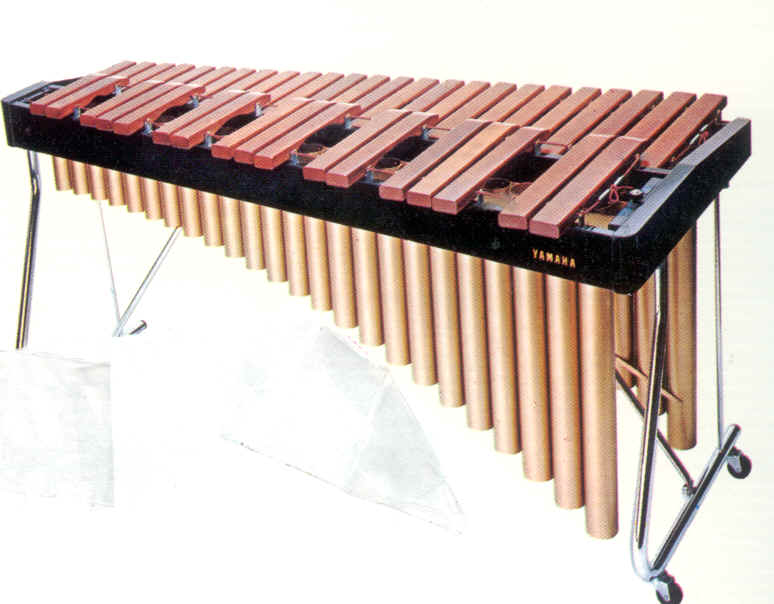
And the saxophone, sousaphone, zither and xylophone
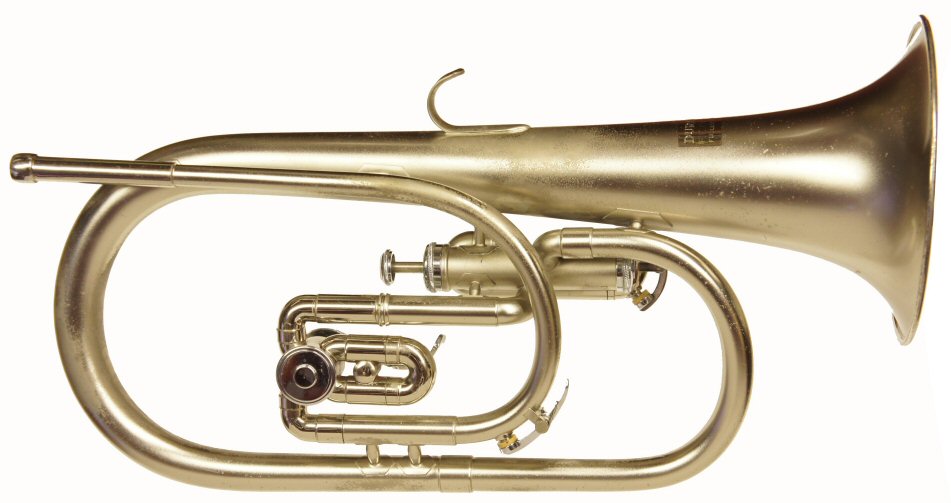
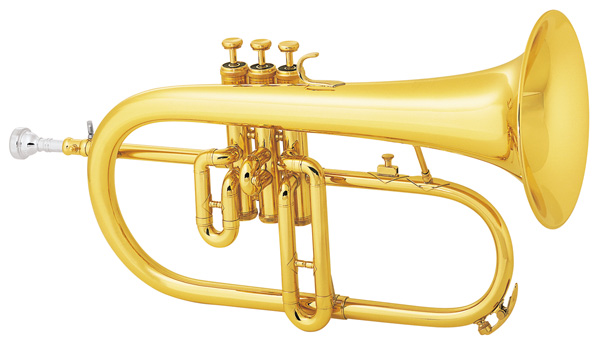
Clarinet, buglehorn, fiddle and flugelhorn
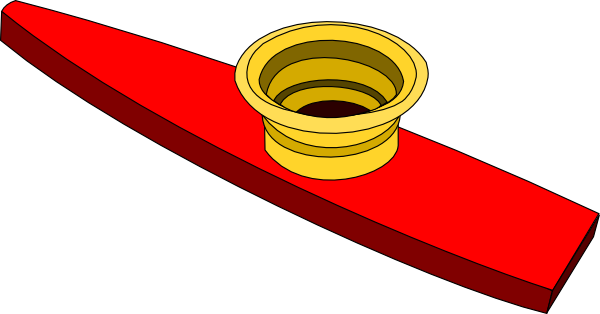
Tinny kazoo and the timpani, too
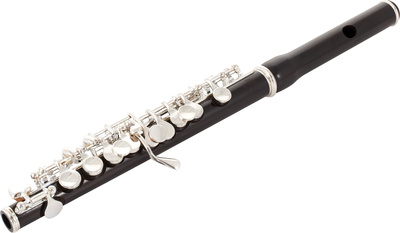
And the piccolo, piccolo


Now some of you children may be very surprised to hear that the symphony is not only music, but that it always tells a story. Which has a beginning, a middle, and an end. Except for the unfinished symphony, which has a beginning.... As I was saying

If you listen you will hear
From the corner of your ear
How the oboe she makes love to the bassoon
And the fife goes diddle, diddle
And the fiddle's in the middle
And the dish ran away with the spoon.

Heh, heh, heh, that's what she did. Well, so. Now we tell the story. Which starts with the first movement. Presto vivace argomento molto, cantabile molto, chocolo molto. And we have the first theme which is naturally the theme of the little fiddle.

Now this little fiddle is a young girl who lives with her wicked guardian, which is a french horn. Now this young girl, who is a beautiful girl, and her wicked guardian live all alone on a farm. And all she has for company are a hen, and a dog, and a nanny goat.

Now, one day when her wicked guardian, the french horn, is upstairs busy washing his coils along came a handsome young trumpet. When he clasps his eyes on the little fiddle his heart went zing (musical noise). And he gets so excited he has a big cadenza, which is a solo passage in triple time.

This brings us to the second movement, when the little fiddle is happy, and the trumpet is happy. When suddenly, out stalks the french horn. Ehhhhhh, what's going on here says the french horn. The little fiddle is so "putrified" her bridge falls out. But the trumpet says, we love each other. But the french horn is very objectionable to this marriage. And the trumpet blows his top, ah shut up!

Now I know who you are, you are not the french horn at all. That (nice music) had me fooled for awhile but the (bad music) gave you away. You are a glockenspiel in disguise beyond a doubt wanted by the police for drowning twelve little fiddles out. The glockenspiel tries to escape to his flat but the animals are too sharp for him.

Ow, in the leg!
Ow, in the neck!
Ow, in the face!

Ow, in the other place!

The glockenspiel is trapped, his escape they are foiling, so he jumps into a kettle drum, which is boiling.

INSTRUMENTS MENTIONED
IN THE SONG
bassoon
bugle
clarinet
fiddle
fife
flugelhorn
french horn
glockenspiel
kazoo
kettle drum
(timpani)
oboe
piccolo
saxophone
sousaphone
timpani
trombone
trumpet
tuba
xylophone
zither

Saturday, July 12, 2014

INTRODUCTION TO MUSICAL INSTRUMENTS and the ORCHESTRA VIDEOS

ORIGINS OF THE ORCHESTRA
Horrible Histories Prom 2011
Bob Hale: Orchestra Report (Humor)
https://www.youtube.com/watch?v=IcCg4mHmkZk
==============================================
Instruments of the
Symphonic Orchestra
Part One
Part one to the "Instruments of the Symphonic Orchestra" covering strings and brass.
Instruments of the
Symphonic Orchestra
Part Two
Part two to the "Instruments of the Symphonic Orchestra"
covering woodwinds and percussion.
==============================================

Lets Go to the Symphony!

Nashville Symphony

==============================================
Toot Whistle Plunk and Boom
Disney '53
https://www.youtube.com/watch?v=8iVf0p
PHvjc&list=RDC_ipa4JzNNc&index=6
https://www.youtube.com/watch?t=15&v=8iVf0pPHvjc
==============================================
Happy and You Know It 
Melody Street
==============================================
The Orchestra Song
Spotlight on Music Series for Fifth Grade:
Sara Wilshire Bibee

Garage Band and iMovie were used to create the video and audio. Bibee is

not a voice person at all. She was just trying to make a model for her

students showing them that anyone can sing in multiple parts.
==============================================
Introduction to the Orchestra
Antoinette, the Clarinet 3:02
Knute, the Flute 2:57
Bobo, the Oboe 3:07
Muldoon, the Bassoon 2:45
Crumpet, the Trumpet 2:48
Poobah, the Tuba 2:56
Monsieur Forlorn, the French Horn 3:04
Mike Malone, the Slide Trombone 2:51
Lucy Lynn, the Violin 3:07
Mellow Fellow, the Cello 2:39
Nola, the Viola 3:02
Lovelace, the Bass 2:56
Peter Percussion 1:30
Max, the Saxophone 1:27
Mort, the Pianoforte 1:38
Lady Harp 1:53
The Orchestra-First movement 1:37
Second Movement 1:53
Third Movement 1:42
Fourth Movement 1:47
==============================================
Variations and Fugue on a theme of Purcell, Op. 34 
Benjamin Britten
(Without Narration)
https://www.youtube.com/watch?v=3HhTMJ2bek0

Variations and Fugue on a 
theme of Purcell, Op. 34
Benjamin Britten
(Narrated by Peter Pears. 1955)
Philharmonia Orchestra conducted by Igor Markevitch
==============================================
Bolero by Ravel
Wiener Philharmonic
Conductor: Gustavo Dudamel
https://www.youtube.com/watch?v=KK23BhEQVyU
Ravel, a master of orchestral textures and effects,
himself claimed that Bolero was 
"seventeen minutes of orchestration without music"
in which he has each instrument and then groups
of instruments introduce the melody. Subtly, Ravel
builds the piece not by developing his melodic idea,
or his rhythm, but by adding instruments, which
builds to an incredible climax.


This is a great piece to learn
the instruments individually.


A sparse accompaniment begins the piece with plucked
strings (pizzicato) punctuating each beat of the bar;
playing this figure virtually for the entire work.

The first instrument to enter with the melody is the flute
next to be followed by the clarinet and then the bassoon
playing the melody in a high register (for a bassoon).

Can you guess what the next instrument is?
1. ____________ (hint: it is a high-pitched woodwind
instrument, the little sister of the second
instrument that played.)

An instrument rarely featured is next. Hear the sweet
and unique sound of the oboe d’amore; a double reed
instrument in the oboe family. Unlike the oboe, it has
a pear-shaped bell at the bottom of the instrument.
While it is the mezzo-soprano of the oboe family,
lower and deeper than the oboe, the English horn
is the alto, the largest and lowest sounding of the
three instruments. It appears later in the piece. 

The tenor saxophone, rare in a symphony orchestra
piece, adds to the jazzy feel of the work. Soon another
saxophone enters with the melody called the
2. __________________.

Ravel starts intensifying the melody with the entry of
the horn, two piccolos and the celeste which has a
bell like quality but it is a 3. _____________ instrument.
Unusually enough, while the horn plays the melody in
the original key, Ravel has the celeste and two piccolos
play it in two different keys. 

Later, an American composer uses this technique.
In fact, often he put different melodies together in
different keys. Can you name him? 
4. ________________________

The next entry of the melody is a great opportunity
to see the relative sizes of the oboe, oboe d’amore,
and English horn and to hear them together. 

Perhaps the wildest version of the melody is the
"jazzed" up trombone rendition. At this late point in
the piece the "singers" of the orchestra, the violins,
finally enter with the melody. Using mainly the higher
instruments, Ravel builds the suspense. 

The snare drum player gets reinforcement as a second
snare drum is added. Soon the entire orchestra is
playing with all their might. There is a sudden surprise
just before the end. Ravel aurally shocks us by
switching the key briefly. 

With great fanfare, the bass drum, cymbals and tam-tam
enter just six bars from the end. Watch as the
trombones move their instrument slides toward their
faces. This raucous sound is called "glissandos" or
glides. Ravel holds us captive for a moment on a
dissonant and remote chord at the very end
before the great finish.


QUIZ ANSWERS
1) E-flat clarinet,
2) soprano saxophone
3) keyboard
4) Charles Ives

==============================================
Musical Instruments 
Part 1 of 2
(Jocelyn Moellering)

Musical Instruments 
Part 2 of 2
(Jocelyn Moellering)
==============================================
"I Am a Fine Musician"
I Am a Fine Musician is a variation on the
 German folk song Ich bin ein Musikante.
from The Dick Van Dyke Show

http://mifasollapisdecor.blogspot.com/2012_11_01_archive.html
(Sally)
I am a fine musician
I practice every day
And people come from miles around
Just to hear me play
My trumpet, my trumpet
They love to hear my trumpet.
Ta-tada-ta-ta, ta-tada-ta-ta, ta-ta, ta-ta, ta-a-a…

(Buddy)
I am a fine musician
And I get lots of pay
And people throw me money
When they hear me play*
My tuba, my tuba
They love to hear my tuba.
(NOTE: Morey Amsterdam sang it differently each time they did it. The other version
is "And when I play my tuba/People throw money my way.")
Oompa, Oompa, Oompa, Oompa, Oompa, Oompa, Oompa, Oomp
Ta-tada-ta-ta, ta-tada-ta-ta, ta-ta, ta-ta, ta-a-a… 

(Rob)
I am a fine musician My music is so gay
And everybody dances
When they
hear me play
My trombone, my trombone
They love to hear my trombone
Daa-daa, daa-daa-daa, Daa-da-daa-daa, Daa-daa-daa
Oompa, Oompa, Oompa, Oompa, Oompa, Oompa, Oompa, Oomp
Ta-tada-ta-ta, ta-tada-ta-ta, ta-ta, ta-ta, ta-a-a…

(Laura)
I am a fine musician That's what the people say
And all the children follow me
When they hear me play
My piccolo, my piccolo
They love to hear my piccolo
Deedle-ee dee dee, Deedle-ee dee dee,
Deedle deedle dee-dee deedle-deedle dee
Daa-daa, daa-daa-daa, Daa-da-daa-daa, Daa-daa-daa
Oompa, Oompa, Oompa, Oompa, Oompa, Oompa, Oompa, Oomp
Ta-tada-ta-ta, ta-tada-ta-ta, ta-ta, ta-ta, ta-a-a…

(All Together)
We all are fine musicians
We practice every day
And if you'd like to join us
We'll show you the way
Come join us
Come join us
Come take a part and join us
(As they walk off one by one)
Ta-tada-ta-ta, ta-tada-ta-ta, ta-ta, ta-ta, ta-a-a…
Oompa, Oompa, Oompa, Oompa, Oompa, Oompa, Oompa, Oomp
Daa-daa, daa-daa-daa, Daa-da-daa-daa, Daa-daa-daa
Deedle-ee dee dee, Deedle-ee dee dee,
Deedle deedle dee-dee DEEDLE DEEDLE DEE!!
==============================================
http://www.classicsforkids.com/music/orchestra.asp

WORKSHEETS
==============================================
On my blog site see also:


==============================================
SOME WORKSHEETS
Instruments of the Orchestra
            STRINGS                                          PERCUSSION
WOODWINDS                                             BRASS
Orchestra Seating Chart
 
Do You Know the Instruments?
Orchestra Collage
Do You Know the Instruments Worksheet