"Art is a kind of illness."
AUTHOR: Giacomo Puccini
 MEANING OF THE QUOTE:
"A true artist is addicted to his art."
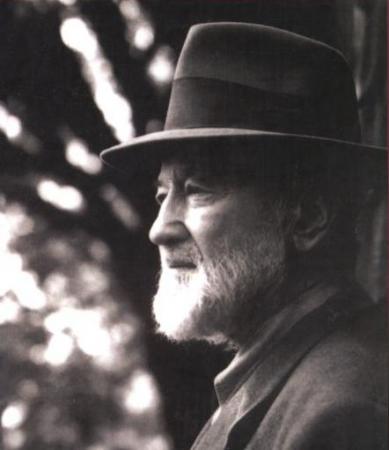
COMPOSER
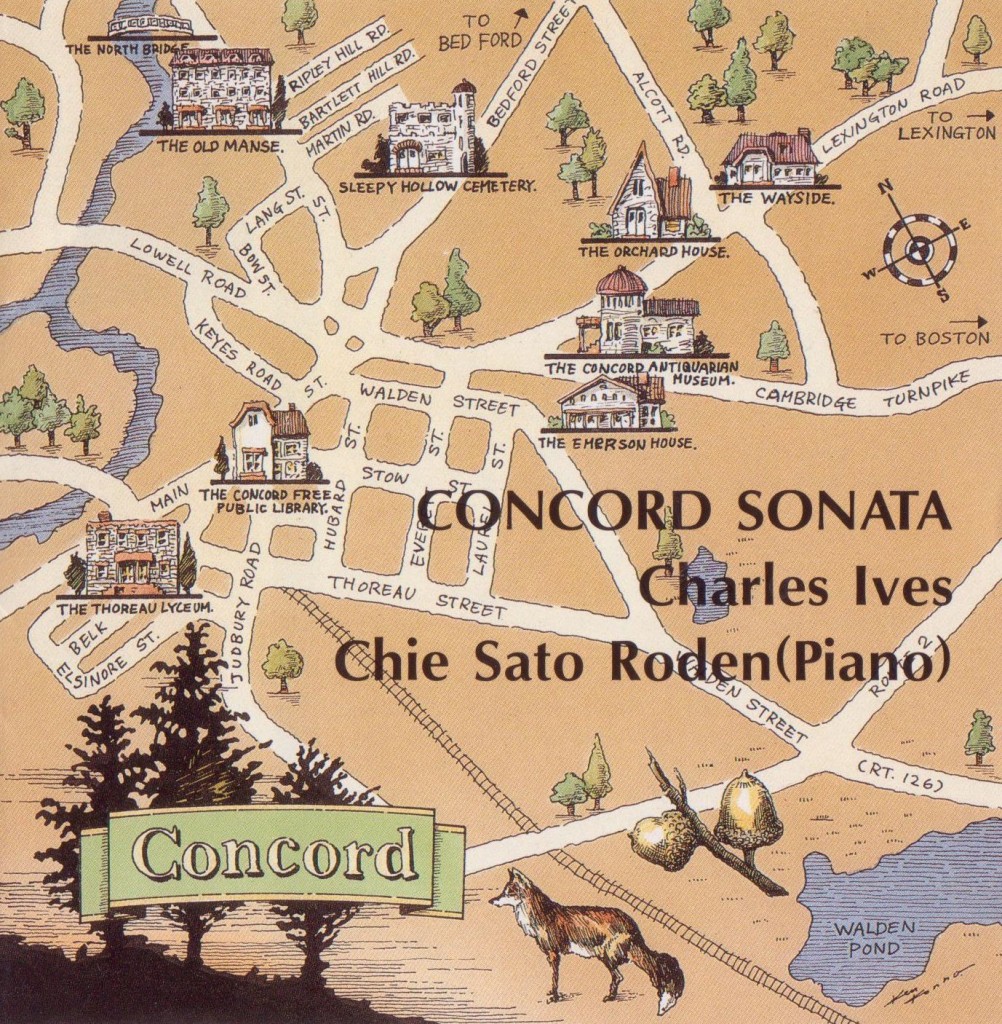
PIANO SONATA NO. 2
"CONCORD" III: THE ALCOTTS
John Kirkpatrick, Piano

PIANO SONATA NO. 2
"CONCORD" III: THE ALCOTTS
Charles Ives, Piano
PIANO SONATA NO. 2
COMPOSER
IVES

SEE HOW
MUSIC AND LITERATURE
INTERCONNECT
Charles Ives came from New England
and often wrote his music about the
famous people and events
that came from there.
 |
| The Old North Bridge: Concord, Massachusetts |
The four movements of the Concord Sonata
are titled "Emerson," "Hawthorne," "The Alcotts,"
and "Thoreau" after four famous American authors
who lived from approximately 1840-1860.
Ives did not originally conceive the
Concord Sonata as a four-movement work for
solo piano but rather as four separate orchestral
works, part of a collection he had dubbed
"Men of Literature."
Emerson, Hawthorne, Thoreau,
and the Alcotts all lived near each other in
Concord, Massachusetts and espoused
American Transcendentalism
in their writings.
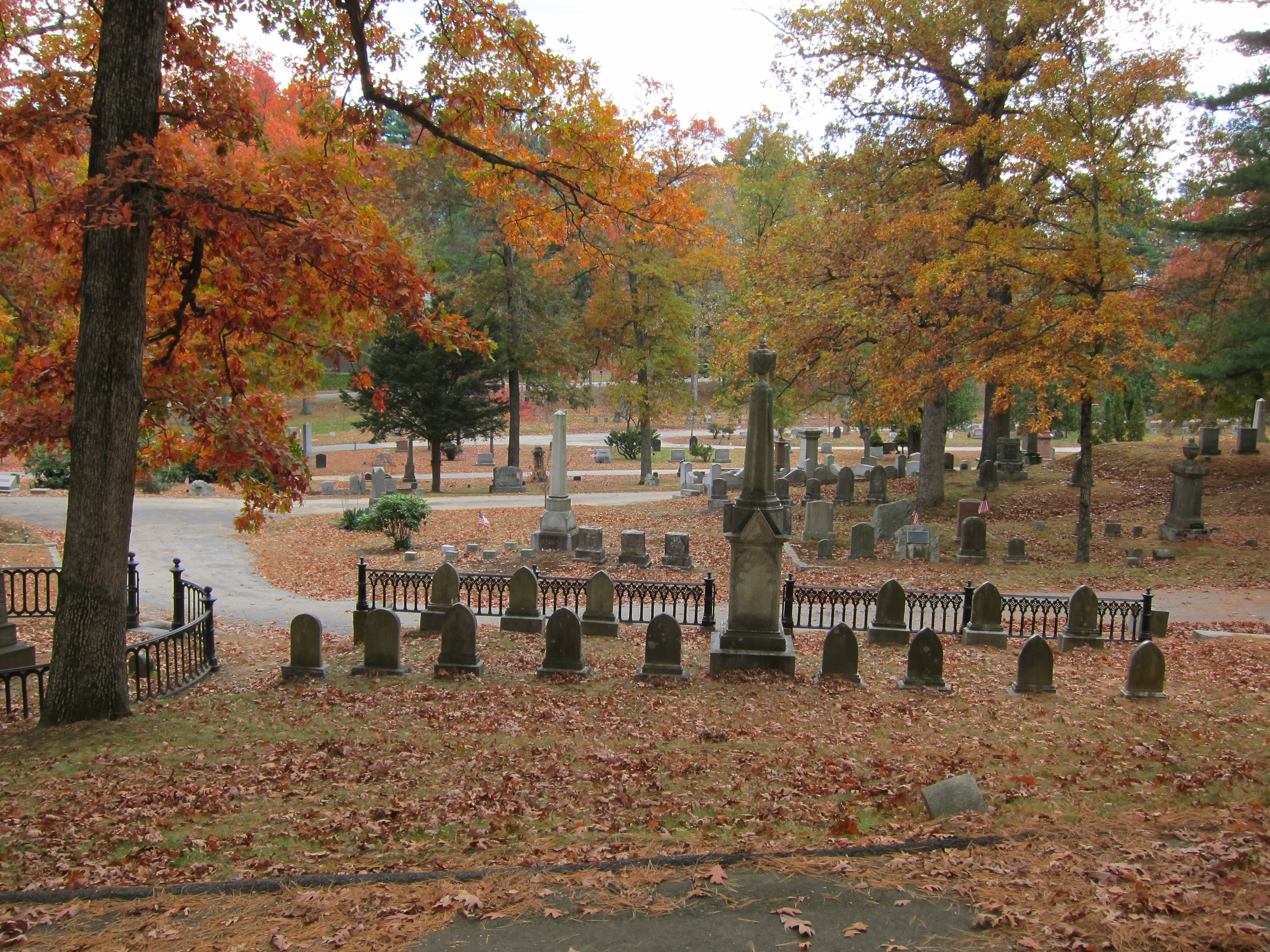 |
| Author's Ridge |
They were all buried at what is called
"Authors Ridge" in Concord's
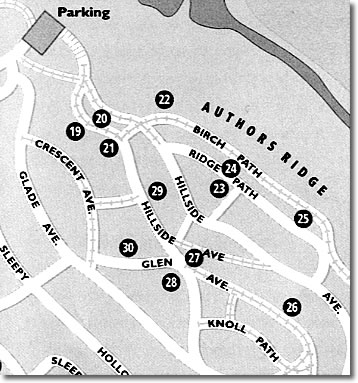 |
| 19. Henry David Thoreau 20. Nathaniel & Sophia Hawthorne 21. Alcott Family 23. Ralph Waldo Emerson & Family |
PIANO SONATA NO. 2
"CONCORD"
Complete
Gilbert Kalish, Piano
I: Emerson
II: Hawthorne
III: The Alcotts
III: Thoreau
The sonata is built on two motifs.
One, epic in nature, consisting of three
repeated
notes and a drop of a third
to the fourth note; similar to
the opening
motif of Beethoven's
Fifth Symphony.
 |
| In one of the most thrilling passages from "Emerson," Ives reharmonizes the famous motive; he takes Beethoven, and dirties him up, with a glorious bluesy intensity. |
BEETHOVEEN SYMPHONY NO. 5
Movement 1
Arturo Toscanini, Conductor
"Ives drew a connection between the philosophy
of Emerson and the compositions of Beethoven,
ending his Essay on Emerson by writing: There
is an 'oracle' at the beginning of the Fifth
Symphony—in those four notes lies one of
Beethoven’s greatest messages. We would
place its translation above the relentlessness
of fate knocking at the door...and strive to bring
it toward the spiritual message of Emerson’s
revelations—even to the ‘common heart’ of
Concord— the Soul of humanity knocking at
the door of the Divine mysteries, radiant in
the faith that it will be opened—and that
the human will become the Divine."
The second motif is lyrical and moves mostly
in conjunct motion. There is usually some
interweaving of the two, whenever they appear.
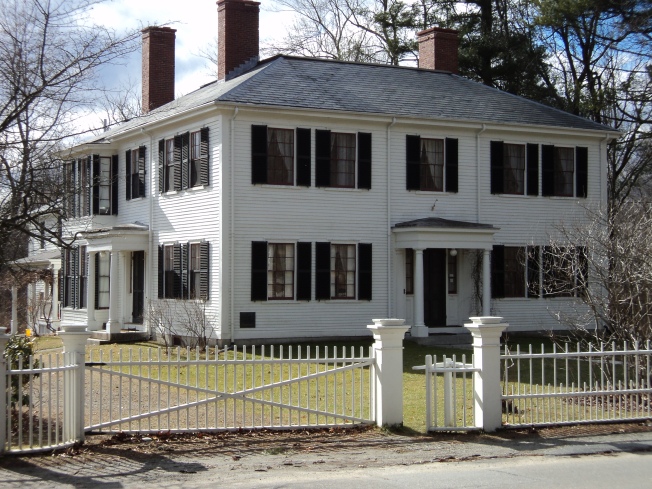 |
| Bush: Emerson's House |
 |
| Ralph Waldo Emerson |

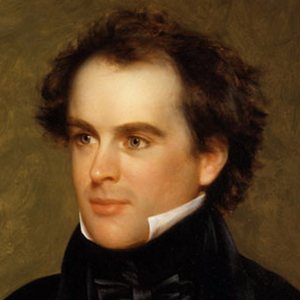 |
| Nathaniel Hawthorne |
 |
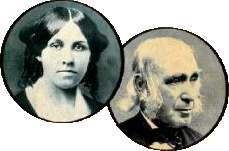
| The Orchard House: Alcott's Home |
"CONCORD" III: THE ALCOTTS
John Kirkpatrick, Piano


PIANO SONATA NO. 2
"CONCORD" III: THE ALCOTTS
Charles Ives, Piano
Charles Ives begins this piece with a
4-note motive (as Beethoven does in his
5th Sympony) and then uses it, often
5th Sympony) and then uses it, often
in variation, as the basis for the rest
of the composition.
Compare the introduction of Ives' piece
Compare the introduction of Ives' piece
with the beginning of "Every Little Kiss"
by Bruce Hornsby and the Range.
The melody of the song is based on the
introduction which was borrowed from Ives.
by Bruce Hornsby and the Range.
The melody of the song is based on the
introduction which was borrowed from Ives.
EVERY LITTLE KISS
Bruce Hornsby and the Range
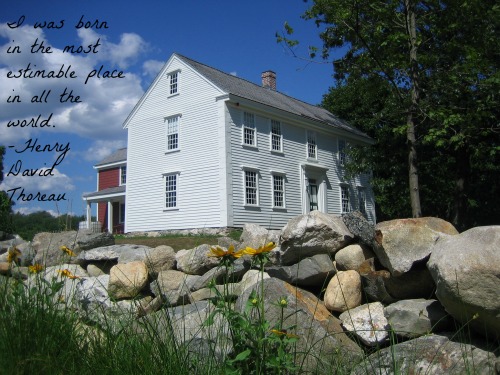 |
| Thoreau's Farmhouse and Birth Place |
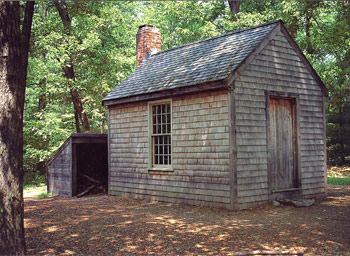
"CONCORD" IV: THOREAU
 |







.jpg)

.jpg)
.jpg)
.jpg)
.jpg)
.jpg)