Showing posts with label Beethoven. Show all posts

Monday, January 13, 2014

BEETHOVEN: A&E FILM (CLASS NOTES TAKEN FROM THE A&E FILM)


WATCH BEETHOVEN'S PICTURE BEING
"SPEED" PAINTED:

Ludwig van Beethoven's signature (image)

01. Beethoven had genius.

02. Genius possesses a man.

03. Born in Bonn, Germany 1770 from a musical family.
View of Bonn
Bonn during Beethoven's Time Period
04. There was a revolt in Europe. Aristocrats who ran Europe were on their way to collapse.

05. Grandfather Ludwig (his name sake) worked for the courts.
06. Johann (his father) tried to be Beethoven's piano teacher 
but was cruel to him; beat him.
Beethoven - Liebig's card in Italian

07. Johann wanted Beethoven to be a child prodigy like Mozart 
and hoped to make money off of him.

08. Beethoven thought the world was a dangerous place and 
felt it was dangerous to trust people. 
He became a loner.

09. He threw all his efforts into playing the piano to escape the real world.

10. He quit school at age 10 to focus on his music.

11. The late 18th Century was known as the "Enlightenment Period" because during this time 
the common people gained liberty from the aristocrats and were taking control over their own governments 
(ideas advocated by the famous philosophers Voltaire and Kant).
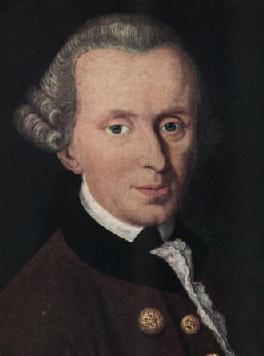
Gant                                                              Voltaire

12. Beethoven felt that music had the power to transform people and 
should not be used purely for entertainment purposes.

13. Beethoven was inspired by his teacher Christian Neffe.

14. He was sponsored to go to Vienna, Austria, a famous city of the arts 
centralized in Europe, where he could prove himself musically.

Vienna, 1850
15. People, during the Enlightenment, broke with old, conventional rules just 
as Beethoven started to break with the old music styles.

16. During this time, Vienna was considered the musical and cultural capital of the world.
17. Beethoven wanted to meet and hoped to study with Mozart (who was living in Vienna). 


After hearing Beethoven play Mozart was impressed and said, 
"Watch out for this boy, one day he will give the world something to talk about."

18. Though Beethoven wanted to stay and study with Mozart 
he was called home to take care of his sick mother. 
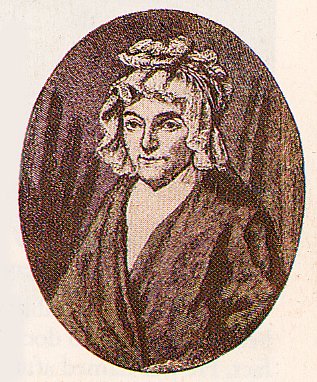
Beethoven's Mother:
Maria Magdalena Keverich (1746-87)
 
When Beethoven finally was able to return to Vienna, years later, Mozart had died.

19. After his mother died his father took to drinking a lot and Beethoven 
became the head of the family,
financially taking care of his father and brothers.

20. He worked at the Bonn court playing the viola.
Bratsche
Beethoven's Viola
21. At this job he started to compose. 
One piece, dedicated to Franz Joseph II (a leader in the Enlightenment), 
Franz Joseph II of Austria
 was so difficult to play that some musicians refused to perform it. 

22. It is thought that perhaps Beethoven wanted the performers to feel the same anguish as him. 
To him the expression of the music came first and it was of no concern to him 
if the performers found it hard to play. 

23. During the French Revolution (1789) Beethoven's music embodied 
the upheavals shaking Europe.
The Storming of the Bastille
The aristocrats grip on power was collapsing. 

24. Joseph Haydn, a famous Viennese composer and contemporary of Mozart, 
offered to teach Beethoven in Vienna 
(where aristocrats still were the major source for financial backing of the arts). 
There Haydn could also introduce him to the people 
who would be able to "bank roll" his career.

25. Beethoven wanted to get a reputation as a different musician. 
His music was emotional; a style never heard before.

26. After obtaining financial backers for his music he made it clear that 
he might be financially subsidized but he could not be bought. 
He would not change his music for any amount of money.

27. Beethoven's, mood swings and temper were legendary; like his music.

28. He had a big ego and felt he was better than the aristocrats who sponsored him 
although he would dedicate pieces to his patrons (sponsors). 

29. He liked people to speculate that the name "van" in the middle of his name 
meant he was of noble birth. 
But, the "van" meant nothing of the sort. 
("Von" means noble and "van" means common).

30. Just as he is beginning to get fame he starts to hear a "ringing" in his ears.

31. His first symphony was written at age 30.

32. He fell in love with one of his pupils
Juliet Gvichchardi

and wrote the famous "Moonlight Sonata" for her. 


But, since she found out that Beethoven had no royal title 
she left him and married a count 2 years later.

33. The ringing in his ears was the beginning of a hearing loss 
that would progress eventually into deafness. 
As the hearing loss worsened so did his raging temper; 
becoming violent, abusive, and physical.

34. For a long time he would not tell anyone about his hearing problem.

35. He was terrified that he would lose his hearing and 
knew when he couldn't hear the church bells ring near his house 
that his hearing would soon be totally gone.

36. Music was Beethoven's therapy and he vented his rage through it. 
During this time he wrote many fine compositions; he heard the music in his head.

37. Looking "fate" in the face he decided to use his disadvantages as his advantages.

38. Beethoven idolized Napoleon as an enlightened leader so he dedicated his third symphony to him. 
When Napoleon took over France and declared himself Emperor, 
Beethoven tore up the dedication and renamed the symphony "Heroic" or "Eroica."
Beethoven - Liebig's card in ItalianBeethoven and his Eroica Symphony (image)
39. As he became more deaf, he struggled to recapture the beauty of nature 
with his sixth symphony called the "Pastoral." 
He wanted the music to sound like things he would never hear again: 
wind, bird songs, sunlight, storms, etc.

40. Beethoven was always falling in love with aristocratic women 
who did not want to marry him because he was a commoner.

41. After he could not hear his own piano playing he quit performing 
concerts and spent all his time composing.
Beethoven composing in his study (image)
42. To help him hear himself compose his seventh symphony 
it is said that he resorted to placing his ear on the piano and even resorted to sawing 
the legs of the piano in order to have the instrument close enough to the ground so he could
place his ear on the floor to hear the vibrations.
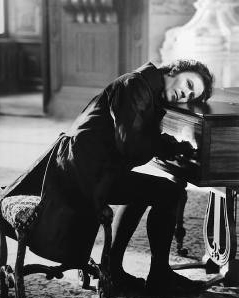
43. The deafer he became the more he withdrew within himself 
and threw all his emotions into his music.

44. The idea of a free Europe where people could govern themselves 
was the basis for his only opera called "Fidelio."
45. When Beethoven's brother died he wanted to get custody of his nephew 
Nephew Karl van Beethoven
(1806-1858)
feeling that he could be the father he never had. 
He battled in court for custody against the wishes of his family 
during which he showed himself as a mean and selfish man 
who became publically humiliated when it came out in trial that 
he was not of noble birth as he had led everyone to believe.

46. After the court case, he became even more isolated and stopped taking care of himself. 
Friends abandoned him and it seemed that his whole life was a mess. 
But, as the outside was falling apart, his inside was writing the most beautiful music.

47. As his life is fell apart he turned to the church 
and decided to write a Mass called the "Missa Solemnis." 
He is used music to try to put all his thoughts and ideas in order; 
to make sense of all that is happening to him. 
Beethoven Composing Missa Solemnis

48. At this time he also writes a series of string quartets.

49. By the time he writes his ninth (and last) symphony he is totally deaf. 
It has passionate and optimistic music and uses the famous poem by Schiller, 

"Ode to Joy," 
setting it to music in the 4th movement and then adding a chorus 
singing the poem's lyrics in an added 5th movement.

50. The poem "Ode to Joy" emphasizes brotherhood for all man kind.

51. This symphony was the first symphony to ever use a chorus 
and adding a 5th movement to the normal 4 movement format was also unusual.

52. At the premier of the symphony Beethoven could not hear the audience applaud.

53. Beethoven got sick before he could write his tenth symphony.

54. He died raising his fist in the air just as thunder from a terrible storm was heard.

55. Beethoven was the most famous celebrity of his day; 
a revolutionary hero and epitomized the struggle of an artist to overcome great odds 
for the sake of his art, lifting himself up from agony through his music.

56. To many, he is the symbol of music; he is immortal.

57. Beethoven once said, 
"Talent is what a man possesses, 
genius is what possesses a man." 
Beethoven was possessed.

58. Beethoven's hair, taken from his head after his death, 
has been analyzed to determine the actual cause of his death which was lead poisoning.


TERMS/NAMES
TAKEN FROM THE FILM NOTES
Germany
Johann Beethoven
prodigy
Enlightenment Period
Voltaire
Kant
Christian Neffe
Austria
Bonn
viola
Franz Joseph II
French Revolution
Joseph Haydn
Mozart
Vienna
subsidized
patrons
von
van
Moonlight Sonata
Napoleon
France
Emperor
Heroic
Eroica
Pastoral
aristocratic
commoner
Fidelio
Mass
Missa Solemnis
string quartets
Schiller
Ode to Joy
genius 


Beethoven:
The Sound and The Fury
A&E WORKSHEET

It is almost impossible not to have heard the stirring music composed by Ludwig von Beethoven. 
His immortal compositions have survived for generations and are as much a part 
of the modern world as they were almost two centuries ago. 

But the beauty of Beethoven’s music was born a midst the darkness of a tortured soul. 
This angry, belligerent, and hostile man lost his hearing before he was thirty, 
yet continued to produce some of the world’s greatest music.

Beethoven: The Sound and the Fury would be useful for classes on 
European History, Western Civilization, World Culture and Music. 
It is appropriate for middle school and high school.

Vocabulary

Discussion Questions
  1. Beethoven was undoubtedly a genius. But what is genius? What is the price of genius? Who else in history has possessed genius?
  2. Beethoven’s father was an abusive alcoholic. How did Beethoven’s father and childhood affect Beethoven’s life and career?
  3. Beethoven was a surly, ill-tempered man. What were the roots of his bitterness and bad temper?
  4. Why is Beethoven’s music so difficult to play?
  5. Beethoven spent his life in the courts of Vienna but he was not a nobleman. Discuss the class implications of Beethoven’s life at court.
  6. Why was Beethoven embarrassed about his hearing loss?
  7. How does Beethoven’s music reveal his inner rage? Do you think his music would be different if his temperament had been different?
  8. Beethoven lost his hearing by the time he was thirty. How did this hearing loss affect him?
  9. How did he continue to compose such beautiful music despite his hearing loss?
  10. What was Beethoven’s contribution to the world of music?
Extended Activities
  1. Compare the music of Beethoven to the music of Mozart. What are the differences in their musical styles?
  2. You might not realize it, but you probably hear Beethoven’s music almost daily. Identify Beethoven’s music in everyday life.
http://www.aetv.com/class/admin/study_guide/archives/aetv_guide.0265.html

Learn about Beethoven's life "cartoon" style:

Tuesday, April 26, 2011

BEETHOVEN SYMPHONY #5


THERE ARE MANY VERSIONS

OF BEETHOVEN'S 5TH SYMPHONY.
HERE ARE SOME INTERESTING ONES I FOUND:

Beethoven: Symphony No. 5


Fantasia 2000 -

L. V. Beethoven "Symphony No.5/1"http://www.youtube.com/watch?v=a3pdO-Y5ZKU


Beethoven 5th Symphony

(No. 5, graphical score animation, allegro)http://www.youtube.com/watch?v=rRgXUFnfKIY


Liszt transcription of

Beethoven Symphony No. 5 op.67


Apocalyptica -

Beethoven's Symphony No.5


Beethoven symphony no 5


Beethoven's Fifth, Symphony No. 5


Glass Harp Music


Argument to Beethoven's 5th
http://www.youtube.com/watch?v=EEhF-7suDsM


Rockin' Beethoven


Beethoven: Symphony Number 5 Guided Tour
"This is a Guided Tour of Beethoven's 5th Symphony via explanatory subtitles. This symphony, conducted here by Toscanini, is in four sections, called movements. The first movement, in this video, is fast and is in sonata form. Sonata form means that it comes in four sections: an Exposition, where the main themes of the movement are laid out, a Development where those themes are broken down and played with, a Recapitulation where the themes return and a Coda, where everything comes to a close. These moments and other musical highlights will be pointed out by the subtitle track."

BEETHOVEN SYMPHONY #7 (FIELD TRIP SELECTION)


TO VIEW THE ENTIRE BEETHOVEN SYMPHONY #7 CLICK ON THIS LINK:


About The Piece
Beethoven's Symphony #7

Composed: 1811-1812
Length: c. 35 minutes
Orchestration: 2 flutes, 2 oboes, 2 clarinets, 2 bassoons, 2 horns, 2 trumpets, timpani, and strings

First Los Angeles Philharmonic performance: April 1, 1921, Walter Henry Rothwell conducting

“It is a composition in which the author has indulged in a great deal of disagreeable eccentricity. Often as we now have heard it performed, we cannot yet discover any design in it, neither can we trace any connection in its parts. Altogether, it seems to have been intended as a kind of enigma – we almost said a hoax.”

So wrote a critic in London’s influential Harmonicon in July of 1825, a full 13 years after Beethoven’s Seventh Symphony was introduced in Vienna. While that concert, which also featured the first performance of the bellicose Wellington’s Victory, was enthusiastically received by the public – the Wiener Zeitung reported that “...the applause rose to the point of ecstasy” – the A-major Symphony was savagely assailed by virtually all of the critics, including Carl Maria von Weber, who dismissed it as the work of a madman. Ironically enough, this giddy, impetuous swirl of motion, which Wagner in a famous pronouncement called the “Apotheosis of the Dance,” was written during one of the darkest and most difficult periods in the composer’s life.

By the summer of 1812, when the work was taking its final form, the French army had invaded Russia, thus launching the most savage phase of the Napoleonic Wars. Amid the universal turmoil, Beethoven was suffering innumerable shocks within his own silent hell. This was the period of those ardent, pathetically hopeful letters to “The Immortal Beloved,” the great unrequited love of his life. It was also a time when the illness which had destroyed his hearing began manifesting itself through other disturbing symptoms: the constant, excruciating intestinal pain, and the first signs of the serious liver disorder that would eventually kill him.

Except in its heart-rending second movement, the ebullient, life-affirming A-major Symphony shows no signs of either the social chaos or the private agony that surrounded its composition. Following the lengthiest of Beethoven’s symphonic introductions – in which a pair of simple, unadorned musical ideas are developed at majestic length – the first movement proper, marked Vivace, is announced by some chirping woodwinds who expand a bare but insistent rhythmic figure into light and graceful dance. While the movement reminded Hector Berlioz of a peasant round, the music is far too complex and refined for such a description – unless the peasants happened to be members of the Kirov corps de ballet. After a development section in which the irresistible power of the dance figure nearly threatens to destroy the formal bonds which contain it, an even more uninhibited coda, over a droning five-note figure that rumbles out of the depths of the orchestra, brings the movement to its exultant close.

The essentially rhythmic organization of the Symphony is evident even in the melancholy second movement, marked Allegretto. After a somber woodwind chord, the lower strings present the hushed, march-like pulse from which the entire movement will grow. Fugal countermelodies in the violas and cellos are woven around the principal subject, which eventually gives way to a second, flowing melody in the clarinets and bassoons. A mysterious passage rises to a tremendous climax, after which fragments of the principal theme rustle like leaves in the various sections of the orchestra.

The slapdash Scherzo is among the most impetuous and light-hearted symphonic movements that Beethoven ever wrote. The Presto section is buoyant, witty, and full of colorful, explosive contrasts. The Trio is built on an alternately tender and noble melody for the clarinets, bassoons, and horns, which ends with a sleepy string figure bearing a striking resemblance to the tune of “Good Night, Ladies.” Both sections of the movement are repeated with minor variations, although when the Trio attempts to return for a third and final time, it is rudely cut off by five impatient staccato chords.

The whirlwind Finale, marked Allegro con brio, is a frenetic, uninhibited dance in which one furious climax follows another in a welter of moiling, though perfectly controlled and unfailingly good-natured, commotion.

http://www.laphil.com/philpedia/piece-detail.cfm?id=9


Notes on Beethoven's Seventh Symphony


by Christopher H. Gibbs

June 11, 2006 - By the mid 1810s Beethoven was recognized far and wide as the preeminent living composer. That did not mean, however, that he was the most popular, published, or often performed. Rossini was emerging as a new force in the musical world, and his prominence extended far beyond the opera house; arrangements for every conceivable combination of instruments took his music into home, café, and concert hall. Beethoven's imposing historical stature can obscure our appreciation of how in his own time he sought to juggle fame, popularity, and artistic innovations.

Greatness and Popularity
Many of what are today considered Beethoven's most highly esteemed compositions, especially ones from late in his career, were initially received with a complex mixture of admiration, bewilderment, and resistance. But there were also works that were truly popular or at least aimed to be so. These pieces tend to be much less familiar today than when they were the favorites of his contemporaries: Wellington's Victory, the oratorio Christ on the Mount of Olives, the Septet, and his best-loved song, "Adelaide." Occasionally, Beethoven wrote something that was immediately recognized as both artistically great and hugely popular. An example is the second movement of his Seventh Symphony, a piece that was often performed separately from the complete Symphony and that may have been Beethoven's most popular orchestral composition. It also exerted extraordinary influence on later composers, as the slow movements of Schubert's "Great" C-major Symphony and E-flat Piano Trio, Mendelssohn's "Italian" Symphony, Berlioz's Harold in Italy, and other works attest.

After its premiere, the Seventh Symphony was repeated three times in the following 10weeks; at one of the performances the "applause rose to the point of ecstasy," according to a newspaper account. The Leipzig Allgemeine musikalische Zeitung reported that "the new symphony (A major) was received with so much applause, again. The reception was as animated as at the first time; the Andante [sic] (A minor), the crown of modern instrumental music, as at the first performance, had to be repeated." The Symphony's appeal is not hard to understand. In scope and intensity, it is fully Beethovenian, and yet it does not place quite as many demands on the listener as does the "Eroica." The ambition of the first movement, beauty of the second, the breathlessness of the scherzo, and relentless energy of the finale did not fail to impress audiences. Beethoven himself called it "one of the happiest products of my poor talents."

Celebrating Victory
Beethoven wrote the Symphony in 1811-12, completing it in April. It was premiered at one of his most successful concerts, given on December 8, 1813, to benefit soldiers wounded in the battle of Hanau a few months earlier. Paired with the Seventh was the first performance of Wellington's Victory, also known as the "Battle Symphony." The enjoyment of the event was hardly surprising given what most members of the Viennese audience had been through during the preceding decade. Napoleon's occupations of Vienna in 1805 and 1809 had proven traumatic, but the tide had turned with the Battle of Leipzig in 1813. In June, the Duke of Wellington was triumphant against Joseph Bonaparte, Napoleon's younger brother, in the northern Spanish town of Vittoria, and within the year the Congress of Vienna was convened to reapportion Europe in the aftermath of France's defeat. After so much conflict and misery, impending victory could be honored and celebrated.

Later writers characterized the Seventh Symphony in various ways, but it is striking how many of the descriptions touch on its frenzy, approaching a bacchanal at times, and on its elements of dance. Richard Wagner's poetic account is well known: "All tumult, all yearning and storming of the heart, become here the blissful insolence of joy, which carries us away with bacchanalian power through the roomy space of nature, through all the streams and seas of life, shouting in glad self-consciousness as we sound throughout the universe the daring strains of this human sphere-dance. The Symphony is the Apotheosis of the Dance itself: it is Dance in its highest aspect, the loftiest deed of bodily motion, incorporated into an ideal mold of tone."

As biographer Maynard Solomon has keenly observed, the descriptions of Wagner and others seem to have a common theme: "The apparently diverse free-associational images of these critics—of masses of people, of powerful rhythmic energy discharged in action or in dance, of celebrations, weddings, and revelry—may well be variations on a single image: the carnival or festival, which from time immemorial has temporarily lifted the burden of perpetual subjugation to the prevailing social and natural order by periodically suspending all customary privileges, norms, and imperatives." Wellington's Victory gave a realistic imitation of battle between the English (represented by the song "Rule Britannia") and the French ("Marlborough s’en va-t’en guerre") and ends victoriously with variations on "God Save the King"—it is an effective but hardly subtle work. The Seventh apparently tapped into similar celebratory emotions vivid at the moment, but on a much deeper level that has allowed the Symphony to retain its stature ever since.

A Closer Look
The Symphony's dance elements, vitality, and sense of celebration are conveyed principally through rhythm. It is not the melodies that are so striking and memorable as the general sense of forward movement. (At times there is no melody at all, but simply the repetition of a single pitch.) The first movement (Poco sostenuto) opens with the longest of Beethoven's introductions—indeed the longest yet in the history of the symphony, that leads (by way of repeating just one note) into the main body of the movement (Vivace). The famous A-minor Allegretto is framed by the same unstable chord to open and close the movement. The form is ABABA with the opening section using a theme that is once again more distinctive for its rhythmic profile than for its melody. The movement builds in intensity and includes a fugue near the end.

The Presto scherzo brings out the dance aspect even more. As in some of his other instrumental works, Beethoven includes two trio sections. The Allegro con brio finale offers a tour-de-force of energy and excitement. As throughout the Symphony, part of the distinctive sound comes from Beethoven's use of the horns. The work is in A-major, which gives a brightness not found in the composer's earlier symphonies.
http://www.npr.org/templates/story/story.php?storyId=5481664


FREE AUDIO VERSION


Beethoven’s Symphony No. 7 was completed in 1812 and conducted its premier on December 8, 1813 in the University of Vienna. Beethoven’s Symphony No. 7 is widely viewed as a symphony of dance, where as, Wagner described it as “the apotheosis of the dance.” Its highly enjoyable, haunting 2nd movement was often most encored.
http://classicalmusic.about.com/od/onestopbeethoven/a/beethovensympho.htm


BEETHOVEN: MODERN RENDITIONS

HAPPY BIRTHDAY VARIATIONS 
BASED ON SOME FAMOUS PIECES BY BEETHOVEN 

Happy Birthday Dear Ludwig  
Variations in The Style of Beethoven
Leonid Hambro (1970) 

BEETHOVEN PICTURES