Showing posts with label JUNE 2013. Show all posts

Wednesday, June 5, 2013

WEDNESDAY, JUNE 5, 2013

QUOTE:
"A musician must make music, an artist must paint, a poet must write, if he is to 
  be ultimately at peace with himself."
AUTHOR: Abraham Maslow
MEANING OF THE QUOTE:
“To be truly content in life people must be able to express themselves through their
   their special talents."


COMPOSER
RAVEL


Pavane Pour Une Infante Defunte
A Pavane, Edwin Austin Abbey
http://vivoperlei-kat.blogspot.com/2010_07_01_archive.html

Conductor: Ozawa  


The Pavane (a slow Spanish dance that was first popular in the 15th and 16th centuries), written as a piano solo in 1899 when Ravel was 24, was immediately popular. Ravel orchestrated it in the version played today in 1910.  Ravel did not have a specific princess in mind, but rather a mood of a dance a princess might have danced long ago in a bygone era. The main theme is introduced by the horns, and from there it moves about the orchestra. The Pavane is deceptively simple, with an appealing charm and beauty.


GENERAL MUSIC
01.  BOW HOLD (USING NATURAL SHAPE OF FINGERS)
........a.  FINGERS PLACED ON TOP OF BOW WITH MIDDLE KNUCKLES
........b.  THUMB PLACED IN BETWEEN BOW STICK and HAIR LIGHTLY TOUCHING IN BETWEEN THE 2 
              MIDDLE FINGERS
........c.  PINKY MOVED TO SIT NATURALLY CURVED ON TOP OF BOW 
.............1)  PINKY IS THE BALANCE FINGER
........d.  SLIGHT ADJUSTMENT OF POINTER FINGER MIDDLE KNUCKLE ON TOP OF BOW
02.  BOWING ON THE SHOULDER
........a.  USING DIFFERENT PARTS OF THE BOW
.............1) FROG to MIDDLE (TRIANGLE to SQUARE) USE OF ELBOW and SHOULDER
.............2) MIDDLE to TIP (SQUARE TO TRAPEZOID) USE OF ELBOW

ADV. STRINGS
JUNE 5th 5:00 PM (4:30 CALL TIME) DEDICATION FOR PATRICK'S GARDEN 
VOLUNTARY PARTICIPATION TO PLAY "STAIRWAY TO HEAVEN"
ICE CREAM PARTY IN MR. ROA'S ROOM

BEG. STRINGS
ICE CREAM PARTY IN MR. ROA'S ROOM

Tuesday, June 4, 2013

TUESDAY, JUNE 4, 2013

QUOTE:
"The pause is as important as the note."
AUTHOR: Truman Fisher
MEANING OF THE QUOTE:
“There is no music without both sound and silence; it is the silence that makes the rhythm by 
  separating sounds into patterns."


COMPOSER
RAVEL

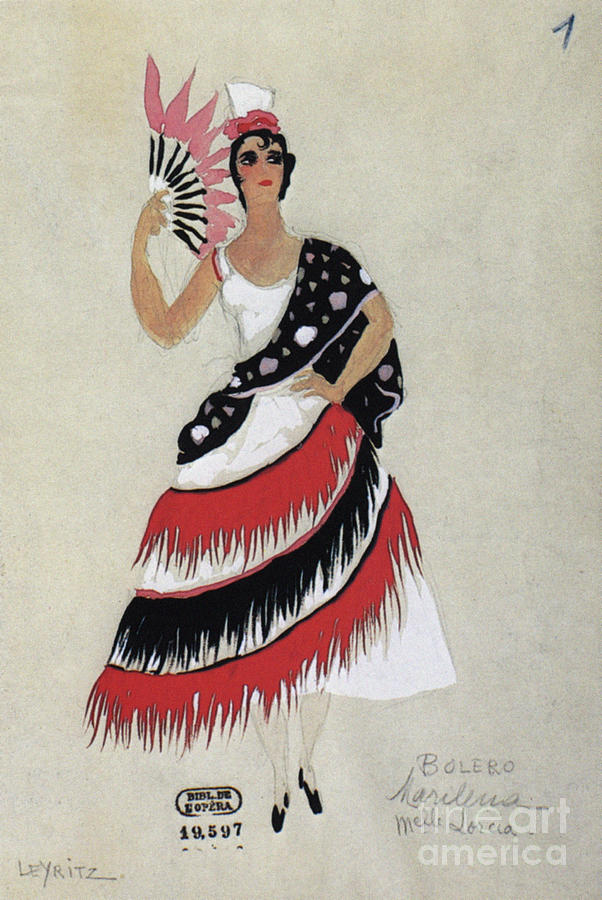
Bolero
http://fineartamerica.com/featured/bolero-costume-granger.html
THIS ARTICLE FROM:
by Michael Steinberg
RAVEL: BOLÉRO
Joseph Maurice Ravel was born in Ciboure near Saint-Jean-de-Luz, Basses-Pyrénées, on March 7, 1875, and died in Paris on December 28, 1937. He composed Boléro between July and October 1928 on commission from Mme. Ida Rubinstein for her ballet troupe, which mounted the premiere at the Paris Opera on November 22, 1928, with Walter Straram conducting. Ravel conducted the first concert performance in Paris with the Lamoureux Orchestra on January 11, 1930, but the North American premiere had already taken place two months earlier, on November 14, 1929, when Arturo Toscanini conducted the New York Philharmonic-Symphony. Bernardino Molinari led the first San Francisco Symphony performances in July 1930; the most recent performances, in November 2006, were conducted by Yan Pascal Tortelier. Boléro is scored for two flutes and piccolo, two oboes (second doubling oboe d'amore) and English horn, two clarinets, high clarinet in E-flat, bass clarinet, two bassoons and contrabassoon, three saxophones (sopranino, soprano, alto), four horns, four trumpets, three trombones, bass tuba, timpani, two snare drums, cymbals, tam-tam, celesta, harp, and strings. Duration: about fifteen minutes.

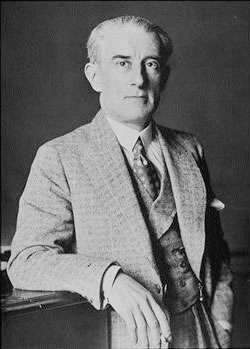
The guest conductor at the San Francisco Symphony concerts of February 3 and 5, 1928, was a tiny man, fine-featured, with a long nose and a mouth like a horizontal line. His tightly contained white hair made him look older than his not quite fifty-three years; a certain diffidence betrayed the fact that he rarely found himself on a podium before an orchestra. Maurice Ravel had in fact led the Boston and Chicago symphonies and the Cleveland Orchestra within the past few weeks, and when he acknowledged the ovations in the Curran Theatre he was about one-quarter of the way through a triumphal tour that took him, between January 4 and April 21, to twenty-five cities in the United States and Canada. He was celebrated and prosperous; with few exceptions, he had already written the music that made him so. Those exceptions included Boléro, which would quickly become the most famous of all his works.

Before leaving for America, Ravel had promised Ida Rubinstein a new work for her ballet troupe. He was on vacation at Saint-Jean-de-Luz, just across the bay from his birthplace, and Gustave Samazeuilh, music critic of La Républicaine, was his guest. As the two were about to go out for their pre-breakfast swim, Ravel made a detour via his piano and played a melody. "Don't you think this theme has a certain insistent quality?" he asked. "I'm going to try and repeat it a number of times without any development, gradually increasing the orchestra as best I can." As soon as Ravel returned to Le Belvédère, his villa west of Paris, he began his new score. His first working title was Fandango, but realizing that the increase in speed and the sudden stops characteristic of that dance were contrary to his idea for the new piece, he retitled the piece Boléro. Ida Rubinstein's dance, in its smoky Spanish café setting, enjoyed considerable success, but it was only when her exclusive performance right elapsed and the first concert presentations took place that the staggering popularity of Boléro began.

Here is Ravel on Boléro: "I am particularly anxious that there should be no misunderstanding as to my Boléro. It is an experiment in a very special and limited direction, and it should not be suspected of aiming at achieving anything different from, or anything more than, it actually does achieve. Before the first performance, I issued a warning to the effect that what I had written was a piece…consisting wholly of orchestral texture without music—of one long, very gradual crescendo. There are no contrasts, and there is practically no invention except in the plan and the manner of the execution. The themes are impersonal—folk tunes of the usual Spanish-Arabian kind. Whatever may have been said to the contrary, the orchestral treatment is simple and straightforward throughout, without the slightest attempt at virtuosity.... I have done exactly what I have set out to do, and it is for listeners to take it or leave it."

Ravel uses two melodies. The first could stand by itself, but the second starts so obliquely that it has to be a continuation rather than a beginning. In presenting them, Ravel brings each around twice before going on (or returning) to the other. He traverses this pattern of AABB four times before wrapping the piece up with what promises to be a single compressed AB.

How does Ravel arrange his long crescendo? He begins with solo instruments playing the melody and progresses to groups, often assembled in novel and effective ways. Much of the effect of the crescendo is vested in the accompaniment. A snare drummer taps out the bolero rhythm from beginning to end, a second drummer joining in for the final statement of AB. But violas and cellos mark the beat too, and as soon as we have heard the first melody through once, Ravel begins to build the accompaniment. Often, the instrument that last played the melody joins the accompaniment team. When the two melodies come around for the last time, the obsessive rhythm is beaten out with an increasing dissonance. How do you end such a piece? When a dynamic crescendo is no longer feasible, Ravel makes a huge harmonic leap. We have been at a C major standstill for fifteen minutes. Virtually without warning, we are suddenly plunged into E major. The shock destroys the piece, which collapses in upon itself as a mined tower collapses. Fair enough as a symbol, for Boléro was a radical challenge to the most basic assumptions of Western concert music.


Building Bolero
The Queensland Symphony Orchestra

https://www.youtube.com/watch?v=xn7CYzPMf2o


GENERAL MUSIC
01.  VIOLIN RIGHT HAND PIZZICATO
........a.  RIGHT HAND PIZZICATO IN GUITAR POSITION
........b.  REPEAT RIGHT HAND PIZZICATO HAND POSITION HOLDING THE VIOLIN NORMALLY
02.  REPEAT OPEN STRING SONG BATMAN USING RIGHT HAND PIZZICATO
........a.  THIS SPECIFIC RIGHT HAND PIZZICATO IS USED TO ESTABLISH RIGHT ARM BOW PLACEMENT
03.  INTRODUCTION TO THE BOW HOLD


ADV. STRINGS
JUNE 5th 5:00 PM (4:30 CALL TIME) DEDICATION FOR PATRICK'S GARDEN 
VOLUNTARY PARTICIPATION TO PLAY "STAIRWAY TO HEAVEN"
MUSICAL: "UNSINKABLE MOLLY BROWN"

BEG. STRINGS
FINISHED THE MUSICAL: "OLIVER"

Monday, June 3, 2013

MONDAY, JUNE 3, 2013

QUOTE:
"It is incontestable that music induces in us a sense of the infinite 
  and the contemplation of the invisible."
AUTHOR: Victor de La Prade
MEANING OF THE QUOTE:
“Music places the listener into whatever creative venture the mind 
  can dream up."


COMPOSER
RAVEL
Tzigane
Played by violinist Midori

Tzigane
Played by violinist Henryk Szeryng


Tzigane
Played by violinist Isaac Stern


Tzigane
Played by violinist Itzhak Perlman


Tzigane
Played by violinist David Oistrakh


Tzigane
Played by violinist Jascha Heifetz


From the article:
“Tzigane,” Concert Rhapsody for violin and orchestra
Program Notes
Maurice Ravel (1875-1937)
By MARC MANDEL

First performance (original version for violin and piano): April 26, 1924, London, Jelly d’Arányi, violin; Henri Gil-Marchex, piano-luthéal (see below). 

First performance of orchestral version: November 30, 1924, Paris, Concerts Colonne, Gabriel Pierné cond., Jelly d’Arányi, soloist. 

First BSO performance: February 26, 1925, Serge Koussevitzky cond., Paul Kochanski, soloist. 

First Tanglewood performance: Tonight’s performance is the first by the BSO at Tanglewood, the orchestra’s most recent performances having been given in the 1979-80 season with Seiji Ozawa conducting and then concertmaster Joseph Silverstein as soloist, at Symphony Hall, Carnegie Hall, and eight other out-of-town locations on tour in the United States and Canada.

During one of Maurice Ravel’s visits to London, following a private musicale during which the Hungarian violinist Jelly d’Arányi 


performed the composer’s recent Sonata for Violin and Cello with the cellist Hans Kindler, Ravel asked Mlle. d’Arányi—who was a grandniece of the famed Austro-Hungarian violinist-composer conductor-teacher Joseph Joachim—to play him some Gypsy melodies. This went on until five in the morning and presumably was the first event in the history of Ravel’s Tzigane for violin and orchestra. Ravel completed the Tzigane (which means “Gypsy”) just shortly before its premiere in April 1924; the orchestral version was given for the first time half a year later. On both these occasions, the soloist was Mlle. d’Arányi, who was dedicatee of the violin sonatas by Vaughan-Williams and Bartók as well as of the present work. It was also she who spurred the unearthing of Robert Schumann’s Violin Concerto in 1937 by claiming the composer’s spirit had visited her.

When it was new, a striking feature of Tzigane in its original violin-and-piano version was Ravel’s use of the recently devised piano-luthéal, a modified grand piano that allowed the player to alter the timbre of the instrument by employing harmonium-like stops set above the keyboard to produce a variety of sounds (lute- and harpsichord-like, as well as the normal timbre of the piano). One of these stops—fittingly, for Tzigane—created a sound similar to the Hungarian cimbalom, a hammered dulcimer whose use in that country is traceable back to the sixteenth century. Ravel also called for this instrument in his opera L’Enfant et les sortilèges (“The Child and the Magic Spells”), completed in 1925.

In any event, the first performance of Tzigane astounded both the composer and the audience, especially given the limited rehearsal time. Ravel’s ability to write for an instrument he had never studied also attracted notice. The reviewer for the London Times, however, was skeptical. Describing the piece as “rhapsodical in the literal meaning of the word, being a series of episodes in the Hungarian manner strung together,” he was “puzzled to understand what M. Ravel is at. Either the work is a parody of the Liszt-Hubay-Brahms-Joachim school of Hungarian violin music…or it is an attempt to get away from the limited sphere of his previous compositions to infuse into his work a little of the warm blood it needs.” Such commentary seems superfluous. Tzigane is, simply and straightforwardly, a virtuoso showpiece, opening with an extended “quasi cadenza” for the soloist and, along the way, using just about every violinist trick in the book.
MARC MANDEL

http://imslp.org/wiki/Tzigane_(Ravel,_Maurice)
http://en.wikipedia.org/wiki/Tzigane
http://www.gotomidori.com/english/musicnote-200302/musicnote-07ravel.html
http://www.timsummers.org/?page_id=62
http://musimelange.com/?p=1044
http://bso.http.internapcdn.net/bso/images/program_notes/Ravel_Tzigane.pdf
http://www.lawrencebudmen.com/program_notes_concert_gluzman_feldman.html
http://www.anne-sophie-mutter.de/back-to-the-future-ravel.html?&L=1
http://www.cpr.org/article/Ravel_Tzigane
http://www.troychromatics.org/114season/pdfs/TCC114-2LaraStJohnProgram.pdf


GENERAL MUSIC
01. VIOLIN LEFT PIZZICATO WARM-UP
02.  OPEN STRING NOTE READING REVIEW
03.  OPEN STRING SONGS PLAYED WITH LEFT PIZZICATO
........a.  CRIPPLE CREEK
........b.  BATMAN
04.  VIOLIN RIGHT HAND PIZZICATO INTRODUCTION
........a.  RIGHT HAND PIZZICATO IN GUITAR POSITION
........b.  REPEAT RIGHT HAND PIZZICATO HAND POSITION HOLDING THE VIOLIN NORMALLY
OPEN STRING RIGHT HAND PIZZICATO SONGS TOMORROW

ADV. STRINGS
JUNE 5th 5:00 PM (4:30 CALL TIME) DEDICATION FOR PATRICK'S GARDEN 
VOLUNTARY PARTICIPATION TO PLAY "STAIRWAY TO HEAVEN"
PRACTICED STAIRWAY TO HEAVEN FOR WEDNESDAY

BEG. STRINGS
HOE DOWN (SPICCATO BOWING TECHNIQUE)
DISCUSSED SONGS FOR NEXT YEAR