Showing posts with label dance. Show all posts

Thursday, January 1, 2015

THURSDAY, JANUARY 1, 2015

QUOTE:
"No man is complete without a feeling for music
 and an understanding of what it can do for him."
AUTHOR: Zoltan Kodaly


MEANING OF THE QUOTE:
"Complete fulfillment in life is not possible
  unless you have some music appreciation."

COMPOSER
DEBUSSY

SARABANDE II
From: Pour le Piano

Fil:Sarabande Roybet.jpeg
Roybet: Sarabande 
Sarabande II
From: Pour le Piano
(Impressionistic Art)

Debussy’s Sarabande, which dates

from the winter of 1894, progresses
"with a solemn and slow elegance"
that mirrors the stately pace of the
Baroque dance for which it was
named. Originally written for piano,
it was later orchestrated by

Maurice Ravel
in 1923, five years
after Debussy’s death.
Sarabande II
From: Pour le Piano
Maurice Ravel, Orchestral Arrangement
http://www.pianostreet.com/smf/index.php?topic=52890.0
Sarabande II
From: Pour le Piano
Analysis Through Added Lyrics

https://www.youtube.com/watch?v=LaSS4JzvGQg
http://www.musicteachers.co.uk/resources/debsara.pdf
Sarabande
(Spanish: Zarabanda)
Originally this was a Latin American dance
form from the 17th and 18th centuries. The
dance was banned by Philip II in 1583
Phillip II of Spain
because it was regarded as loose and ugly,
'exciting bad emotions.' Introduced to France
and England in the early 17th centuries, this
dance transformed into a more stately version
in a slower triple time. Sarabandes became a
standard movement of the suite form in the
instrumental works by Henry Purcell,
Sarabande from "Dioclesian"
By Henry Purcell
Dr. Ricardo Barros, Choreography
J. S. Bach, and G. F. Handel. In the
20th century it was revived by Debussy,
Satie, Vaughan Williams (in "Job"),
Ralph Vaughan Williams
JOB, A MASQUE
FOR DANCING(1931)
By Ralph Vaughan Williams
I. Introduction - Saraband of the sons of God
II. Satan's dance of triumph / Minuet of the sons of Job and their wives
III. Job's dream 
IV. Dance of the three messengers
V. Dance of Job's comforters 
VI. Elihu's dance of youth and beauty - Pavane of the sons of the morning
VII. Galliard of the sons of the morning - Altar dance 
IX. Epilogue
and Benjamin Britten
Benjamin Britten
(in "Simple Symphony").
Simple Symphony Op. 4
By Benjamin Britten
Chuhei Iwasaki, Conductor
Iwasaki Philharmonic Orchestra Prague

https://www.youtube.com/
watch?v=sAtwt0-oB6E#t=10

1. Boisterous Bourree 0:00
2. Playful Pizzicato 3:17
3. Sentimental Saraband 6:45
4. Frolicsome Finale 13:07
Nicolas Lancret: La Camargo Dancing

Monday, December 8, 2014

MONDAY, DECEMBER 8, 2014

QUOTE:
"There is only one real happiness in life,
  and that is the happiness of creating."
AUTHOR: Frederick Delius
MEANING OF THE QUOTE:
"Its more fun to create something yourself
 then to create something yourself then to
 have someone else create it for you."


COMPOSER
DEBUSSY

ARABESQUE NO. 2 in G MAJOR
DEBUSSY PLAYS DEBUSSY:
ARABESQUE NO. 2 in G MAJOR
from Deux Arabesques, L. 66
Allegretto scherzando
Claude Debussy, Piano
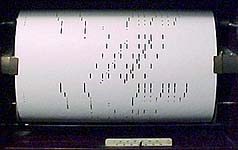
(Recorded from a piano roll)
Edgar Degas: End of an Arabesque
This is a player piano with a roll:
This what the roll looks like up close:

ARABESQUE
Imusic it is an ornate, whimsical
composition especially for piano but
also found in other art forms such as in ballet.
Edgar Degas: The Star-Dancer on Pointe
ARABESQUE NO. 2 in G MAJOR
from Deux Arabesques, L. 66
Allegretto scherzando
Judith Goldstein: Arabesque
ARABESQUE NO. 2 in G MAJOR
from Deux Arabesques, L. 66
Allegretto scherzando
With Animated Score
Saatchi Art Artist: Loui Jover; Pen and Ink 2013 Drawing "arabesque" #Art
Loui Jover: Arabesque
Arabesque in Dance
Arabesque
Claude Francis Barry: Arabesque

Wednesday, October 13, 2010

WHAT WE DID TODAY #1-30: WEDNESDAY; OCTOBER 13, 2010

GENERAL MUSIC PERIODS 2,3,6 
COMPOSER: BACH: Minuet in G 
(transcribed for violin)

1. This music came from the "Notebook for Anna Magdalena"
2. It is manuscript notebook (1725) that Bach presented to his second wife Anna Magdalena and is a compilation
    of music by both Bach and other composers of the era which features keyboard music (minuets, rondeaux, 
    polonaises,  chorales, sonatas, preludes, musettes, marches, gavottes) and a few pieces for voice (songs, and arias).
    (http://en.wikipedia.org/wiki/Notebook_for_Anna_Magdalena_Bach
3. The author of the music maybe Bach or someone else but because it is in this notebook it is attributed to Bach.
4. This music was often used for teaching purposes and today is often transcribed for other instruments.
5. Term "Minuet":
.....a. This is a social dance of French origin for two people, usually in 3/4 time. 

.....b. The word was adapted from Italian minuetto and French menuet, meaning small, pretty, delicate.

.....c. The name is also given to a musical composition written in the same time and rhythm, but when not accompanying 
         an actual dance, the pace was quicker. (http://en.wikipedia.org/wiki/Minuet)
6. Term "Transcribed": An adaptation or reworking of a musical composition for a different instrument than the music 
     was originally written for. 

OBJECTIVE: Using the Left and Right Brain

1. QUOTE AUTHOR: Frederick Delius
.....a. One of his most famous pieces is called "On Hearing the First Cuckoo in Spring" 


2. Brain: Left Side/ Right Side and What It Has to Do With Music
.....a. Explained that are bodies are "cross-circuited"
..........1)Right side of the brain controls the left side and vice-versa
.....b. Most everyone favors one side of the brain over the other that is why some people write with their right 
         hand and some with their left
..........1)Few people can write equally well using right and left hands
..........2)Equal use of both hands is called being "ambidextrous"
..........3)In terms of certain skills controlled by one side of the brain, the other side is under developed
.............a)To illustrate this point: print and write in cursive your name with the normal hand and then try the other
......c. What makes music unique compared to some other art forms is that most musicians need equal use of both hands 
           in order to create their art.
...........1)An art teacher would probably not ask the student to draw using the weak hand, either would the English teacher  
               ask the student to hand write an essay using the weak hand; but in music the playing of most instruments 
               requires it.
......d. As the exercise in writing your name with the weak hand illustrates, the brain is trying extremely hard to send the 
          message to move the fingers, but the fingers cannot respond quickly (like the fingers on the strong hand does)
...........1)Frustration results when the brain knows how to do something but the muscles cannot respond at the same rate 
              of speed; this is the experience all musicians go through during music training (especially beginners). 
...........2)Actually this "frustration" is the brain expanding its capabilities (sort-of like the muscles aching when 
              exercising them; trying to build them up).
...........3)Frustration thus is a good thing and all musicians experience this when learning something new.
......e. Playing music, learning to use both hands equally, forces the under-developed side of the brain to be used and thus 
           people who do this utilize more of their brain capacity
...........1)I like to say, "Playing music makes a person smarter; the more of the brain you use the smarter you become."
3. BODY PERCUSSION SONG "ALLEY CAT"
.....a. Utilizes quarter notes and quarter rests and also eighth notes in pairs.
.....b. Review note values and rhythm reading; how to perform a rest (which should be felt but not heard)
.....c. Go over directions: why certain notes are colored red and some colored black (red notes and black notes have stems 
         in different directions as well)
.........1)The different colors indicated the use of right and left hands used to perform the rhythms in this body percussion 
              exercise.
.........2)Using the left and right hands (not always in patterns) demonstrates the use of the right and left brain activity as 
            discussed earlier.
............a)Students will feel frustration or their brains' expanding as they perform this piece; especially when left-right 
                  patterns are deliberately changed often near the end
............b)As the brain functions by patterns, it rebels when new patterns are suddenly introduced to it
............c)Forcing the brain to learn new patterns also expands the abilities of the brain's function.
.....d. This exercise demonstrates the technique that a drummer (snare drummer) must go through when playing.
.........1)Profession drummers plan their "sticking" (which hand plays which note at any given time) before practicing 
            any given piece. (Sticking is not random.)
.....e. Since the performance of this is only rhythmic (no melody playing by the performer) in the beginning of the 
         learning process the ear cannot easily help out the eyes should the eyes get lost; so focus and concentration is more 
         difficult in drumming then on a melody instrument
4. RECORDER HOLIDAY SONG: JOLLY OLD ST. NICK
......a. Short explanation of new note LOW "E" and its fingering
......b. Sight read through "JOLLY OLD ST. NICK"
5. REVIEW B-A-G SONG: TURKEY TROT

DECEMBER 9th is the holiday concert for chorus, band, and strings. Recorder students are invited to play their instruments ("recorder carolling") as the pre-concert activity outside of the gym. This is not mandatory; just a fun way to celebrate the holidays through music. We will play the holiday music learned in class. All students need to bring is their recorder; music and accompaniments will be already set-up. More details to follow as I get them.


BEGINNING VIOLIN PERIOD 5: 
OBJECTIVE: PREPARATION FOR HOLIDAY PERFORMANCE/DOUBLE STOPPING
1. DOUBLE-STOPPING

.....a. Separate Bows (UH) 2x at each of the 7 bow levels
.....c. Bow patterns taken from Hava Nagila: short long short short short long
.....d. "Mary Had a Little Lamb" double-stopped
.........1)Played the DO-RE-MI song with the neighboring higher open string
.........2)Played on G with open D, D with open A, A with open E, and then the melody alone on the E string

.........3)By adding the open string with the melody harmony is produced helping the ear hear intonation better on the 
            fingered notes ( a good intonation training technique) 
2. HOLIDAY PROGRAM SONG: COVENTRY CAROL
.....a. Worked on keeping together the pizzicato and rests
..........1)Because I wanted the rests to be "played"silently together I had students deliberately move something (like a head 
             nod) during them.
..........2)Even though rests are silent, they must be felt.
3.HOLIDAY PROGRAM SONG: HAVA NAGILA
.....a. Worked on certain sections to get the counting and articulation together
.....b. Worked for continuity; training the performer how to play through mistakes in a performance with others

.....c. Added a tremolo to the ending note (as per a student's suggestion; a suggestion I liked very much!)

ADVANCED VIOLIN PERIOD 4: 
OBJECTIVE: Preparation for: Harvest Day performance on October 28th/Holiday Program December 9th
1. TUNE
2. MUSIC STANDS WERE SET-UP
3. REVIEW SONGS FOR THE HARVEST FESTIVAL
.....a. HOEDOWN
 

.....b. ORANGE BLOSSOM SPECIAL
.....c. DE COLORES
4. GREENSLEEVES
.....a. Harmony first/split 2 parts..violins on melody (review some fingerings) rest harmony 

         Sight read Coventry Carol (added 7th grade beg. violins during HR) 
.....a. Listen to the accompaniment with string harmony part
.....b. Everyone plays harmony part together (later to separate into melody and harmony parts)
...........1)Playing the harmony part is important even for those who will be playing the melody because harmony helps the ear 

              with intonation, the counting is different, and also because it is good for everyone in the group to know how their 
              part fits together with the the others. 
5. Preparation for the Harvest Festival Performance
......a. There are 11 practice sessions (days left) before the concert
......b. We will be performing on the outside stage in the early part of the festival
......c. When we are finished we can put our instruments away in the room and enjoy rest of the festivities
......d. More information to follow when I get it.