Everything music from a perspective of a public
school music teacher with subject integration
(especially art, history, and literature) as a focus
to help teach the Common Core Curriculum.
1856-1950 (aged 94) Dublin, Ireland (playwright, critic, political activist) He was most angered by what he perceived as the exploitation of the working class, and most of his writings censure that abuse. causes, which included gaining equal rights for men and women, alleviating abuses of the working class, rescinding private ownership of productive land, and promoting healthy lifestyles
He is the only person to have been awarded both a Nobel Prize for Literature (1925) and an Oscar (1938), for his contributions to literature and for his work on the film Pygmalion, respectively. Shaw wanted to refuse his Nobel Prize outright because he had no desire for public honors, but accepted it at his wife's behest: she considered it a tribute to Ireland. He did reject the monetary award, requesting it be used to finance translation of Swedish books to English.
The Hungarian producer Gabriel Pascalwished to create a set of films based on Shaw's works, beginning with Pygmalion, and went to see Shaw in person to gain permission to do so. Shaw was reluctant to allow a film adaptation of Pygmalion owing to the low quality of previous film adaptations of his works, Pascal had tried to convince Shaw to let Pygmalion be turned into a musical, but the outraged Shaw explicitly forbade it, having had a bad experience with the operetta The Chocolate Soldier, based on Shaw's Arms and the Man. Pascal died in 1954, and it was not until 1956 that Pygmalion became My Fair Lady but Pascal managed to convince him (on the condition Shaw retained full control over the adaptation) and later went on to also adapt Major Barbara, Caesar and Cleopatra and Androcles and the Lion.
Pygmalion by Jean-Baptiste Regnault, 1786, Musée National du Château et des Trianons
D) Other stories with the “Pygmalion” theme:
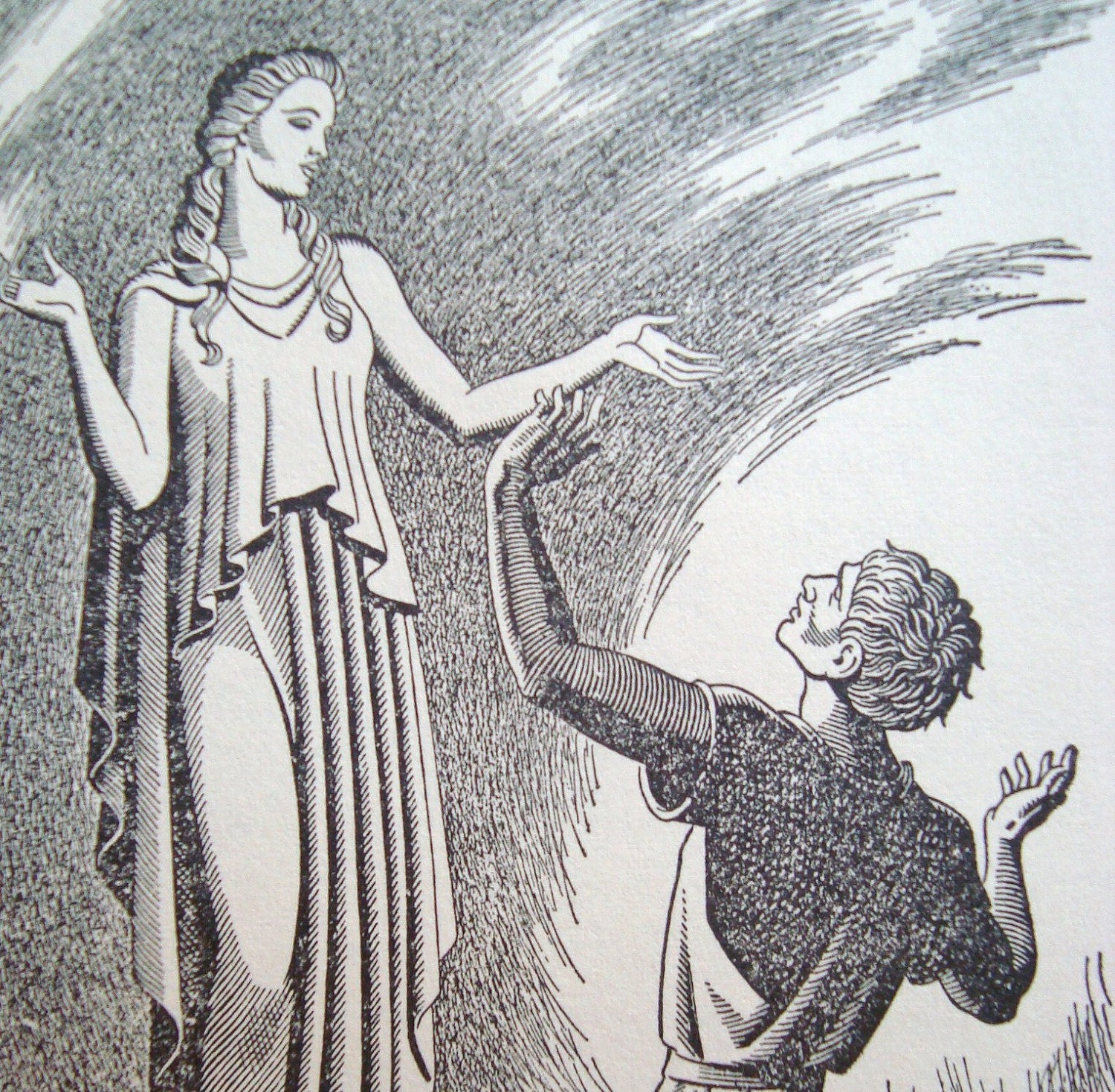
Ovid, Metamorphoses X.Pygmalion was a sculptor who fell in love with a statue he had carved. He was not interested in average women and could not find one that was good enough for him so he carved his vision of the ideal woman out of marble. His statue was so realistic that he fell in love with it. He offered the statue gifts and eventually prayed to Venus (Aphrodite). She took pity on him and brought the statue to life as Galatea.
06. What the story is about: This story about a confirmed bachelor and egotistical professor of phonetics, Henry Higgins (also an expert in spoken dialects), who makes a wager with his friend, Colonel Pickering, that he can transform in just six months a unrefined Cockney flower girl,("metamorphose the guttersnipe into a paragon of verbal correctitude")Eliza Doolittle, into a lady (speak, dress and act like a duchess) and at an embassy ball and fool everyone into thinking she really is one, too.http://www.draytonentertainment.com/season_2008/my_fair_lady/
07. A) Where the story takes place (ex: name of city, country, etc.):
Eliza Doolittle is a cockney flower girl from Lisson Grove (a poor section of London) working outside Covent Garden. Her potential to become “a lady” becomes the object of a bet between Higgins and Pickering.
02. PROFESSOR HENRY HIGGINS A British, upper class professional bachelor, world famous phonetics expert, teacher and author of “Higgins’ Universal Alphabet.
03. ALFRED P. DOOLITTLE * Eliza’s father; an elderly but vigorous dustman who does everything he can to get out of doing work. He "does little."
04. COLONEL HUGH PICKERING * He is a retired British officer with colonial experience and the author of “Spoken Sanskrit.
05. FREDDY EYNSFORD-HILL * Upper class young man who becomes completely smitten with Eliza.
06. MRS. HIGGINS She is Henry’s long-suffering mother.
07. PROFESSOR ZOLTAN KARPATHY A bearded Hungarian; former phonetics student of Henry Higgins.
08. MRS. PEARCE * She is Henry Higgins’ housekeeper.
11. Inner messages within the story (ex: morals, ethics, etc.) that have moral or social significance. Explain the message you think the author of the movie is trying to display: 01. Women in society now and then. 02. Importance of language and financial success. 03. Communication between men and women: Do we understand each other? 04. Make-Overs: What are the consequences? Can you change the inside by changing the outside? 05. Class system in England (middle class morality, rich versus poor).
Mrs Higgins:But, my dear Mr. Doolittle, you need not suffer allthis if you are really in earnest. Nobody can force you to accept thisbequest. You canrepudiateit. Isn't that so, Colonel Pickering?Pickering:I believe so.Doolittle:That's the tragedy of it, ma'am. It's easy to say chuck it; but I haven't the nerve. Which of ushas? We're all intimidated. Intimidated, ma'am; that's what we are. What is therefore me if Ichuck itbut theworkhousein my old age? I have to dye my hair already to keep my job as adustman. If I was one of the deserving poor, and I had put by a bit, I couldchuck it; but then why should I, a cause the deservingpoor might as well be millionaires for all the happiness they ever has. They don't know what happiness is. But I, as one of the undeserving poor, having nothing between me and thepauper'suniform but this here blastedthree thousand a year that shoves me into the middle class (Excuse the expression, ma'am: you'd use it yourself if you had myprovocation.) They've got you every way you turn: it's a choice between the Skillyof theworkhouseand theCharybdisof the middle class; and I haven't the nerve for the workhouse. Intimidated: that's what I am. Broke. Bought up. Happier men than me will call for my dust, and touch me for their tip; and I'll look on helpless, and envy them. And that's what your son has brought me to. [He is overcome by emotion.] One wonders how on earth Doolittle ever picked upScyllaandCharybdis.
12.
A) Personal opinion (your enjoyment factor; why you liked or disliked the musical):
I liked or disliked this musical because.....
B) Personal opinion on the quality of the artistry in this musical (ex: how well acted, quality of the singing voice(s), cinematography, memorable melodies, etc.):
I found the quality of the artistry to be.....
13.
Song titles (hint: listen for repeated words or phrases in the song and make an educated guess of the name of the song if you don’t know it):
Alfred P. Doolittle, a dustman, the father of the main character Eliza Doolittle, has received a surprise bequest of four thousand pounds a year from an American millionaire, raising him to middle-class respectability. Consequently he feels he must marry Eliza's "stepmother," the woman he has been with for many years. This song is about Doolittle and his friends having a bachelor party the night before Doolittle's wedding.
Crept Crumpets Cue Dashed Dashing Descend Despise Dialectician Dome Dote Ducky Duke Dustman
Earl Easy street Eccentric Elevated fool Embassy Ball En mass Enthralling Ecstatic Eternal strife Exasperating Faces flushing Falter Farce Fetch Flat Flower Girl Frenzied Garn Gavotte Glum Governor Grammarian Gramophone Gripping Gutter Guttersnipe Hags Hail Hailed Hampshire Hark Hartford Heiress Hereford Humanities Hungarian Hurdled Hussy Hymn Impetant Infantile Irrational Jabber Ja wohl Jewels in the crown Keats Keyed up Knight Lark Liquor Lisson Grove London Lull Meditate Metamorphose Milk of human kindness Milton Muddle Mutton-headed Noble On land, or sea, or foam Paree Peer Pensive Philandrin' Philosophical Phonetics Pinched it Plain Plods Poignant Pounds Prim and proper Prime Reelin' Repentant Reverberated Ripping Royal Opera House Rue it Rumpus Run amuck Sabbatical Scotland Yard Selsey Serenity Shirk Simultaneously Slighted Smashing Soho Square Spanish Inquisition Spectacle Spruced up Staunchly St. James Strife Sturdy as Gibraltar Swindle Tar and feather Temptation Thrive Tie the knot Till Tomb Transylvania Triumph Tuppence Trace Uttered Vacillating Verbal class distinction Vow Wagnarian mother Walk the straight and narrow Whewt Whim Windsor Castle Woes Wooin' Wretch Wretched Yorkshireman
THE FOLLOWING IS A LIST OF TERMS HEARD IN THE MOVIE THAT I MADE INTO A DEFINITION WORKSHEET:
.jpg)