Dubbing is the substitution of the voices of the actors shown on the screen; a transference of some recorded material onto a new recording medium.
A form of dubbing is lip syncing [lip sync, lip-sync, lip-synch (short for lip synchronization)], a technical term for matching lip movements with sung or spoken vocals, which is basically having the original artists singing over a pre-recorded track of their own material. Lip dubbing (in contrast to lip syncing) is having anyone other than the original artist singing over the pre-recorded track. In both examples, the audio must be very carefully timed to match the onscreen actor's lip movements exactly, so that it is not obvious that the video has been dubbed.
A form of dubbing is lip syncing [lip sync, lip-sync, lip-synch (short for lip synchronization)], a technical term for matching lip movements with sung or spoken vocals, which is basically having the original artists singing over a pre-recorded track of their own material. Lip dubbing (in contrast to lip syncing) is having anyone other than the original artist singing over the pre-recorded track. In both examples, the audio must be very carefully timed to match the onscreen actor's lip movements exactly, so that it is not obvious that the video has been dubbed.
In the case of live concert performances, lip-synching is a commonly used shortcut, but it can be considered controversial. Though lip-synching, also called miming, can be used to make it appear as though actors have musical ability (e.g., The Partridge Family) or to misattribute vocals (e.g. Milli Vanilli), it is more often used by recording artists to create a particular effect, to enable them to perform live dance numbers, or to cover for illness or other deficiencies during live performance.
Sometimes lip-syncing performances are forced by television for short guest appearances, as it requires less time for rehearsals and hugely simplifies the process of sound mixing. Some artists, however, lip-sync because they are not as confident singing live and lip-syncing can eliminate the possibility of hitting any bad notes. The practice of lip syncing during live performances is frowned on by many who view it as a crutch only used by lesser talents.
Pop singer Ashlee Simpson lip synced when she appeared on the live comedy TV show Saturday Night Live in 2004. During her performance, vocal parts from a previously performed song began to sound while the singer was "holding her microphone at her waist" revealing that she was not singing live. After making "some exaggerated hopping dance moves" she walked off the stage in embarrassment.Sometimes lip-syncing performances are forced by television for short guest appearances, as it requires less time for rehearsals and hugely simplifies the process of sound mixing. Some artists, however, lip-sync because they are not as confident singing live and lip-syncing can eliminate the possibility of hitting any bad notes. The practice of lip syncing during live performances is frowned on by many who view it as a crutch only used by lesser talents.
FILM MUSICALS
In film production, lip syncing is often part of the post-production phase. In many musical films, actors sang their own songs beforehand in a recording session and lip-synced during filming, but many also lip-synced to voices other than their own.
Currently the preference is for "real" screen actors, to perform their own songs on screen with an acceptance of their vocal imperfections. In years past however, classically trained singers like Betty Noyes, Betty Wand, and Marni Nixon made careers out of singing for some of Hollywood’s most famous actresses including Audrey Hepburn and Leslie Caron.
"West Side Story"
Due to the operatic-type vocal score, one of the greatest movie musicals, West Side Story, dubbed most of its principal cast members who did have the vocal training needed to execute the vocal parts: Natalie Wood (voice supplied by veteran Hollywood vocalist Marni Nixon), Richard Beymer (Jimmy Bryant), Russ Tamblyn (whose lyrics in "The Jets Song" were supplied by Tucker Smith), and Rita Moreno (Betty Wand) with only George Chakiris, performing his own singing due to the fact that his vocal parts were less challenging.
Marni Nixon (dubbing Natalie Wood's voice) was employed on a day-to-day basis (no contract was signed) to do only the high or sustained notes that Wood’s less disciplined voice could not manage. The songs were recorded in that manner, with Wood being continually told how "wonderful" she was. However, while this was going on, Nixon was being told that she would do the full soundtrack in order to ensure that there would be not clash between the star and the studio until Wood’s visuals had been completely filmed. Only after the filming was over was Wood informed that Nixon was dubbing her entire singing parts. Wood reacted with understandable anger. (Later on when Wood filmed her role in Gypsy, there were no substitutions made for her singing voice.) (http://www.westsidestory.com/site/level2/archives/fact/fact.html)
Due to the operatic-type vocal score, one of the greatest movie musicals, West Side Story, dubbed most of its principal cast members who did have the vocal training needed to execute the vocal parts: Natalie Wood (voice supplied by veteran Hollywood vocalist Marni Nixon), Richard Beymer (Jimmy Bryant), Russ Tamblyn (whose lyrics in "The Jets Song" were supplied by Tucker Smith), and Rita Moreno (Betty Wand) with only George Chakiris, performing his own singing due to the fact that his vocal parts were less challenging.
Marni Nixon (dubbing Natalie Wood's voice) was employed on a day-to-day basis (no contract was signed) to do only the high or sustained notes that Wood’s less disciplined voice could not manage. The songs were recorded in that manner, with Wood being continually told how "wonderful" she was. However, while this was going on, Nixon was being told that she would do the full soundtrack in order to ensure that there would be not clash between the star and the studio until Wood’s visuals had been completely filmed. Only after the filming was over was Wood informed that Nixon was dubbing her entire singing parts. Wood reacted with understandable anger. (Later on when Wood filmed her role in Gypsy, there were no substitutions made for her singing voice.) (http://www.westsidestory.com/site/level2/archives/fact/fact.html)
Other prominent musicals that used dubbing:
My Fair Lady: Marni Nixon sang for Audrey Hepburn
AUDREY HEPBURN'S REAL VOICE
MY FAIR LADY "SHOW ME"
SUNG BY AUDREY HEPBURN
MY FAIR LADY "SHOW ME"
DUBBED BY MARNI NIXON
~~~~~~~~~~
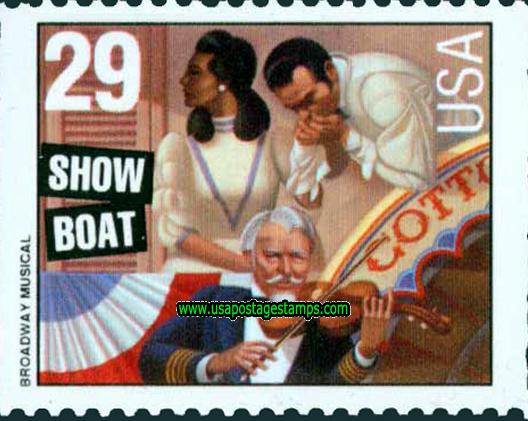
Show Boat: Annette Warren sang for Ava Gardner
SHOW BOAT "CAN'T HELP LOVIN' DAT MAN"
SUNG BY AVA GARDNER
SHOW BOAT "CAN'T HELP LOVIN' DAT MAN"
DUBBED BY ANNETTE WARREN
~~~~~~~~~~
Gigi: Betty Wand sang for Leslie Caron
GIGI "THE NIGHT THEY INVENTED CHAMPAGNE"
SUNG BY LESLIE CARON
GIGI "THE NIGHT THEY INVENTED CHAMPAGNE"
DUBBED BY BETTY WAND
~~~~~~~~~~
LINKS
================================================================
================================================================
MARNIE NIXON ON VOICE DUBBING
CLIPS and INFORMATION
FROM MUSICALS THAT MARNIE NIXON DUBBED
================================================================
================================================================
ARTICLE FROM:
Nixon, Marni - Interview
Written by Diana Saenger

Robert Osborne Interviews Hollywood Singer
Marni Nixon
Following a Saturday evening Robert Osborne Classic Film Festival screening on March 24 of An Affair to Remember, Marni Nixon, who dubbed Deborah Kerr's singing voice in the film, appeared on stage for a Q&A session with festival host Robert Osborne.
Robert Osborne's introduction:
Few people know that Marni was the singing voice for Deborah Kerr in An Affair to Remember and The King and I, the singing
voice of Natalie Wood in West Side Story and sang for Audrey Hepburn in My Fair Lady. She's a star in her own right and just finished
a Broadway run of My Fair Lady staring Kelsey Grammer as Professor Higgins, Kelli O'Hara and Brian Dennehy. Marni played Kelsey Grammer's mother.
Robert O:
How does the dubbing work. Do you do the singing first and does she mouth to you?
Marni N:
Marni N:
First of all, I've seen this movie many times and it just makes me weep! In The King and I, when I first worked with Deborah Kerr,
we prepared for a week at a time to get into her character. We stood side by side and rehearsed the scenes together. She would
look at me, and I would look at her -- both singing. Then I would go to the recording stage with the orchestra and record the
number. Then she would mouth to that when it was filmed. That's the best way to do it.
When An Affair To Remember came along shortly after, I had a year contract on the Ernie Ford show and was there every single day.
So Deborah said, 'Marni, you know my voice so much you just sing it the way you think I'd sing it and I'll just follow along.' And that's
the way that one happened.
Robert O:
It's an incredible voice match though, you sound so much like her vocal.
Marni N:
we prepared for a week at a time to get into her character. We stood side by side and rehearsed the scenes together. She would
look at me, and I would look at her -- both singing. Then I would go to the recording stage with the orchestra and record the
number. Then she would mouth to that when it was filmed. That's the best way to do it.
When An Affair To Remember came along shortly after, I had a year contract on the Ernie Ford show and was there every single day.
So Deborah said, 'Marni, you know my voice so much you just sing it the way you think I'd sing it and I'll just follow along.' And that's
the way that one happened.
Robert O:
It's an incredible voice match though, you sound so much like her vocal.
Marni N:
We had a great kinship, the same color hair, and it turned out our ancestry was actually from the same part of Scotland so we felt
this kinship. I was able to take from her speaking voice the way she articulated and other things.
Robert O:
this kinship. I was able to take from her speaking voice the way she articulated and other things.
Robert O:
My Fair Lady, how was that processed?
Marni N:
Marni N:
Audrey Hepburn did not know how much of her voice was going to be used, but she was very smart and she knew she was going
to be dubbed, as Deborah Kerr did. She was taking voice lessons every day, and I was permitted to go to those voice lessons and
observe her and figure out how I would sing it. She recorded "Wouldn't It Be Loverly" to her own track. They eventually cut that
out, and I had to dub in my voice after it was filmed, but all the other sings except of the beginning - Just You Wait - that was her -
was me.
Robert O:
to be dubbed, as Deborah Kerr did. She was taking voice lessons every day, and I was permitted to go to those voice lessons and
observe her and figure out how I would sing it. She recorded "Wouldn't It Be Loverly" to her own track. They eventually cut that
out, and I had to dub in my voice after it was filmed, but all the other sings except of the beginning - Just You Wait - that was her -
was me.
Robert O:
Did it ever bother you that you were doing all of this silently"
Marni N:
Marni N:
In those days I was warned - dubbing was not to be known about. After The King and I, the studio called and warned me if anyone
ever found out that I did any part of Deborah Kerr's singing that they would see to it that I wouldn't work in Hollywood again. Can
you imagine that? I was doing a lot of classical singing in my Hollywood area but people didn't know me as anything else but a classical singer. I was doing chorus work just to make a living, like they do now days as waitressing, and I did jingles and commercials. My husband, at the time, wasn't affluent. We had had two kids and at that point I needed to make a living, so after their warning, I was
very scared. We had just bought a house.
But over the years I think the atmosphere changed and people started wanting to know about these things. Deborah Kerr herself
said she admired me a lot and that she didn't know what was in my contract. and she went to Earl Wilson, a famous syndicated
columnist and he interviewed her and his headline was, 'Debra Tells a Secret.' She said I had done the dubbing for the picture and
that was before the picture was out. I was very nervous but nothing happened, and gradually everyone started knowing that I was
doing it, and when West Side Story came along they still didn't give me credit for it or My Fair Lady, but everybody started talking
about it.
ever found out that I did any part of Deborah Kerr's singing that they would see to it that I wouldn't work in Hollywood again. Can
you imagine that? I was doing a lot of classical singing in my Hollywood area but people didn't know me as anything else but a classical singer. I was doing chorus work just to make a living, like they do now days as waitressing, and I did jingles and commercials. My husband, at the time, wasn't affluent. We had had two kids and at that point I needed to make a living, so after their warning, I was
very scared. We had just bought a house.
But over the years I think the atmosphere changed and people started wanting to know about these things. Deborah Kerr herself
said she admired me a lot and that she didn't know what was in my contract. and she went to Earl Wilson, a famous syndicated
columnist and he interviewed her and his headline was, 'Debra Tells a Secret.' She said I had done the dubbing for the picture and
that was before the picture was out. I was very nervous but nothing happened, and gradually everyone started knowing that I was
doing it, and when West Side Story came along they still didn't give me credit for it or My Fair Lady, but everybody started talking
about it.
Robert O:
Interestingly, in those days there wasn't a lot of curiosity about the background of films, and no seemed curios that Rita Hayworth
or Cyd Charisse never sang although they sang in their movies. I think the only time during that era that it was publicized was when Larry Parks did the Al Jolson story and they used Al Jolson's real voice.
or Cyd Charisse never sang although they sang in their movies. I think the only time during that era that it was publicized was when Larry Parks did the Al Jolson story and they used Al Jolson's real voice.
Marni N:
Someone said Vera Ella, who was a wonderful dancer at MGM, had 35 different voices in pictures and no one thought it was strange.
I think over the years we've become very curious about how the movies are made and the special effects, but I think they thought -
I think over the years we've become very curious about how the movies are made and the special effects, but I think they thought -
Robert O:
That the magic would be gone.
Marni N:
Yes, and then they wouldn't come see the movie.
Robert O:
Your book, I Could Have Sung All Night is doing wonderfully. What's a good secret about Marni Nixon that we don't know?
Marni N:
Hmm...I have three children, six grandchildren, been married three times, 27 years to my third husband and it may last! My son is Andrew Gold, who wrote the song for the Golden Girl's theme, "Thank You For Being A Friend."
Marni was then asked to sing and closed out the evening with her lovely voice.
Read Classic Movie Guide's book review of Marni Nixon's book I Could Have Sung All Night.
Interview presented with permission from Grady College's Classic Film Festival, 2007.
Photo credit: Diana Saenger
================================================================
================================================================
ARTICLE FROM:
The Recording of Musical Numbers for Musical Films
by John Cunningham 1997
The classic and usual technique was to pre-record all the songs before actual production of the film. This was done for several reasons, the main one being that during a musical number people are typically moving around a great deal, and if it were recorded with a boom (overhead) microphone during shooting, the distance between the singer -- usually doing some sort of dance moves -- and the microphone would constantly vary, creating a vocal track that "comes and goes."
Also, most classic musical numbers (e.g.. those directed by Minnelli--The Master of the movie musical, in my opinion) used many moving camera shots. Sometimes the camera would be on a crane and follow the singing actors all over the place (for example: the song in MEET ME IN ST. LOUIS (1944) in which Judy Garland goes around the house turning out all the lights). Cranes, camera dollies and their crews (sometimes four or five crew members to operate a crane) always make a certain amount of noise. With the singer pre-recording the musical numbers and lip-syncing to their playback during shooting, the crew could make virtually all the noise they wanted because the song playback was blaring out of the speakers.
Another reason was that a pre-recorded song eliminated any unwanted background noise from the location -- it gave a "clean" recording. Example: a scene with a waterfall in the background -- if the song were recorded "live" (on location during photography) the waterfall would compete with the voice. Pre-recording a "clean" musical track and lip-syncing to it on location meant that there was no waterfall sound competing with the song. Then, during mixing, the sound of a waterfall would be added -- with the benefit that the filmmakers now have total control over the waterfall because it is added later as a sound effect.
In the days before magnetic sound recording, the songs were pre-recorded both to optical soundtrack and to disc (phonograph records). On the stage they were played back via phonograph (see the "restored" version of Garland's A STAR IS BORN (1954) for a some scenes that show this technique).
In film production "dubbing" generally refers to audio material recorded after the shooting of the scene (either because a line was poorly recorded originally due to extraneous noise on location, or because it's being dubbed into another language). In classic musicals, the numbers were pre-recorded (i.e. recorded beforehand). Then, during shooting the actors/singers would lip-sync to them. (See the "Lose that Long Face" number in the restored Garland A STAR IS BORN -- it demonstrates this technique.)
Another reason that the numbers were pre-recorded as opposed to sung "live" during photography (and there are lots of reasons) is repeatability. Since a given musical number is photographed in a number of "shots" the actor/singer must be able to repeat exactly from take to take and shot to shot the same movements, etc., and also the same pacing and expression in a song.
If they tried (and they did--a time or two) to record the number live, not only would they have a heck of a time trying to follow the actor around the stage with a mic, and have to have an orchestra present, but the pacing of the song would invariably vary ever so slightly from take to take. Then, if this happens, the film editor has a heck of a time assembling the final edited song, because for an editor everything must match and that includes the pacing of a musical number. By lip-syncing to a pre-recorded track, the pacing of the musical number stays exactly the same from take to take and shot to shot, so that in the editing room everything can fall properly into sync.
The alternative to this is to have very static musical numbers and just have the mic up above. This was done in the very early days of talking pictures. If you look at some of these films now the musical numbers are very stagy and confined. The actors couldn't move around much at all because if they did their sound would be off-mic.
You may say, "Gee, I can't believe that all those musical actors lip-synced their way through all those songs!". Well, the fact is that they were professionals. They were very well trained and the big studios had lots of money for re-takes should they slip up and make a mistake. And, occasionally, you can see a tiny little error here or there in the lip-syncing. I noticed a slight slip up by Barbra Streisand during a number or two of HELLO DOLLY (1969).
(Of course no one is making musicals these days, but lip-syncing still comes in handy. I was working on a religious TV show about 10 years or so ago in which Norma Zimmer (of Lawrence Welk fame) sang a song. Due to the poor acoustics in the church building from which the broadcast was coming, and because she didn't fully trust the sound crew whom she didn't know (and I don't blame her!!), she lip-synced all her songs in front of a full live audience and they never knew the difference. She is a pro. )
The fact that musical numbers were pre-recorded means that today we have some very interesting audio material from films which were never made--or never made with those who pre-recorded the songs. Example: Judy Garland recorded all the songs (or at least many of them) for ANNIE GET YOUR GUN (1950). Of course, as everyone knows, she was replaced by Betty Hutton, but now those songs survive as an interesting look (or listen!) at what might have been. (I have the album-- it is, or at least was, available). These songs have been synced up to recently found outtakes of Garland's (thanks to that repeatability factor!) and included in THAT'S ENTERTAINMENT! III (1994).
If you want to read a GREAT, GREAT, GREAT book about the making of the classic Hollywood musicals you must read Hugh Fordin's book The World of Entertainment. It was published in 1976, and is currently out of print, but should be available in many public libraries. It chronicles (in a very readable fashion) the history of the Arthur Freed unit at MGM as they made such films as THE WIZARD OF OZ (1939), MEET ME IN ST. LOUIS (1944), etc. (virtually all of Garland and Minnelli's MGM films -- Gene Kelly's too -- SINGIN' IN THE RAIN (1952), SHOWBOAT, THE PIRATE (1948), AN AMERICAN IN PARIS (1951), also SHOWBOAT (1951), EASTER PARADE (1948), the list goes on and on.) I cannot recommend this book too highly. It is a treasure trove for the musical film lover--just like spending a day at the MGM archive! (If your public library doesn't have it, they should be able to obtain it for you on what is called an "inter-library loan" -- ask 'em!)http://www.reelclassics.com/Techtalk/musical-article.htm


.jpg)


.JPG)

.jpg)


.jpg)