"It is incontestable that music induces in us a sense of
the infinite and the contemplation of the invisible."
AUTHOR: Victor de La Prade

MEANING OF THE QUOTE:
"Music places the listener into whatever
creative venture the mind can dream up."
.jpg)
TZIGANE
Violin and Piano
https://www.youtube.com/watch?v=-ZdmEBHKBjA
http://www.violinist.com/discussion/response.cfm?ID=17996
TZIGANE
Orchestra Version
Isaac Stern, Violin
 Eugene Ormandy, Conductor
The Philadelphia Orchestra


 BARTOK FIRST SONATA
Philharmonia Orchestra (London, UK)


a long, slow solo introduction,
which leads to a rhapsodic friska,
or fast section. The friska is presented
as a festive, frenzied dance in the form of a
loose set of variations. Ravel uses two
themes: one previously used in the czárdás,
and another introduced toward the middle of
the main section. The piece culminates
in a whirlwind finale.

LINKS
http://imslp.org/wiki/Tzigane_(Ravel,_Maurice)
http://en.wikipedia.org/wiki/Tzigane
http://www.gotomidori.com/english/musicnote-200302/musicnote-07ravel.html
http://www.timsummers.org/?page_id=62
http://musimelange.com/?p=1044
http://bso.http.internapcdn.net/bso/images/program_notes/Ravel_Tzigane.pdf
http://www.lawrencebudmen.com/program_notes_concert_gluzman_feldman.html
http://www.anne-sophie-mutter.de/back-to-the-future-ravel.html?&L=1
http://www.cpr.org/article/Ravel_Tzigane
http://www.troychromatics.org/114season/pdfs/TCC114-2LaraStJohnProgram.pdf
http://www.violinist.com/discussion/response.cfm?ID=17996
https://www.youtube.com/watch?v=zTHAeo0uEAI
http://imslp.org/wiki/Tzigane_%28Ravel,_Maurice%29
http://www.redwoodsymphony.org/history/prognotes.aspx?ID=451
http://img.soundsondemand.com/prd_pdf/00002359.pdf
http://www.loc.gov/rr/perform/concert/pdf/program-10282011.pdf
http://grsymphony.org/sites/default/files/pdf_downloads/Tzigane.pdf
http://www.njsymphony.org/events/detail/koenig-conducts-dvorak#discover-more

COMPOSER
RAVEL
RAVEL
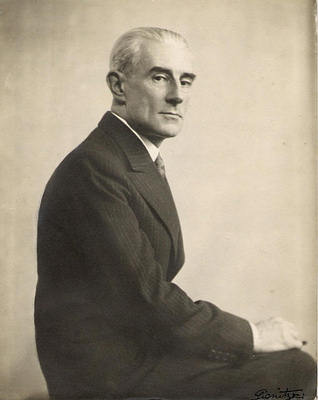


TZIGANE
Violin and Piano

.jpg)
https://www.youtube.com/watch?v=-ZdmEBHKBjA
http://www.violinist.com/discussion/response.cfm?ID=17996
TZIGANE
Orchestra Version
Isaac Stern, Violin
The Philadelphia Orchestra
TZIGANE
Orchestra Version
Itzhak Perlman, Violin
Zubin Mehta, Conductor
New York Philharmonic
From the article:
"TZIGANE,"
CONCERT RHAPSODY
FOR VIOLIN AND ORCHESTRA
Program Notes
Maurice Ravel (1875-1937)
By MARC MANDEL
First Performance
Original Version for Violin and Piano:
April 26, 1924,
London,
Jelly d’Arányi, violin;
Henri Gil-Marchex,
piano-luthéal (see below).
First Performance
Orchestral Version:
November 30, 1924,
Paris, Concerts Colonne,
Gabriel Pierné cond.,
Jelly d’Arányi, soloist.
During one of Maurice Ravel's visits to London,
following a private musicale during which the
Hungarian violinist Jelly d'Arányi
 |
| Charles Geoffroy-Dechaume: |
performed the composer's recent
Sonata for Violin and Cello
SONATA FOR
VIOLIN AND CELLO
Benjamin Bowman, Violin
Franz Ortner, Cello
Sonata for Violin and Cello
SONATA FOR
VIOLIN AND CELLO
Benjamin Bowman, Violin
Franz Ortner, Cello
 |
| Hans Kindler He established Washington, D.C.'s National Symphony Orchestra |
Ravel asked Mlle. d'Arányi, who was a
grandniece of the famed Austro-Hungarian
violinist-composer conductor-teacher
Joseph Joachim,
 |
| James Archer: Doctor Joseph Joachim (1831–1907) Violinist, Conductor, Composer, and Teacher |
to play him some Gypsy melodies.
In 1922 Ravel first heard Jelly d'Aranyi
perform in London when she played Bartok's
First Sonata with Bartok at the piano.
FOR VIOLIN AND PIANO
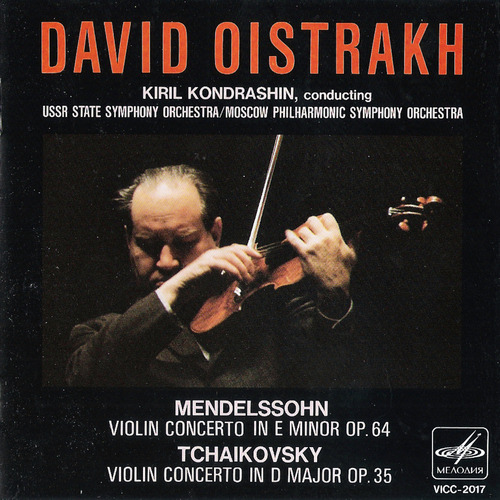
David Oistrakh, Violin
Sviatoslav Richter, Piano
.jpg) |
| Jelly d'Aranyi and Bela Bartok |
Later at a dinner with Bartok in Paris, Ravel
decided to write his own Hungarian style pastiche.
He had been inspired by Bartok's musicological
research on Hungarian folk music and the gypsy
style variations that Ms. d'Aranyi had performed.
Ravel wrote to Bartok:
"You have inspired me to write a short piece of diabolical
difficulty, conjuring up the Hungary of my dreams.
Since it will be for violin, why don't we call it 'Tzigane?'"
This went on until five in the morning and presumably
was the first event in the history of Ravel's
Tzigane for violin and orchestra.
 Ravel completed the Tzigane
(which means "Gypsy")
TZIGANE
Orchestra Version
(With Notation)
Joshua Bell, Violin
Andrew Litton, Conductor
Royal Philharmonic Orchestra
(which means "Gypsy")
 |
| Vincent Van Gogh: The Gypsy Caravans or Camping Around Arles |
just shortly before its premiere in April 1924;
the orchestral version was given for the first
time half a year later. On both these occasions,
the soloist was Mlle. d'Arányi, who was
dedicatee of the violin sonatas by Vaughan-
Williams and Bartók as well as of the present
work. It was also she who spurred the unearthing
of Robert Schumann's Violin Concerto in 1937
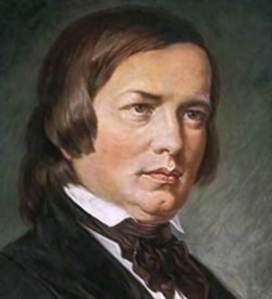 |
| Robert Schumann |
When it was new, a striking feature of Tzigane
in its original violin-and-piano version was Ravel's
use of the recently devised piano-luthéal,
PIANO LUTHEALPhilharmonia Orchestra (London, UK)
(A piano which combined plucked and struck strings to
suggest the sound of the Hungarian cimbalom.)
a modified grand piano that allowed the player to
alter the timbre of the instrument by employing
harmonium-like stops set above the keyboard to
produce a variety of sounds (lute- and harpsichord-
like, as well as the normal timbre of the piano).
One of these stops—fittingly, for Tzigane—
created a sound similar to the Hungarian

CIMBALOM SOLO
traceable back to the sixteenth
century. Ravel also called for this
instrument in his opera
L'Enfant et les sortilèges
 |
| http://boleravel.blogspot.com/2012/05/agenda -des-concerts-de-la-saison-2012.html |
("The Child and the Magic Spells"),
completed in 1925.
L'ENFANT ET LES SORTILEGES
Philippe Gerard, Musical Director
Philippe Gerard, Musical Director
In any event, the first performance of Tzigane
astounded both the composer and the audience,
especially given the limited rehearsal time.
Ravel's ability to write for an instrument he had
never studied also attracted notice. The reviewer
for the London Times, however, was skeptical.
Describing the piece as
"rhapsodical in the literal meaning of the
word, being a series of episodes in the
Hungarian manner strung together,"
he was
"puzzled to understand what M. Ravel is at.
Either the work is a parody of the Liszt-
Hubay-Brahms-Joachim school of Hungarian
violin music…or it is an attempt to get away
from the limited sphere of his previous
compositions to infuse into his work a
little of the warm blood it needs."
Such commentary seems superfluous. Tzigane
is, simply and straightforwardly, a virtuoso
showpiece, opening with an extended "quasi
cadenza" for the soloist and, along the way,
using just about every violinist trick in the book.
In this piece Ravel follows the pattern
of a traditional czárdás dance,
 |
| Andor Heller: Czárdás |
which leads to a rhapsodic friska,
or fast section. The friska is presented
as a festive, frenzied dance in the form of a
loose set of variations. Ravel uses two
themes: one previously used in the czárdás,
and another introduced toward the middle of
the main section. The piece culminates
in a whirlwind finale.
Tzigane opens with an extended solo,
similar to a cadenza or free fantasia,
A cadenza features the soloist
without accompaniment, and if
it isn't improvised on the spot, it
is supposed to sound like it is.
for the violin (Lento, quasi cadenza),
buried in the middle of which is a
theme characterized by a dotted-rhythm,
falling-fifth figure which serves as the
melodic center for much of the work.
Nearly halfway into the length of the work
the piano (or harp, in the orchestra version)
enters with its own chromatic mini-cadenza
as the soloist's fiery technical gestures
and robust double stops subside into
flickering double tremolos and a pair of
unaccompanied trills that usher in the main
body of the piece.
The remainder of Tzigane is worked out in
a clearly sectional manner. After a
restatement of the falling-fifth idea by
the violin, the piano produces its own little
theme, a staccato tune that makes thorough
use of the typically "gypsy" interval of an
augmented second. Some time later, a
bombastic Grandioso breaks in. After a brief
pause, the violin resumes in sixteenth note
perpetual motion, colored by such features

(Excerpt)
Left Hand Pizzicato

time and again until it finally achieves
unstoppable momentum. The work comes
to an end with three incisive chords (marked
pizzicato, but often played with the bow).
LINKS
http://imslp.org/wiki/Tzigane_(Ravel,_Maurice)
http://en.wikipedia.org/wiki/Tzigane
http://www.gotomidori.com/english/musicnote-200302/musicnote-07ravel.html
http://www.timsummers.org/?page_id=62
http://musimelange.com/?p=1044
http://bso.http.internapcdn.net/bso/images/program_notes/Ravel_Tzigane.pdf
http://www.lawrencebudmen.com/program_notes_concert_gluzman_feldman.html
http://www.anne-sophie-mutter.de/back-to-the-future-ravel.html?&L=1
http://www.cpr.org/article/Ravel_Tzigane
http://www.troychromatics.org/114season/pdfs/TCC114-2LaraStJohnProgram.pdf
http://www.violinist.com/discussion/response.cfm?ID=17996
https://www.youtube.com/watch?v=zTHAeo0uEAI
http://imslp.org/wiki/Tzigane_%28Ravel,_Maurice%29
http://www.redwoodsymphony.org/history/prognotes.aspx?ID=451
http://img.soundsondemand.com/prd_pdf/00002359.pdf
http://www.loc.gov/rr/perform/concert/pdf/program-10282011.pdf
http://grsymphony.org/sites/default/files/pdf_downloads/Tzigane.pdf
http://www.njsymphony.org/events/detail/koenig-conducts-dvorak#discover-more




.jpg)
.jpg)
.jpg)


.jpg)

.jpg)


.jpg)
.jpg)
.jpg)
.jpg)
.jpg)