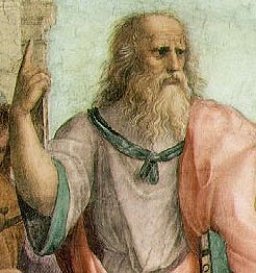
"Music is given to us with the sole purpose of establishing
an order in things, including, and particularly, the co-
ordination between man and time."
AUTHOR: Igor Stravinsky
 MEANING OF THE QUOTE:
"Music is a way that man has emotionally
"Music is a way that man has emotionally
recorded his history throughout time."
COMPOSER:
PETER ILYICH TCHAIKOVSKY
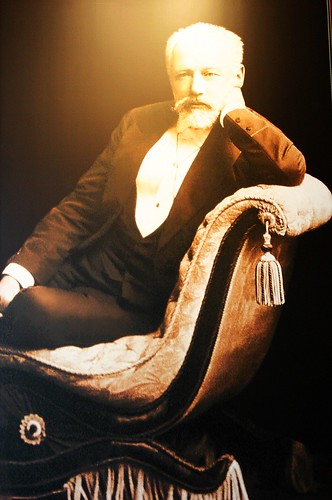

SLAVONIC MARCH
IN B-FLAT MINOR, OP. 31
(MARCHE SLAV)
Leonard Slatkin, Conductor
St. Louis Symphony Orchestra
INTRODUCTION


The Marche Slav in B-flat minor, Op. 31 (published as Slavonic March)
or Serbo-Russian March (as Tchaikovsky referred toit as he was writing it)
is a patriotic orchestral Tone poem about the Turko-Serbian War (1876
conflict between Serbia and the Ottoman Empire or Serbian–Ottoman War
1876–78) composed by Pyotr Ilyich Tchaikovsky and published in October,
1876. "Marche Slave" is the French title given this piece to which it
is most commonly called. It was premiered in Moscow on
November 17, 1876, conducted by Nikolai Rubinstein.
The Marche Slav in B-flat minor, Op. 31 (published as Slavonic March)
or Serbo-Russian March (as Tchaikovsky referred toit as he was writing it)
is a patriotic orchestral Tone poem about the Turko-Serbian War (1876
conflict between Serbia and the Ottoman Empire or Serbian–Ottoman War
1876–78) composed by Pyotr Ilyich Tchaikovsky and published in October,
1876. "Marche Slave" is the French title given this piece to which it
is most commonly called. It was premiered in Moscow on
November 17, 1876, conducted by Nikolai Rubinstein.

CONFLICT

In 1875, lingering discontent within the Ottoman Empire in the Balkans
erupted in a chain of furious events that culminated in a major war. High
taxation sparked a revolt in Bosnia and this was followed, early in 1876,
by a Bulgarian uprising aimed at overthrowing the Turkish rulers. The
Turks responded with a merciless massacre of people hoping to put a
quick end to the rebellion and discourage further unrest by making an
example of the Bulgars. However, outraged by the atrocities, the
Serbians rose up to support the oppressed Bulgars.

The Russians, who always resented the Ottoman Empire and even had
ambitions of capturing Istambul, supported and encouraged the Serbs
in their revolt. The tiny Balkan nations of Serbia and Montenegro
declared war against the Ottomans in June, 1876.

However, in July and August, the ill prepared Serbian army suffered
several crushing defeats from the Turks, and on August 26, Serbia
pleaded with the major European powers for mediation in ending the
war. By autumn, volunteer Russian soldiers (with Czar Alexander II's
 |
| Czar Alexander II |
support) openly supported Serbia were streaming off to reinforce
the Balkan side, with public opinion solidly behind them.
the Balkan side, with public opinion solidly behind them.
 |
| "God Save the Tsar" |
Russia declared war upon Turkey in April 1877 and after a short war the
Turks negotiated for peace in January, 1878. The Russians bowed to
international pressure and settled for the independence of
Serbia, Romania and Montenegro.
Serbia, Romania and Montenegro.

There has been much conflict in this region. The following graphically
shows geographic changes made to this area from 1796-2008.

PERFORMANCE
During the conflict, the Russian Musical Society of Moscow, under
pianist/conductor Nikolai Rubinstein, organized a a benefit concert
on behalf of Russian soldiers who fought and were wounded in the
conflict alongside the Serbs against the Turks. He asked Tchaikovsky,
who was a sympathizer with the Slavonic cause, to compose a piece
for the occasion. Tchaikovsky responded with the Slavonic
for the occasion. Tchaikovsky responded with the Slavonic
March which he composed in just five days.

Marche Slav is a big, colorful, and bombastic work laid out for a large
orchestra including an impressive battery of percussion. Some might
describe it as a propaganda piece designed to appeal to its listeners'
patriotic feelings. After its premiere an unnamed person
described the scene of the audience's reaction:
described the scene of the audience's reaction:
"The rumpus and roar that broke out in the hall beggars description.
The whole audience rose to its feet, many jumped up upon their seats:
cries of 'bravo' and 'hurrah' were mingled together. The march had to
be repeated, after which the same storm broke out afresh … It was one
of the most stirring moments of 1876. Many in the hall were weeping."

THE MUSIC
Tchaikovsky described his rousing work on the title page of
Tchaikovsky described his rousing work on the title page of
the manuscript as "Serbo-Russian March on Slavonic Folk
Themes" to which he musically programmed the conflict by
including 3 songs taken from a published collection of
authentic Serbian folk tunes (which he marked on the
manuscript of the piano arrangement) and employed, not
for the first or last time, the Russian National Anthem "God
Save the Tsar," which had been written in 1833 by Alexei Lvov
 |
| Alexei Lvov (1799-1870) |
who had won a competition for a new Russian National
Anthem in 1833. The Anthem remained in use
until the Bolshevik Revolution of 1917.
Anthem in 1833. The Anthem remained in use
until the Bolshevik Revolution of 1917.
[Tchaikovsky also used it in some other of his works:
The well known 1812 Overture (MP3) (1880),
March for the Volunteer Fleet (MP3) (1878),
and in the Festival Coronation March he composed in 1883 (MP3)
for the coronation of Tsar Alexander III.]


The music begins, as Tchaikovsky noted in the score,
"with the movement of a funeral march"
describing the oppression of the Serbs by the Turkish.
It uses Serbian folk songs: the first "The Sun Does Not Shine Brightly"
("Sunce jarko, ne sijaš jednako") or "Bright sun, You Do Not Shine
Equally" appears at the beginning (from bar 5) after a four-measure
introduction in which lower strings and timpani set the marching pace,
and dominates the opening section,
https://www.youtube.com/watch?v=UXZn7DASlaU
describing the oppression of the Serbs by the Turkish.
It uses Serbian folk songs: the first "The Sun Does Not Shine Brightly"
("Sunce jarko, ne sijaš jednako") or "Bright sun, You Do Not Shine
Equally" appears at the beginning (from bar 5) after a four-measure
introduction in which lower strings and timpani set the marching pace,
and dominates the opening section,
the next from from bar 86, "The Kind Serb's Doorstep"
("Prag e ovo milog Srba"), and from bar 104, "Their Guns
Do Not Make Him Afraid" ("Er puscani pra ne zadae nemu strah"),
also alternatively known as "The Serb is Happy to Go to War"
("Rad itti serb na voinu s vragami") [or "Gladly Does the Serb
Become a Soldier" ("Rado ide Srbin u vojnike")]
A more cheerful second section in the relative major key
signals the Russian arrival to support their Serbian allies.
This is based on a simple melody with the character of a
rustic dance which is passed around the orchestra until
finally it gives way to a solemn statement of the Russian
national anthem, "God Save the Tsar" (bars 123–134)

which makes its first appearance and used in the music
to depict the Russians coming to rescue the Serbs. [A
tempestuous third section later reprises this melody (bars
205–219) reiterating the Serbian cry for help.]
signals the Russian arrival to support their Serbian allies.
This is based on a simple melody with the character of a
rustic dance which is passed around the orchestra until
finally it gives way to a solemn statement of the Russian
national anthem, "God Save the Tsar" (bars 123–134)
which makes its first appearance and used in the music
to depict the Russians coming to rescue the Serbs. [A
tempestuous third section later reprises this melody (bars
205–219) reiterating the Serbian cry for help.]
The final section describes the Russian volunteers marching
to assist the Serbs and includes another blazing rendition of
"God Save the Tsar" prophesying the triumph of the
Slavonic people over tyranny. The overture finishes with
a virtuoso coda for the full orchestra.
"God Save the Tsar" prophesying the triumph of the
Slavonic people over tyranny. The overture finishes with
a virtuoso coda for the full orchestra.


LINKS

Compare Marche Slav
to this modern version:
Accept
By Metal Heart