Showing posts with label Poland. Show all posts

Wednesday, September 9, 2015

FRIDAY, AUGUST 21, 2015

QUOTE:
"Tones sound, and roar and storm about me
   until I have set them down in notes."
AUTHOR: Ludwig van Beethoven

MEANING OF THE QUOTE:
"Some artists can never rest until they
  are allowed to express themselves."

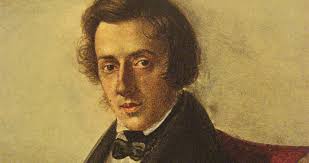
COMPOSER:
FREDERIC CHOPIN
ETUDE IN C-MINOR OP. 10, NO. 12
REVOLUTIONARY (1831)
"FALL OF WARSAW"
ETUDE IN C-MINOR OP. 10, NO. 12
REVOLUTIONARY (1831)
"FALL OF WARSAW"
Chopin was inspired to write this piece,
initially called the Étude on the Bombard-
ment of Warsaw, during his Polish homeland's
unsuccessful revolution against Russia
after the Russian attack on Warsaw during
An etude is a French word for a musical
study piece (short composition) for a solo
instrument designed to provide practice
material for perfecting a particular musical
skill. It is intended to demonstrate
technical virtuosity; a musical exercise.
Russian assault on Warsaw in 1831
The Battle of Warsaw was fought in
September 1831 between Imperial Russia
and Poland; a Polish rebellion that un-
successfully tried to overthrow Russian rule
as in the Polish provinces of western Russia
and parts of Lithuania, Belorussia, (now Belarus),
and Ukraine. After a two-day assault of the city's
western fortifications, the Polish defenses
collapsed and the city was evacuated. It was
the largest battle of the Polish-Russian War of 
1830–1831 and the final episode of what
became known as the November Uprising.
Emila Plater Conducting Polish Scythemen in 1831
Due to poor health Chopin could not fight
for his beloved country so he wrote
this music as a tribute instead.
ETUDE IN C-MINOR OP. 10, NO. 12
REVOLUTIONARY (1831)
"FALL OF WARSAW"
Sviatoslav Richter, Piano
Marcin ZaleskiCapture of the Arsenal in Warsaw 1830
ETUDE IN C-MINOR OP. 10, NO. 12
REVOLUTIONARY (1831)
"FALL OF WARSAW"
Ignace Paderewski, Piano
Together with the radio interview of Ignaz Friedman,
speaking on Paderewski, in 1940.
https://www.youtube.com/watch?v=UNlBp9TM2Pc
Juliusz Kossak: Battle of Ostrołęka, 1831
This is a nationalistic solo piano work by
Frédéric Chopin written circa 1831, and
the last in his first set, Etudes Op.10,
dedicated "à son ami Franz Liszt"
("to his friend Franz Liszt").
Franz Liszt in his
Travelling Coat
Chopin often used his music to pour his
emotions out on the matter of the suppression
of the Polish people by the Russians.
Karol Malankiewicz: 1831 Battle of Ostroleka, 1828
During this time period he produced some of
his darkest and most passionate works
such as the Scherzo No. 2
SCHERZO NO. 2
IN B-FLAT MINOR,
OP. 31 (1837)
and this etude which expressed the
strong feelings that emerged in him
after hearing of Poland's failure
in its rebellion against them.
Juliusz Kossak: Charge of Poznań Cavalery During November Uprising
Chopin stated,
"All this has caused me so much pain.
Who could have foreseen it!"
File:Kingdom of Poland 1830-1831.PNG
Kingdom of Poland 1830-1831
The "Revolutionary Étude" holds its place as
one of the most eminent and well recognized
of all of Chopin’s compositions.
In the beginning, after a strong dramatic first
chord rings out, perhaps likening the opening
chord to a gunshot, the ensuing tumultuous left
hand, playing low notes, runs relentlessly
(the technical difficulty is in the left hand

having rapid runs and frequent turns
including poly-rhythms and cross-rhythms)
giving the piece a sullen, dramatic
theme; a sense of chaos or war.
Battle of Iganie: April 10, 1831
Above it is added the impassioned melody in the
right hand which could be interpreted as
a hero fighting a battle in a war.
Wojciech Kossak: A Night of November
A Scene from the November Insurrection of 1830-1831
The higher notes are a nice change in

the song, offering a glimpse of hope during a
time of such despair for the Polish people
although this is quickly shot down with the
sad sounds of the lower notes. Alternating the high
and low notes increases the drama in the song.
Battle of Bialoleka: February 25, 1831
Another technique to note is the sporadic playing
of piano notes. The song doesn't repeat a measure
once which adds to the sense of chaos.
Jan Rosen: Battle of Stoczek, 1831
This, of course, was common for a song
written during the Romantic era which
experienced stylistic changes in music chang-
ing to emotional writing instead of writing
for patrons (moving from order and rules,
as seen in the Baroque and Enlightenment
periods, to Romantic spontaneity).
REVOLUTIONARY ETUDE
SHEET MUSIC
After a hard struggle, the piece ends quite as
chaotically and dramatically as it started, yet in C-
major in stead of the stormy key of C minor in which
it began, leaving us with a sense of ambiguity; we
are not sure if our hero prevailed or perished,
but we do know that he fought bravely
with both body and spirit.
LINKS

Tuesday, August 25, 2015

TUESDAY, AUGUST 25, 2015

QUOTE:
"There is at the top. There are
  always further heights to reach."
AUTHOR:  Jascha Heifetz
MEANING OF THE QUOTE:
"There is always a way to improve yourself."


COMPOSER:
FREDERIC CHOPIN
Subtitled "Sadness" or "Tristesse," possibly by
the publishers, because of the great beauty of
the melody (which Chopin reportedly had said he
would never write anything more beautiful), this
etude is primarily a melodic study. It involves a
lot of work on the independence of the
fingers, each hand playing two distinct voices.
ETUDE OP. 10
NO. 3 IN E MAJOR
"TRISTESSE"
Valdimir Horowitz, Piano
ETUDE OP. 10
NO. 3 IN E MAJOR
"TRISTESSE"
Ignace Jan Paderewski, Piano
ETUDE OP. 10
NO. 3 IN E MAJOR
"TRISTESSE"
Alfred Cortot, Piano
ETUDE OP. 10
NO. 3 IN E MAJOR
"TRISTESSE"
Maurizio Pollini, Piano

ETUDE OP. 10
NO. 3 IN E MAJOR
"TRISTESSE"
Valdimir Ashkenazy, Piano

ETUDE OP. 10
NO. 3 IN E MAJOR
"TRISTESSE"
Jan Lisiecki, Piano
ETUDE OP. 10
NO. 3 IN E MAJOR
"TRISTESSE"
Arrangement for Orchestra
Andre Kostelanetz, Conductor
Columbia Symphony Orchestra
This etude owes its popularity in
non-professional circles to the fact
that a text was written on its melody,
a century after Chopin's publication,
(and arranged by Alois Melichar
the conductor of the Berlin
Philharmonic Orchestra) called
 
ETUDE OP. 10
NO. 3 IN E MAJOR
"TRISTESSE"
"In Mir ein Lied Klingt"
By Ernst Marischka
The same year, Albert Valentin
wrote a text in French to
this same melody called
"My Heart is Dedicating Its Melody to You"
for a film about Chopin
7
entitled The Song of Farewell
("La Chanson de L'Adieu"),
co-directed by Géza von Bolváry.
This film was later made into a U.S.
This melody is taken over by Tino Rossi
in the song Tristesse (1939),
ETUDE OP. 10
NO. 3 IN E MAJOR
"TRISTESSE"
and Edgardo Donato in the tango
La Melodia del Corazón (1940)
ETUDE OP. 10
NO. 3 IN E MAJOR
"TRISTESSE "
"LA MELODY DEL CORAZON"
By Edgardo Donato Romeo Gavio, Vocals

https://www.youtube.com/watch?v=06y_jwDxWwo#t=77

NO. 3 IN E MAJOR
"TRISTESSE"
Song Arrangement
Manca Izmajlova, Vocals
ETUDE OP. 10
NO. 3 IN E MAJOR
"TRISTESSE"
"Dans La Nuit"
Sarah Brightman, Vocals

IN THE NIGHT
LYRICS
(English Translation)
By Anna Lena
And when in the night all fell asleep,
I saw the skies in front of my eyes closed.
In the silence I had found the truth,
As a flower which resembles my heart.
The air seemed lightweight lightweight
And the colors of an infinite softness,
The eyes closed.

The heart so pure
That sees the hope reviving,
Ms. Black made ​​if 
it seems to rain.

And when in the night all fell asleep,
I saw the skies in front of my eyes ferms.
In silence.

The heart so pure
That sees the hope reviving,
Ms. Black made ​​if 
it seems to rain.

And in the dark
can see hope.
http://www.metrolyrics.com/dans-la-nuit-english-in-the-night-lyrics-sarah-brightman.html
ETUDE OP. 10
NO. 3 IN E MAJOR
"TRISTESSE"
"NO OTHER LOVE"
Jo Stafford, Vocals
ETUDE OP. 10
NO. 3 IN E MAJOR
"TRISTESSE"
"THIS DAY OF DAYS"
ETUDE OP. 10
NO. 3 IN E MAJOR
"TRISTESSE"
"SO DEEP IS THE NIGHT"
Webster Booth and Anne Ziegler, Vocals
SO DEEP IS THE NIGHT
LYRICS
So deep is the night
No Moon tonight
No friendly star
To guide me with it's light
Be still my heart
Silent lest my love should be returning
From the world, far apart
So deep is the night
O, lonely night
On broken wings
My heart has taken flight
And left a dream
In my dream our lips are blending
Will my dream be never ending
Will your memory haunt me 'til I die
Alone am I, deep into the night
Waiting for the light
Alone am I, I wonder why
I wonder why.
"TRITESSE"
SADNESS
Pablo Picasso: Femme aux Bras Croises, 1901
"Etude" is the French word for "study."
If taken literally, this would make Chopin's
Etudes just mere studies to exclusive
technical exercises. Although to a certain
extent this was Chopin's intention, he also
wanted to achieve in these etudes a
balance between technical and artistic
aims. By creating very expressive etude
compositions he tying those elements
together he elevated the etude format to
the romantic grandeur which was unpre-
cedented in the earlier history of this genre.
Part of what distinguishes these etudes is a
rhythmic or textural complexity making the
etudes rewarding and unique. In them
Chopin relentlessly pursues sublime and
musically eclectic styles with a wide
range of moods, times, etc.
In all, Chopin wrote 24 etudes made ​​up of
two sets of 12 etudes, Op.10 and Op. 25
which are also suitable for concert perform-
ances), one in each key, like he did in his
Preludes. Each etude explores a different
technical challenge for an advanced
pianist serving as excellent practice
preparation for their repertoire.
Chopin's first set of studies, entitled
Douze Etudes Grande, Op.10,
was composed from 1828 to 1832.
The set was published in June,1833
and dedicated to Franz Liszt.
Of that set, Etude No's. 8-11 were the
first to be completed (originally numbered
7-10) and by 1831, when Chopin arrived
in Paris, all but No's. 3 and 4 had been com-
pleted. (On completion of the set their order
was arranged into a cycle for publication.)
Op.10 No. 3, named "Tristesse" (meaning
"sadness" in French) some say by Chopin himself,
was completed on August 25, 1832. It is of signifi-
cance that Chopin may have put a name to this
piece as he did not name many of his etudes.
This etude for solo piano is a slow cantabile
study (known for its fluid romantic operatic-
type phrasing manifesting Chopin's love for
Romantic opera) in which the right hand
must maintain a singing tone in the melody
whilst contributing to the accompaniment.
It marks a significant departure from the
technical virtuosity required in etudes written
before Chopin's time because instead of con-
centrating on technical skills it instead
focuses on melodious phrasing and legato
ambiance of performance. To this,
von Bülow once stated,
Hans von Bülow
"It is a study in expression."
Some critics have classified this as a
miniature piano etude tone-poem be-
cause the music never fails to move it's
listeners (particularly when the haunting
theme returns after the middle section's
dramatic outbursts composed of
intervals of fourth and sixth's).
The popular Etude Op. 10 No. 3 is set
apart from many of the other Op. 10 and
Op. 25 etudes most noticeably by its
tempo. Chopin originally envisioned it in
a much faster time than played in record-
ings we hear performed in today. Chopin's
first tempo marking was that of Vivace,
later changed to Vivace ma non troppo.
Only for its French publication, in 1833,
was the tempo of the outer sections
dramatically slowed down to Lento ma
non troppo. While many of the other
etudes in these two sets are whirlwinds
of notes, this etude, with the slower tempo,
is calmer and (due in part to that change)
is incredibly emotional and musical.
 
The primary technical focus here is playing
in three voices. The right hand plays the
melody and the left hand plays accompany-
ing notes. However, there is a sixteenth-
note third between the melody and bass,
played by both hands. In the middle of the
piece, the difficulty shifts to fast playing of
chromatic fourths, which could pose a
challenge to pianists who could otherwise
technically handle this piece with ease.
However, technique aside, expression-wise,
even the theme portion of this etude
is not without difficulties.
Herbert Weinstock
in his biography on Chopin stated,
"if it is relatively easy to play, it is
maddeningly difficult to play well."
In the middle section of this Etude, the
music splinters into symmetrically mirrored
figurations (littered with accidentals and
irregular rhythms) which threaten to lose
touch with an underlying harmonic found-
ation. In such passages we sense harmony
dissolving into 'color.' Such chromaticism
creates a sense of dissonance and un-
settledness. By deliberately delaying the
resolution of the dissonance, Chopin creat-
ed feelings within the listener of tension,
mystery, and the yearning for hope; hope
of the ultimate resolution and return to the
tonic, the ultimate home; his home, Poland.
This is heard when the torrential variation
eventually coalesces into the gentle rhythm
of the first theme, and the coda begins with
the final restatement of the first theme.
Again, what makes this particular etude not-
able, however, is not its technical difficulty,
it is the nostalgia, the wistfulness, and the
emotion that flow through the music. The
music had a special, private meaning for
the composer. As related by a famous
anecdotewhen his pupil and
friend, Adolf Gutmann,
played it at a lesson, Chopin
broke down and sighed sadly,
"Oh, my homeland."
Chopin was said to have commented later
on in his life that this piece was most
intimate piece he had ever composed,
that it displayed the melody so beautifully
that he had never been able to write
another equal to it. He said,
"In all my life I have never again been
able to find such a beautiful melody."
This etude is one of the best expressions of
Chopin's nationalism
Joseph Chełmoński: Fine Weather Hawk (Polish Scenery)
and the love he felt for his Poland.
SOME FAMOUS PLACES IN POLAND
DURING THE TIME OF CHOPIN
K. F. Dietrich: Radziwiłł Palace, First Half of the 19th c.
Warsaw Conservatory Casimir Palace, Warsaw
Wincenty Kasprzycki: View of the Palace in Wilanów (Seen from the Park), Warsaw
 K. F. Dietrich: Warsaw National Theater
on Plac Krasińskich Opposite Krasiński Palace
Jan Seydlitz: A View of Castle Square from Krakowskie Przedmieście, Warsaw
Jan Seydlitz: Łazienki Palace at the Time of a Festival, Warsaw
The etude is not simply sad; it is an
"expression of something beyond sadness."

To play this piece on the piano for less
experienced pianists see this arrange-
ment transposed and arranged
in to the key of F Major:
Here is a simple melody version:

LINKS
http://www.filmowychopin.pl/baza-filmow.html
http://twilightstarsong.blogspot.com/2010/07/music
-monday-chopin-tristesse-so-deep.html
http://www.songfacts.com/detail.php?id=20194