Showing posts with label player piano. Show all posts

Monday, March 30, 2015

MONDAY, MARCH 30, 2015


QUOTE:
"No artist is pleased...there is no satisfaction whatever at any time.
  There is only a strange, divine dissatisfaction, a blessed unrest that
  keeps us marching and makes us more alive than the others."
AUTHOR: Martha Graham
MEANING OF THE QUOTE:
"An artist is never satisfied with his/her art. The
  pleasure the artists gets is in the act   of striving
  for the perfection that will never be realized."


COMPOSER
JOPLIN
http://marvinhamlisch.us/news/scott-joplin/
Stark advertising copy:
"All that we have ever said of 'Maple Leaf Rag' is
true of 'The Entertainer' and more may be said of
that subtle, soulful quantity not seen in the notes
and never found in the marble heart. Hear 'The
Entertainer' well played and if the harp of your
affections doesn't sound an aeolian chord,
then we don't want to know you..."
THE ENTERTAINER
(From a Piano Roll)
Those paper rolls were some kind
of forerunners for juke-boxes.
They were often used in the
penny-in-the-slot player pianos.
"The Entertainer" (1902) is a classic melodic and
rhythmic piano rag written in the jazz idiom of
ragtime, a style to which Scott Joplin is perhaps
the man most responsible and best known for.
It is sub-titled "A rag time two step," which was a
form of dance popular until about 1911 (and a
style which was common among rags written at
the time) with a musical structure:
Intro AA BB A CC Intro 2 DD.
While ragtime began as
a piano style, it was soon
arranged for numerous
musical ensembles and
became very popular
for the American music
of its day.

Joplin's rag,
"The Entertainer,"
THE ENTERTAINER
Instrumental Version
from "The Sting"
Marvin Hamlisch, Arranger
(and consequently a revival of his
other compositions) was made
popular in our time by its use in the 1973
Oscar-winning motion picture "The Sting,"

with a score adapted from the music
of Joplin by Marvin Hamlisch.


The tune became so popular it even
hit on the pop music charts. This new
interest in Joplin's music won so much belated
recognition that a special award was bestowed
posthumously, in Joplin's Bicentennial Year,
for his contributions to American music.
THE ENTERTAINER
Piano Music
THE ENTERTAINER
HARMONIC AND
RHYTHMIC ANALYSIS
The front cover of The Entertainer sheet music. It has a green background and in the centre is a red ink drawing of a stereotyped African-American performer on stage in top hat and tails
THE ENTERTAINER
How to Play Version
THE ENTERTAINER
Violin Version
Itzhak Perlman, Violin
André Previn, Piano

A SHORT HISTORY
OF RAGTIME

https://www.youtube.com/watch?v=rk-3owM_MpU

Monday, December 8, 2014

MONDAY, DECEMBER 8, 2014

QUOTE:
"There is only one real happiness in life,
  and that is the happiness of creating."
AUTHOR: Frederick Delius
MEANING OF THE QUOTE:
"Its more fun to create something yourself
 then to create something yourself then to
 have someone else create it for you."


COMPOSER
DEBUSSY

ARABESQUE NO. 2 in G MAJOR
DEBUSSY PLAYS DEBUSSY:
ARABESQUE NO. 2 in G MAJOR
from Deux Arabesques, L. 66
Allegretto scherzando
Claude Debussy, Piano
(Recorded from a piano roll)
Edgar Degas: End of an Arabesque
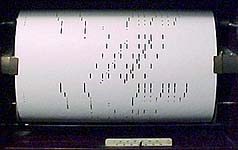
This is a player piano with a roll:
This what the roll looks like up close:

ARABESQUE
Imusic it is an ornate, whimsical
composition especially for piano but
also found in other art forms such as in ballet.
Edgar Degas: The Star-Dancer on Pointe
ARABESQUE NO. 2 in G MAJOR
from Deux Arabesques, L. 66
Allegretto scherzando
Judith Goldstein: Arabesque
ARABESQUE NO. 2 in G MAJOR
from Deux Arabesques, L. 66
Allegretto scherzando
With Animated Score
Saatchi Art Artist: Loui Jover; Pen and Ink 2013 Drawing "arabesque" #Art
Loui Jover: Arabesque
Arabesque in Dance
Arabesque
Claude Francis Barry: Arabesque

Friday, December 5, 2014

DEBUSSY: HEAR HIM PLAY HIS OWN COMPOSITIONS ON THE PIANO

DEBUSSY PLAYS DEBUSSY
Piano Rolls

Preludes, Book1, No. 1: Delphic Dances 03:00
Preludes, Book1, No. 10: Submerged Cathedral 05:40
Preludes, Book1, No. 11: Dance Of Puck 02:25
Childrens Corner (Complete) 12:27
From A Sketchbook 04:22
Evening In Granada, Estampes, No. 2 05:07
Gardens In The Rain, Estampes, No. 3 03:31
Preludes, Book1, No. 8: The Girl With The Flaxen Hair 02:11
Preludes, Book 2, No. 3: At The Gate Of The Vine 03:47
Arabesque, No. 1 in E Major 04:05
Arabesque, No. 2 in G Minor 02:51
Preludes, Book1, No. 2: Sails 02:44
Suite Bergamasque: Moonlight (Claire De Lune) 03:43
Reverie 05:07
Images Set 2, No. 1: Goldfish 02:59
Images Set 1, No. 1: Reflections In The Water 06:01
Piano Roll Production
At QRS Music

Player Piano Rolls
How its Made

DEBUSSY ON HIMSELF
AS A PIANIST
INFORMATION FROM:
(Check out more information on Debussy as a pianist at this site.)

Debussy wrote to Pierre LouĂ¿s on the 16th of October, 1898: 
[I have] the tiresome habit of scattering wrong notes from both
 hands whenever [I have] to play in front of more than two people.
 [Lesure & Nichols p. 102]

In march 1914 a concert was arranged in Amsterdam
 with the works of Debussy's, and he was invited to
perform as a conductor and a pianist. He writes in an
 answer to the conductor Gustav Doret 30th of
January, 1914:
Three piano preludes: I. Dancers of Delphi, II. The Girl with the
 Flaxen Hair, III. La Puerta del vino. In fact that's all my limited
 capabilities allow me to play! If necessary, I could always
 improvise on the Dutch national anthem?
 [Lesure & Nichols p. 286]

A letter from 1915:
But at least I'll see you again and be able to play you these
 Etudes which are giving your fingers such a fright... I may
 say there are certain passages which sometimes bring mine
 to a halt too. Then I have to get my breath back as though
 I'd been climbing a flight of stairs... In truth, this music
 wheels above the peaks of performance! It'll be fertile
 ground for establishing records.
[Lesure & Nichols p. 301]

In a letter to Gabriel Fauré, who apparently had
 asked him to give a concert with the Etudes:
[...] I can no longer play the piano well enough to risk a
 performance of the Etudes... In public a peculiar phobia
 takes hold of me: there are too many keys; I haven't
 enough fingers any more; and suddenly I forget where
 the pedals are! It's unfortunate and extremely alarming.
 [Lesure & Nichols p. 324]

LINKS
http://www.openculture.com/2013/01/debussy_plays_debussy
_the_great_composers_playing_returns_to_life.html