GENERAL MUSIC CLASS INFORMATION SHEET
INSTRUCTOR: MISS JACOBSON
ROOM: 43
OVERVIEW OF CLASS
This year long class is designed as an introduction to music through the playing of instruments: piano, recorder, violin, guitar, and percussion.
OBJECTIVES
01. To learn about note/rhythm reading and other elements of music
02. To gain knowledge of the history of music
03. To be exposed to different genres: musical theatre, classical , folk, and popular music styles
04. To understand basic music terminology
05. To develop listening and focusing skills
06. To work and behave cooperatively in a structured group format
07. To be able to connect music to other subject disciplines such as history, literature, math, and science
BEHAVIOR EXPECTATIONS
01. RULES:
a. No one stops a student from learning.
b. No one stops the teacher from teaching.
c. The classroom must be a safe and respectable learning environment.
d. School rules are to be followed at all times.
02. CONSEQUENCES:
a. Verbal warning
b. Parent contact
c. School discipline rules
03. ADDED WRITTEN WORK ASSIGNMENTS:
a. Use of these assignments will replace points lost by non-participation in the instrument playing activities
b. Maybe assigned to students who are unable to play instruments due to medical issues
c. Will be assigned to students with behavioral issues
d. Can be used to earn extra credit or make-up points toward the final grade
CLASS PROCEDURES
01. CLASSROOM SUPPLIES:
a. Pencils, pencil sharpeners, paper, and other instructional materials will be supplied for each student.
b. These materials are intended for proper classroom use and not to be used for any other purpose.
c. These supplies are to remain in class at all times and not taken out of the classroom without the teacher’s permission.
02. MUSICAL INSTRUMENTS:
a. All instruments will be supplied for students to use for free.
b. These instruments to be used in class either belong to the school or are supplied at the teacher’s personal expense.
c. Rules and procedures for the use of the instruments will be taught and followed at all times.
d. Deliberate misuse of the instruments will not be tolerated.
e. All instruments are to remain in the classroom and never taken home with the exception of instruments loaned out with parent –signed permission forms.
f. Students will not be held accountable for the general maintenance of the instruments.
g. Personal Instruments:
01. No personal instruments are required to be supplied by parents.
02. Any personal instruments are brought to school at the student’s own risk.
03. These instruments should not be taken to school without parent permission.
04. Instruments should have proper identification on them.
05. Given allowable space, instruments may be stored in the music classroom during the school day and picked-up after school.
03. PERSONAL BELONGINGS:
a. All personal belongings (backpacks, books, etc.) will be placed at the back of the room upon entering class.
b. General classroom space will be taken up by the use of the instruments so personal belongings, possibly left in walk paths, could create accidents or cause breakage to the instruments.
04. BATHROOM, WATER, NURSE:
a. To keep the classroom a safe environment in which to work, there will be no unnecessary leaving of seats without permission during class instructional time.
b. Students with signed-parent permission notes will be exempt from this rule.
c. Students with emergency needs will be sent to the nurse with a note which will be returned (signed by the nurse) to the teacher upon returning to class.
d. Use of bathroom facilities follow procedures set down by the school (sign-out sheets posted by the door and bathroom pass are to be used).
05. CLASSROOM TEMPERATURE:
a. Due to wooden instruments that are affected by climate, the classroom temperature is kept deliberately on the cooler side.
b. Students need to dress for class accordingly.
c. If needed, any student may bring to class an old sweater, sweatshirt, etc. to store in class permanently to use.
06. ASKING QUESTIONS:
a. Classroom/Topic Related
01. Students are to raise hands and wait to be called upon to ask questions.
02. Questions should be related to the topic being discussed.
03. “What-if” type questions used deliberately to waste time in class should be avoided.
04. The teacher will be available most lunch periods and after school hours to meet with students who want further explanations or extra instruction.
b. Personal
01. Personal questions are those related to a student’s personal grade, missing class work, etc.
02. Personal questions should be asked during non-instructional time, preferably after class hours.
GRADING
01. Point Percentage Grading for Both Academics and Work Habits:
100%-90% “A”
89%-80% “B”
79%-70% “C”
69%-60% “D”
59%- “F”
02. All points need to be made up if absent except “Participation” points
03. Ask teacher after class hours for missed and/or make-up work
04. Daily Participation: 1 point
a. Student participates in the group activity cooperatively
b. Student tries to follow proper procedures as taught by the teacher
c. Point taken away as a poor choice behavior consequence
d. This point does not need to made up if absent
05. Daily Quote (starting activity): 1 point
a. Students copy quote and write their own interpretation of the meaning
b. Short classroom discussion to help formulate answer
c. This activity done while listening to classical music of different composers
06. Composer Reports: points to be announced
a. 1 point for each completed page, 2 points for the personal reflection
b. Reports done in class with teacher guidance
c. Report based on a classical composer’s music listened in class during the quote activity
07. Tests and/or Quizzes: points to be announced
08. Theory Worksheets: 1 point per page (unless otherwise specified)
a. Theory work consists of note reading, rhythmic counting, musical form analysis, terminology, etc.
b. All worksheets to be discussed and worked on together in class
09. Musical Theatre (Opera) Notes/Reports/Quizzes: points to be announced.
a. Notes taken in class with teacher guidance
b. Students introduced to a famous musical (or opera)
c. Students watch, take notes, and discuss sections of the musical each week
d. Report and/or quiz at conclusion
10. Other assignments (instructional documentaries, demonstrations, etc.) to be announced.
SPECIAL NOTE ON GRADING
EVERY STUDENT SHOULD RECEIVE THE GRADE THEY WANT BECAUSE ALL POINTS CAN BE MADE UP.
EXAMPLES OF HOW TO MAKE UP MISSING POINTS:
01. RETAKING OR REDOING QUIZZES, TESTS, AND/OR ASSIGNMENTS UNTIL THE DESIRED POINTS RESULT
02. DOING MISSING ASSIGNMENTS
03. FINISHING INCOMPLETE WORK
04. USING MUTUALLY AGREED UPON (ARRANGED WITH THE TEACHER) REPLACEMENT ASSIGNMENTS
05. EXTRA CREDIT ARRANGED WITH THE TEACHER
(UP UNTIL ONE WEEK BEFORE EACH FORMAL GRADING PERIOD ANY MISSING POINTS CAN BE MADE UP)
SCHEDULES
WEEKLY SCHEDULE
01. This class will be taught in sections
02. There will be different days for different activities
03. Schedules may be altered as to specific instructional needs or holiday interruptions
IMPORTANT*****
ADDED INFORMATION ON RECORDERS
01. RECORDERS WILL BE SUPPLIED BY THE SCHOOL
02. EACH STUDENT WILL BE GIVEN A SOPRANO RECORDER.
03. SOME RECORDERS ARE NEW, OTHERS USED BUT CLEAN AND SANITIZED.
04. NO STUDENT WILL EVER SHARE RECORDERS WITH ANYONE ELSE.
05. STUDENTS WILL BE REQUIRED TO SUPPLY A LARGE ZIP-LOCK TYPE PLASTIC BAG TO KEEP THEIR RECORDER STORED IN WHEN NOT IN USE. THIS BAG IS TO BE REPLACED IF IT GETS TORN OR DIRTY.
06. RECORDERS WILL HAVE IDENTIFICATION LABELS PLACED AND KEPT ON THEM AT ALL TIMES
07. SCHOOL RECORDERS WILL REMAIN IN CLASS FOR SAFE STORAGE
08. ANYONE WHO WISHES TO HAVE THEIR OWN SOPRANO RECORDER INSTEAD OF USING THE ONE SUPPLIED BY THE SCHOOL WILL BE ALLOWED TO AS LONG AS THE RECORDER IS SIMILAR (IT DOES NOT HAVE TO BE THE EXACT BRAND) TO THE INSTRUMENT WE ARE USING IN CLASS AND HAS A STUDENT IDENTIFICATION LABEL ON IT.
Please have the following tear-off signed and returned to the teacher acknowledging that this document has been read and understood. I am looking forward to having a wonderful year!
Thank-You,
Miss Jacobson.
……………………………………………………………………………………………………………………………
I have read over this music information with my child and understand its content.
Student Name: ___________________________________________________
Date: ________________________
Parent Signature: __________________________________________________
Parent Contact Information: ______________________________
Any questions?
Showing posts with label general music. Show all posts
Showing posts with label general music. Show all posts
Tuesday, February 1, 2011
Monday, December 13, 2010
TERMS, PLACES, and FAMOUS PEOPLE INTRODUCED IN GENERAL MUSIC CLASS SEMESTER 1
THIS SECTION IS A WORK IN PROGRESS. I WILL BE ADDING TO THE LIST AS THE SEMESTER CONTINUES.
Accompaniment:
A vocal or instrumental part that supports the primary part, or provides background for a soloist.
Acoustics:
1. The science relating to the creation and dissipation of sound waves. 2. The way in which sound production is affected by the physical properties of the room or chamber in which they are produced.
Act:
The largest division of a play or opera, which can be sub-divided into scenes
Ambidextrous:
Anderson, Leroy:
Apollo:
Articulation:
The way notes are joined to one another when forming a musical line, e.g. staccato, legato, tenuto, glissando, slur, phrase mark, accents, sforzandos, rinforzandos, etc.
Aulos:
Author:
Automatic Reflex:
Battery Percussion:
Bach, C.P.E.:
Bach, J.S.:
Ballet:
Banjo:
Banjar:
Bar Line:
A vertical line (or lines) drawn across a staff (or if there are many lines, across a number of staves) to mark off measures of a particular length, i.e. containing a number of notes and/or rests whose total time value is given by the time signature
Baroque:
The musical era from roughly 1600 to 1750 A.D., characterized by the establishment of major and minor tonality, rather than modes, and the introduction of opera.
Bart, Lionel:
Bass:
Lowest part; often the lowest in a family of instruments, for example, bass saxophone, bass clarinet, bass trombone, etc.
Beam:
Horizontal line linking two or more notes that individually would have had flags
Beat:
The regular pulse of music which may be dictated by the rise or fall of the hand or baton of the conductor, by a metronome, or by the accents in music. Related to the heartbeat; it is the unit of musical rhythm.
Beethoven, Ludwig Van:
Bell Tree:
Long stick with cup shaped-bells, ordered in pitch, suspended from it
Berlin, Irving:
Bernstein, Leonard:
Binary Form:
A two-part song form consisting of an initial section, which is then followed by a contrasting section. (AB)
Body Percussion (BP):
Using the human body to produce percussive sounds. Examples of body percussion are the actions of stomping, patsching, clapping, and snapping.
Bongos:
Smaller and shallower than conga drums, come in pairs: one drum is slightly larger and lower in pitch than the other. The larger drum is about 7" in diameter, and the smaller is about 5". The contrast between the higher and lower pitch gives the bongos their distinctive sound. A bongo player holds the drums between his/her knees and strikes the drums with his or her hands. The bodies of the bongos are made of wood, and a small piece of wood connects the two drums. Bongos were originally created around 1900 in Cuba to be used in dance bands.
Boulanger, Nadia:
Brandenburg:
Bravo:
Brubeck, Dave:
Cabasa:
Cage, John:
(September 5, 1912 – August 12, 1992) He was an American composer, philosopher, poet, music theorist, artist, print maker,[1] and amateur mycologist and mushroom collector. A pioneer of chance music, electronic music and non-standard use of musical instruments, Cage was one of the leading figures of the post-war avant-garde.
Canon:
Castanets:
(from the Spanish casstano, meaning 'chestnut') a percussion instrument (idiophone) much used in Moorish music, Gypsy music, Spanish music and Latin American music. The instrument consists of a pair of concave shells joined on one edge by string. These are held in the hand and used to produce clicks for rhythmic accents or a ripping or rattling sound consisting of a rapid series of clicks. They are traditionally made of hardwood, although, Bakelite was and fibreglass is now popular. In practice a player usually uses two pairs of castanets. One pair is held in each hand, with the string hooked over the thumb and the castanets resting on the palm with the fingers bent over to support the other side. Each pair will make a sound of a slightly different pitch. The higher pair, known as hembra (female), is usually held in the right hand, with the larger macho (male) pair held in the left
Celesta:
Cello:
Chopin:
French composer (born in Poland) and pianist who wrote music in the romantic style. (1810-1849).
Choreographer:
A person who invents the sequence of steps and movements that make up a ballet or dance, a term that has now replaced 'ballet master', 'dancing master' and le maître à danser
Chromatic:
Motion by half steps; or pitches used outside of the diatonic scale in which they normally occur.
Chromatic Scale:
Includes all twelve notes of an octave.
Classical:
Clapping:
To strike the palms of one's hands together, repeatedly (as in an applause); a body percussive movement
Claves:
(from clavija, literally 'wooden peg') a pair of round sticks, about 7" long, made of hard wood (rosewood is popular), beaten together and used in Cuban music. The larger of the two sticks is called the hembra and the smaller macho. One clave is cupped loosely in the hand and is struck with the other. The clave are used widely in Latin America, and are most popular in Cuba. The usual rhythm played on the claves is called clave
Clavichord:
Clef:
The symbol used at the beginning of a staff to indicate which lines and spaces represent which notes. In modern practice, only three clefs are commonly used, the G clef or treble clef, the F clef or bass clef, and the C clef, when used as an alto clef.In sheet music, a symbol at the beginning of the staff defining the pitch of the notes found in that particular staff.
Coda:
The concluding passage of a movement or composition [Italian, from Latin cauda, tail].
Como, Perry:
Concerto:
A piece for soloist(s) and orchestra.A composition written for a solo instrument. The soloist plays the melody while the orchestra plays the accompaniment.in classical music, the word concerto is a label for a piece in which a small musical group and a large musical group are given distinct roles, with the smaller group to the fore. The most common kind of concerto pairs a solo instrument with a full orchestra. The term also implies the form of a piece as most concerti follow sonata form, typically found with three movements
Conductor:
One who directs a group of performers. The conductor indicates the tempo, phrasing, dynamics, and style by gestures and facial expressions.
Consonance:
Counterpoint:
Cowbell:
A thin walled iron bell mounted on a frame, with its clapper removed, used as an orchestral percussion instrument, often to mimic the dry sound of bells worn by animals; in Latin-America, the cowbell is descended from the guataca, and includes the timbale-mounted bells (mambo, cha-cha, charanga), campana, agogo and comparsa bells. The patterns performed on these bells, when used either alone or simultaneously, make up most of the metallic percussive rhythms of Afro-Cuban popular music
Crumb, George:
Cue:
Indication by the conductor or a spoke word or gesture for a performer to make an entry. Small notes that indicate another performer's part.
Crash Cymbals:
A pair of cymbals held by leather straps and hit together to make a loud, metalic crashing sound
Creative Team:
In a musical the people (director, musical director and/or conductor, choreographer) who oversee and coordinate all the people involved in putting on the production.
Curwin Hand Signs: (http://en.wikipedia.org/wiki/John_Curwen)
Hand signs used with solfege to show musical pitches.
Daguerreotype Photography:
Dance:
A form of expression using movement
Definite Pitch:
In music, a sound or note of definite pitch is one of which it is possible or relatively easy to discern the pitch or frequency of the fundamental, as opposed to sounds of indefinite pitch.
Delacroix, Eugene:
Delius, Frederick:
Dialogue:
The spoken lines of a in a play, essay, story, or novel, especially a conversation between two characters, or a literary work that takes the form of such a discussion
Diaphragm:
In its relaxed state, the diaphragm is shaped like a dome. It is critically important in respiration: in order to draw air into the lungs, the diaphragm contracts, thus enlarging the thoracic cavity and reducing intra-thoracic pressure (the external intercostals muscles also participate in this enlargement). When the diaphragm relaxes, air is exhaled by elastic recoil of the lung and the tissues lining the thoracic cavity.In heavy breathing additional muscles like, the abdominal muscles are brought into play and they push diaphragm further upwards or downwards to take in or push out a greater volume of air try putting your hand on your stomach and cough. You should feel your stomach muscles tighten when you cough. This is your diaphragm working naturally.
Dickens, Charles:
Dionysus:
Director:
Dissonance:
Divisi:
Double Bar:
A pair of vertical lines at the end of a section of a work
Double Concerto:
A concerto for two solo instruments, and orchestra.
Drum Roll:
Drum Stick:
Duet:
A piece of music written for two vocalists or instrumentalists.
Dulcimer (Appalachian):
Dulcimer (Hammered):
Dynamics:
Pertaining to the loudness or softness of a musical composition. Also the symbols in sheet music indicating volume.
Ear Training:
Echo:
Eighth Note:
Encore:
Enharmonic Equivalent:
Ensemble:
Etude:
Excercise: A short piece written to improve performance technique.A musical composition written solely to improve technique. Often performed for artistic interest.(from the French word étude meaning 'study') is a short musical composition designed to provide practice in a particular technical skill in the performance of a solo instrument
Finger Cymbals:
Zills: Tiny metallic cymbals with a diameter of about 2 inches, they are an early Asian percussion instrument often used by female dancers in belly dancing and similar performances. Zills are commonly placed on the thumb and middle finger of one or both hands and struck together in a specific rhythmic pattern.
Fipple:
Flag:
Flat:
A symbol that lowers a given pitch by one half-step.
Flexatone:
or 'Flex-a-tone', a percussion instrument from the 1920s comprising wooden balls on a spring attached to a flexible metal sheet, which when shaken producing a sound similar to a musical saw as the balls strike the metal sheet. Thumb pressure is used to control pitch, which is distinct but generally in motion (and accompanied by rattling from the balls). The instrument's range is approximately E5 to A6
Flutter Tongue:
A vibration of the tongue, as if rolling the syllable rrrr
Folk Music:
songs and dances transmitted orally through several generations before being recorded or notated. Folk music is somewhat synonymous with traditional music. Both terms are used semi-interchangeably amongst the general population; however, some musical communities that actively play living folkloric musics have adopted the term traditional music as a means of distinguishing their music from the popular music called "folk music", especially the post-1960s "singer-songwriter" genre
Form:
The arrangement of sections in a song to contrast similiar and different sections. Often, letters are used to represent different parts of a given selection: ABA, AABA, ABACA, etc.
Forte:
A symbol indicating to play loud.
France:
Fugue:
G Clef:
A clef that indicates which line represents G on a staff, as opposed to a C clef, or an F clef.
Germany:
Gourd:
Gravity Beat:
Gruel:
Guiro:
Guitar:
Guitar Lute:
Hale, Sarah:
Half Step:
Hand Drum:
Harpsichord:
Heifetz, Jasha:
Hindemith, Paul:
Hugo, Victor:
Ignorance:
Impromptu:
A short, improvisational-sounding piece.a free-form musical composition with the character of an improvisation, usually for a solo instrument, such as piano
Improvisation:
Spontanious Composition. The performance of music that is composed on the spur-of-the moment by the performer, usually as a solo, or cadenza. Also used extensively in jazz.
Indefinite Pitch:
Interlude:
Short music used to bridge the acts of a play, or the verses of a hymn.
Intermission:
Introduction:
The opening section of a piece of music or movement.
Invention:
Irving, Washington:
Jazz:
Jingle Bells:
Jolson, Al:
Kapellmeister:
"Master of the chapel." Director of music for a church or royalty.
Kithara:
Kodaly, Zoltan:
Lerner and Lowe:
Linguistics:
Liszt, Franz:
Lug:
Lute:
Lyrics:
The words to a song.
Lyricist:
Major:
A pattern or sequence of notes that define a specific tonality that often gives off an expression of happiness or positive affirming character.One of the two modes of the tonal system. Music written in major keys have a positive affirming character.
Major Scale:
A diatonic scale where the half-steps fall between the third and fourth, and the seventh and . This scale is identical to the Ionian Mode.
Marching Band:
Mallet:
Maracas:
Marimba:
Mazurka:
Measure:
The unit of measure where the beats on the lines of the staff are divided up into two, three, four beats to a measure.
Melody:
A rhythmically organized sequence of single tones of varying pitches so related to one another as to make up a memorable, particular phrase or idea.
Mendelssohn, Felix
Menotti, Gian Carlo:
Meter:
Minor:
One of the two modes of the tonal system. The minor mode can be identified by the dark, melancholic mood.
Minuet:
Slow and stately dance music written in triple time.
Monochord:
Mouth Bow:
Movement:
A self-contained segment of a larger work. Found in works such as sonatas, symphonies, concertos, etc.
Muse:
Musical Alphabet:
Musical Form:
The structure of a piece of music.
Musical (Theater):
Myth:
Nationalism:
Nocturne:
A musical composition that suggests some aspect of the night and is usually solemn and contemplative. A night-piece, or seranade. Originally a salon piano work, as in examples by John Field and Chopin, with nighttime associations.A musical composition that has a romantic or dreamy character with nocturnal associations.
Note Stem:
Novel:
Odious:
Opera:
A musical play, usually entirely sung, making use of costumes, staging, props, sets, and dramatic elements. Operas usually consist of two types of musical elements, the aria, which primarily expresses a single idea or theme, and the recitative which advances the story.A drama where the words are sung instead of spoken.
Opus:
A term used to classify a composition in relation to the composer's other compositions."Work". With a number, used to show the order in which the works by a given composer were written or published. Opus numbers are most often used for composers who catalogued their own works.
Orchestra:
A large group of instrumentalists playing together.
Organ:
Overture:
The introductory music for an opera, ballet, or oratorio.Introduction to an opera or other large musical work.
Pachelbel, Johan:
Panpipe:
Patsch:
Patting either the left, right, or both thighs with hands.
Pattern:
Pedal:
Pen Name:
Pentatonic Scale: (http://en.wikipedia.org/wiki/Pentatonic_scale)
An ancient musical scale containing five pitches creating both the major and minor tonalities. The 5 black keys of the keyboard are also pentatonic scale notes.
Percussion:
Instruments that are sounded by striking, shaking, plucking, or scraping.
Percussionist:
Piano:
An instruction in sheet music to play softly. Abbreviated by a “p”.
Piano(Instrument):
A modern keyboard instrument that produces sounds by hammers striking strings. These hammers are activated by keys, depressed by the performer's fingers.
"Piggy Back" Songs:
The idea of taking a tune from a very familiar song and changing the lyrics to to fit a specific purpose. This technique is often used to help teach and/or memorize important facts.
Pitch:
The frequency of a note determining how high or low it sounds.
Plectrum:
Poland:
Polonaise:
Prelude:
A short composition for piano. "Play-before". An introductory movement or work.Since Chopin, the term often denotated a short piano piece, not necessarily an introduction, for example, one might play 24 successive preludes. In Baroque music, the prelude was often paired with the fugue
Prepared Piano:
A piano that has had its sound altered by placing objects (preparations) between or on the strings or on the hammers or dampers. http://www.youtube.com/watch?v=kc3-C7Lnzh0&feature=related
Pythagorus:
Pygmalion:
Quarter Note:
A note played for one quarter of the duration of a whole note.
Quarter Note Rest:
A silence of the same duration as a quarter note.
Rasps:
Ratchet:
Rebec:
Recital:
Recorder:
A wind instrument of the Medieval, Renaissance, and Early Baroque eras. The recorder is a simple instrument related to the flute; it is sounded by blowing into one end and the pitch is adjusted by covering finger holes.
Repeat Sign:
A 'double bar' (a pair of vertical lines; one thin and one thick) which is preceded by a pair of vertical dots, called repeat dots, indicating that the section should be played twice, that is, should be repeated
Repertoire:
Reprise:
To repeat a previous part of a composition generally after other music has been played.
Resonance:
Reinforcement and intensification of sound by vibrations
Resonating Chamber:
Resonator Tubes:
Rest:
A symbol used to denote silence.
Rhythm:
The timing of musical sounds and silences.The term which denotes the organization of sound in time. The element of music pertaining to time, played as a grouping of notes into accented and unaccented beats.
Romantic:
A period in history during the 18th and early 19th centuries where the focus shifted from the neoclassical style to an emotional, expressive, and imaginative style.
Rondo:
A musical form where the principal theme is repeated several times. The rondo was often used for the final movements of classical sonata form works.In rondo form, a principal theme (sometimes called the 'refrain') alternates with one or more contrasting themes, variously called 'digressions', 'couplets', 'episodes', or 'subordinate themes'. The overall form can be represented as ABACADA.... The number of themes can vary from piece to piece, and the recurring element is sometimes embellished or shortened in order to provide for variation
Rosewood:
Rossini, Gioacchino:
Round:
Russia:
Sand blocks:
Sand, George:
Scale:
A series of notes which define a diatonic tonality, often consisting of eight degrees, and containing a tonic and sometimes also a leading tone.Successive notes of a key or mode either ascending or descending.
Schumann, Clara:
Schumann, Robert:
Sequence:
Serenade:
Sharp:
A symbol that raises a given pitch by one half-step.
Shaw, George Bernard:
Shofar:
Skips:
Skips on the recorder:
Slapstick:
Snare Drum:
Solfege:
The syllables: Do, Re, Mi, Fa, Sol, La, Ti, Do, and their association with specific pitches.
Solo:
Sondheim, Stephen:
Song:
Sounding Point:
Sound Wave:
Sousa, John Phillip:
Sousaphone:
Spoons:
Staccato:
Short detached notes, as opposed to legato.
Staff:
Made up of five horizontal parallel lines and the spaces between them on which musical notation is written.
Staff Lines:
Staff Spaces:
Steps:
Steps on the Recorder:
Stravinsky, Igor:
String Quartet:
A group of 4 instruments, two violins, a viola, and cello.
Suite:
Suspended Cymbals:
Sustain:
Tambourine:
Tchaikovsky, Peter:
Technicians (in a musical):
In a musical, the people involved in the production who are responsible for the costuming, lighting, staging, audio, and make-up/hair.
Tempo:
Speed of the music. It is an Italian term (can be related to the Spanish: "tiempo").Indicating speed.
Texture:
Thumb Roll:
Time Signature:
The numbers written on staff of any piece, indicating which type of note gets a single beat, and also how many beats are in each measure.
Timpani:
Tone:
The intonation, pitch, and modulation of a composition expressing the meaning, feeling, or attitude of the music.
Tone Color:
Transcription:
Treble:
The playing or singing the upper half of the vocal range.
Treble Clef:
The G clef falling on the second line of the staff.
Triangle:
Triplet:
Tune:
A rhythmic succession of musical tones, a melody for instruments and voices.
Tuning:
Vibration:
when something oscillates about a static position it can be said to vibrate.Musical instruments are generators of vibrations, whether those be of a string, a column or air or of a sounding body, hollow or solid. The human ear is sensitive to vibrations in the range 16 Hz. to several thousand Hz., where 1 Hz. is a unit of frequency equal to 1 cycle per second. On the piano, the lowest A has a frequency of 27.5 Hz., while the highest C vibrates as 4,224 Hz.
Vibraphone:
also called 'vibes' or 'vibraharp', a marimba with metal bars and tuned resonators that are fitted with caps that electrically open and close to produced a pulsed vibrato-like sound. It is played with soft beaters and its range is F3 to F6 (notated at pitch). Many vibraphones have a damper pedal that stops or starts the sound
Vibrasnap or Vibraslap:
a percussion instrument designed to imitate the sound of a donkey jawbone or quijada. It is formed of a sprung steel rod, bent into shape, with an open wedge-shaped wooden box on one end and a wooden ball on the other. The box contains a number of loosely fastened rivets in the centre, and when the player strikes the wooden ball or the box itself, the rivets vibrate to produce a sound similar to that of the 'jawbone'
Vibratone:
Victorian Era:
the period of British literature in the late nineteenth century. The date of the period is often given as 1837-1901, the years Queen Victoria ruled the expanding British Empire
Victoria, Queen of England:
Vielle:
Viola:
Violin:
In the violin family, the treble instrument played under the chin. It is a bowed string instrument which has 4 strings and plays high ranges of sounds.
Virtue:
Waltz:
An extremely popular ballroom dance of the 19th century in triple meter, where the accent falls on the first beat of each measure.
Warsaw:
Wisdom:
Woodblock:
Zappa, Frank:
http://www.music.vt.edu/musicdictionary/
http://www.musicoutfitters.com/dictionary.htm
http://www.classicalworks.com/html/glossary.html
http://www.dolmetsch.com/musictheorydefs.htm
Accompaniment:
A vocal or instrumental part that supports the primary part, or provides background for a soloist.
Acoustics:
1. The science relating to the creation and dissipation of sound waves. 2. The way in which sound production is affected by the physical properties of the room or chamber in which they are produced.
Act:
The largest division of a play or opera, which can be sub-divided into scenes
Ambidextrous:
Anderson, Leroy:
Apollo:
Articulation:
The way notes are joined to one another when forming a musical line, e.g. staccato, legato, tenuto, glissando, slur, phrase mark, accents, sforzandos, rinforzandos, etc.
Aulos:
Author:
Automatic Reflex:
Battery Percussion:
Bach, C.P.E.:
Bach, J.S.:
Ballet:
Banjo:
Banjar:
Bar Line:
A vertical line (or lines) drawn across a staff (or if there are many lines, across a number of staves) to mark off measures of a particular length, i.e. containing a number of notes and/or rests whose total time value is given by the time signature
Baroque:
The musical era from roughly 1600 to 1750 A.D., characterized by the establishment of major and minor tonality, rather than modes, and the introduction of opera.
Bart, Lionel:
Bass:
Lowest part; often the lowest in a family of instruments, for example, bass saxophone, bass clarinet, bass trombone, etc.
Beam:
Horizontal line linking two or more notes that individually would have had flags
Beat:
The regular pulse of music which may be dictated by the rise or fall of the hand or baton of the conductor, by a metronome, or by the accents in music. Related to the heartbeat; it is the unit of musical rhythm.
Beethoven, Ludwig Van:
Bell Tree:
Long stick with cup shaped-bells, ordered in pitch, suspended from it
Berlin, Irving:
Bernstein, Leonard:
Binary Form:
A two-part song form consisting of an initial section, which is then followed by a contrasting section. (AB)
Body Percussion (BP):
Using the human body to produce percussive sounds. Examples of body percussion are the actions of stomping, patsching, clapping, and snapping.
Bongos:
Smaller and shallower than conga drums, come in pairs: one drum is slightly larger and lower in pitch than the other. The larger drum is about 7" in diameter, and the smaller is about 5". The contrast between the higher and lower pitch gives the bongos their distinctive sound. A bongo player holds the drums between his/her knees and strikes the drums with his or her hands. The bodies of the bongos are made of wood, and a small piece of wood connects the two drums. Bongos were originally created around 1900 in Cuba to be used in dance bands.
Boulanger, Nadia:
Brandenburg:
Bravo:
Brubeck, Dave:
Cabasa:
Cage, John:
(September 5, 1912 – August 12, 1992) He was an American composer, philosopher, poet, music theorist, artist, print maker,[1] and amateur mycologist and mushroom collector. A pioneer of chance music, electronic music and non-standard use of musical instruments, Cage was one of the leading figures of the post-war avant-garde.
Canon:
Castanets:
(from the Spanish casstano, meaning 'chestnut') a percussion instrument (idiophone) much used in Moorish music, Gypsy music, Spanish music and Latin American music. The instrument consists of a pair of concave shells joined on one edge by string. These are held in the hand and used to produce clicks for rhythmic accents or a ripping or rattling sound consisting of a rapid series of clicks. They are traditionally made of hardwood, although, Bakelite was and fibreglass is now popular. In practice a player usually uses two pairs of castanets. One pair is held in each hand, with the string hooked over the thumb and the castanets resting on the palm with the fingers bent over to support the other side. Each pair will make a sound of a slightly different pitch. The higher pair, known as hembra (female), is usually held in the right hand, with the larger macho (male) pair held in the left
Celesta:
Cello:
Chopin:
French composer (born in Poland) and pianist who wrote music in the romantic style. (1810-1849).
Choreographer:
A person who invents the sequence of steps and movements that make up a ballet or dance, a term that has now replaced 'ballet master', 'dancing master' and le maître à danser
Chromatic:
Motion by half steps; or pitches used outside of the diatonic scale in which they normally occur.
Chromatic Scale:
Includes all twelve notes of an octave.
Classical:
Clapping:
To strike the palms of one's hands together, repeatedly (as in an applause); a body percussive movement
Claves:
(from clavija, literally 'wooden peg') a pair of round sticks, about 7" long, made of hard wood (rosewood is popular), beaten together and used in Cuban music. The larger of the two sticks is called the hembra and the smaller macho. One clave is cupped loosely in the hand and is struck with the other. The clave are used widely in Latin America, and are most popular in Cuba. The usual rhythm played on the claves is called clave
Clavichord:
Clef:
The symbol used at the beginning of a staff to indicate which lines and spaces represent which notes. In modern practice, only three clefs are commonly used, the G clef or treble clef, the F clef or bass clef, and the C clef, when used as an alto clef.In sheet music, a symbol at the beginning of the staff defining the pitch of the notes found in that particular staff.
Coda:
The concluding passage of a movement or composition [Italian, from Latin cauda, tail].
Como, Perry:
Concerto:
A piece for soloist(s) and orchestra.A composition written for a solo instrument. The soloist plays the melody while the orchestra plays the accompaniment.in classical music, the word concerto is a label for a piece in which a small musical group and a large musical group are given distinct roles, with the smaller group to the fore. The most common kind of concerto pairs a solo instrument with a full orchestra. The term also implies the form of a piece as most concerti follow sonata form, typically found with three movements
Conductor:
One who directs a group of performers. The conductor indicates the tempo, phrasing, dynamics, and style by gestures and facial expressions.
Consonance:
Counterpoint:
Cowbell:
A thin walled iron bell mounted on a frame, with its clapper removed, used as an orchestral percussion instrument, often to mimic the dry sound of bells worn by animals; in Latin-America, the cowbell is descended from the guataca, and includes the timbale-mounted bells (mambo, cha-cha, charanga), campana, agogo and comparsa bells. The patterns performed on these bells, when used either alone or simultaneously, make up most of the metallic percussive rhythms of Afro-Cuban popular music
Crumb, George:
Cue:
Indication by the conductor or a spoke word or gesture for a performer to make an entry. Small notes that indicate another performer's part.
Crash Cymbals:
A pair of cymbals held by leather straps and hit together to make a loud, metalic crashing sound
Creative Team:
In a musical the people (director, musical director and/or conductor, choreographer) who oversee and coordinate all the people involved in putting on the production.
Curwin Hand Signs: (http://en.wikipedia.org/wiki/John_Curwen)
Hand signs used with solfege to show musical pitches.
Daguerreotype Photography:
Dance:
A form of expression using movement
Definite Pitch:
In music, a sound or note of definite pitch is one of which it is possible or relatively easy to discern the pitch or frequency of the fundamental, as opposed to sounds of indefinite pitch.
Delacroix, Eugene:
Delius, Frederick:
Dialogue:
The spoken lines of a in a play, essay, story, or novel, especially a conversation between two characters, or a literary work that takes the form of such a discussion
Diaphragm:
In its relaxed state, the diaphragm is shaped like a dome. It is critically important in respiration: in order to draw air into the lungs, the diaphragm contracts, thus enlarging the thoracic cavity and reducing intra-thoracic pressure (the external intercostals muscles also participate in this enlargement). When the diaphragm relaxes, air is exhaled by elastic recoil of the lung and the tissues lining the thoracic cavity.In heavy breathing additional muscles like, the abdominal muscles are brought into play and they push diaphragm further upwards or downwards to take in or push out a greater volume of air try putting your hand on your stomach and cough. You should feel your stomach muscles tighten when you cough. This is your diaphragm working naturally.
Dickens, Charles:
Dionysus:
Director:
Dissonance:
Divisi:
Double Bar:
A pair of vertical lines at the end of a section of a work
Double Concerto:
A concerto for two solo instruments, and orchestra.
Drum Roll:
Drum Stick:
Duet:
A piece of music written for two vocalists or instrumentalists.
Dulcimer (Appalachian):
Dulcimer (Hammered):
Dynamics:
Pertaining to the loudness or softness of a musical composition. Also the symbols in sheet music indicating volume.
Ear Training:
Echo:
Eighth Note:
Encore:
Enharmonic Equivalent:
Ensemble:
Etude:
Excercise: A short piece written to improve performance technique.A musical composition written solely to improve technique. Often performed for artistic interest.(from the French word étude meaning 'study') is a short musical composition designed to provide practice in a particular technical skill in the performance of a solo instrument
Finger Cymbals:
Zills: Tiny metallic cymbals with a diameter of about 2 inches, they are an early Asian percussion instrument often used by female dancers in belly dancing and similar performances. Zills are commonly placed on the thumb and middle finger of one or both hands and struck together in a specific rhythmic pattern.
Fipple:
Flag:
Flat:
A symbol that lowers a given pitch by one half-step.
Flexatone:
or 'Flex-a-tone', a percussion instrument from the 1920s comprising wooden balls on a spring attached to a flexible metal sheet, which when shaken producing a sound similar to a musical saw as the balls strike the metal sheet. Thumb pressure is used to control pitch, which is distinct but generally in motion (and accompanied by rattling from the balls). The instrument's range is approximately E5 to A6
Flutter Tongue:
A vibration of the tongue, as if rolling the syllable rrrr
Folk Music:
songs and dances transmitted orally through several generations before being recorded or notated. Folk music is somewhat synonymous with traditional music. Both terms are used semi-interchangeably amongst the general population; however, some musical communities that actively play living folkloric musics have adopted the term traditional music as a means of distinguishing their music from the popular music called "folk music", especially the post-1960s "singer-songwriter" genre
Form:
The arrangement of sections in a song to contrast similiar and different sections. Often, letters are used to represent different parts of a given selection: ABA, AABA, ABACA, etc.
Forte:
A symbol indicating to play loud.
France:
Fugue:
G Clef:
A clef that indicates which line represents G on a staff, as opposed to a C clef, or an F clef.
Germany:
Gourd:
Gravity Beat:
Gruel:
Guiro:
Guitar:
Guitar Lute:
Hale, Sarah:
Half Step:
Hand Drum:
Harpsichord:
Heifetz, Jasha:
Hindemith, Paul:
Hugo, Victor:
Ignorance:
Impromptu:
A short, improvisational-sounding piece.a free-form musical composition with the character of an improvisation, usually for a solo instrument, such as piano
Improvisation:
Spontanious Composition. The performance of music that is composed on the spur-of-the moment by the performer, usually as a solo, or cadenza. Also used extensively in jazz.
Indefinite Pitch:
Interlude:
Short music used to bridge the acts of a play, or the verses of a hymn.
Intermission:
Introduction:
The opening section of a piece of music or movement.
Invention:
Irving, Washington:
Jazz:
Jingle Bells:
Jolson, Al:
Kapellmeister:
"Master of the chapel." Director of music for a church or royalty.
Kithara:
Kodaly, Zoltan:
Lerner and Lowe:
Linguistics:
Liszt, Franz:
Lug:
Lute:
Lyrics:
The words to a song.
Lyricist:
Major:
A pattern or sequence of notes that define a specific tonality that often gives off an expression of happiness or positive affirming character.One of the two modes of the tonal system. Music written in major keys have a positive affirming character.
Major Scale:
A diatonic scale where the half-steps fall between the third and fourth, and the seventh and . This scale is identical to the Ionian Mode.
Marching Band:
Mallet:
Maracas:
Marimba:
Mazurka:
Measure:
The unit of measure where the beats on the lines of the staff are divided up into two, three, four beats to a measure.
Melody:
A rhythmically organized sequence of single tones of varying pitches so related to one another as to make up a memorable, particular phrase or idea.
Mendelssohn, Felix
Menotti, Gian Carlo:
Meter:
Minor:
One of the two modes of the tonal system. The minor mode can be identified by the dark, melancholic mood.
Minuet:
Slow and stately dance music written in triple time.
Monochord:
Mouth Bow:
Movement:
A self-contained segment of a larger work. Found in works such as sonatas, symphonies, concertos, etc.
Muse:
Musical Alphabet:
Musical Form:
The structure of a piece of music.
Musical (Theater):
Myth:
Nationalism:
Nocturne:
A musical composition that suggests some aspect of the night and is usually solemn and contemplative. A night-piece, or seranade. Originally a salon piano work, as in examples by John Field and Chopin, with nighttime associations.A musical composition that has a romantic or dreamy character with nocturnal associations.
Note Stem:
Novel:
Odious:
Opera:
A musical play, usually entirely sung, making use of costumes, staging, props, sets, and dramatic elements. Operas usually consist of two types of musical elements, the aria, which primarily expresses a single idea or theme, and the recitative which advances the story.A drama where the words are sung instead of spoken.
Opus:
A term used to classify a composition in relation to the composer's other compositions."Work". With a number, used to show the order in which the works by a given composer were written or published. Opus numbers are most often used for composers who catalogued their own works.
Orchestra:
A large group of instrumentalists playing together.
Organ:
Overture:
The introductory music for an opera, ballet, or oratorio.Introduction to an opera or other large musical work.
Pachelbel, Johan:
Panpipe:
Patsch:
Patting either the left, right, or both thighs with hands.
Pattern:
Pedal:
Pen Name:
Pentatonic Scale: (http://en.wikipedia.org/wiki/Pentatonic_scale)
An ancient musical scale containing five pitches creating both the major and minor tonalities. The 5 black keys of the keyboard are also pentatonic scale notes.
Percussion:
Instruments that are sounded by striking, shaking, plucking, or scraping.
Percussionist:
Piano:
An instruction in sheet music to play softly. Abbreviated by a “p”.
Piano(Instrument):
A modern keyboard instrument that produces sounds by hammers striking strings. These hammers are activated by keys, depressed by the performer's fingers.
"Piggy Back" Songs:
The idea of taking a tune from a very familiar song and changing the lyrics to to fit a specific purpose. This technique is often used to help teach and/or memorize important facts.
Pitch:
The frequency of a note determining how high or low it sounds.
Plectrum:
Poland:
Polonaise:
Prelude:
A short composition for piano. "Play-before". An introductory movement or work.Since Chopin, the term often denotated a short piano piece, not necessarily an introduction, for example, one might play 24 successive preludes. In Baroque music, the prelude was often paired with the fugue
Prepared Piano:
A piano that has had its sound altered by placing objects (preparations) between or on the strings or on the hammers or dampers. http://www.youtube.com/watch?v=kc3-C7Lnzh0&feature=related
Pythagorus:
Pygmalion:
Quarter Note:
A note played for one quarter of the duration of a whole note.
Quarter Note Rest:
A silence of the same duration as a quarter note.
Rasps:
Ratchet:
Rebec:
Recital:
Recorder:
A wind instrument of the Medieval, Renaissance, and Early Baroque eras. The recorder is a simple instrument related to the flute; it is sounded by blowing into one end and the pitch is adjusted by covering finger holes.
Repeat Sign:
A 'double bar' (a pair of vertical lines; one thin and one thick) which is preceded by a pair of vertical dots, called repeat dots, indicating that the section should be played twice, that is, should be repeated
Repertoire:
Reprise:
To repeat a previous part of a composition generally after other music has been played.
Resonance:
Reinforcement and intensification of sound by vibrations
Resonating Chamber:
Resonator Tubes:
Rest:
A symbol used to denote silence.
Rhythm:
The timing of musical sounds and silences.The term which denotes the organization of sound in time. The element of music pertaining to time, played as a grouping of notes into accented and unaccented beats.
Romantic:
A period in history during the 18th and early 19th centuries where the focus shifted from the neoclassical style to an emotional, expressive, and imaginative style.
Rondo:
A musical form where the principal theme is repeated several times. The rondo was often used for the final movements of classical sonata form works.In rondo form, a principal theme (sometimes called the 'refrain') alternates with one or more contrasting themes, variously called 'digressions', 'couplets', 'episodes', or 'subordinate themes'. The overall form can be represented as ABACADA.... The number of themes can vary from piece to piece, and the recurring element is sometimes embellished or shortened in order to provide for variation
Rosewood:
Rossini, Gioacchino:
Round:
Russia:
Sand blocks:
Sand, George:
Scale:
A series of notes which define a diatonic tonality, often consisting of eight degrees, and containing a tonic and sometimes also a leading tone.Successive notes of a key or mode either ascending or descending.
Schumann, Clara:
Schumann, Robert:
Sequence:
Serenade:
Sharp:
A symbol that raises a given pitch by one half-step.
Shaw, George Bernard:
Shofar:
Skips:
Skips on the recorder:
Slapstick:
Snare Drum:
Solfege:
The syllables: Do, Re, Mi, Fa, Sol, La, Ti, Do, and their association with specific pitches.
Solo:
Sondheim, Stephen:
Song:
Sounding Point:
Sound Wave:
Sousa, John Phillip:
Sousaphone:
Spoons:
Staccato:
Short detached notes, as opposed to legato.
Staff:
Made up of five horizontal parallel lines and the spaces between them on which musical notation is written.
Staff Lines:
Staff Spaces:
Steps:
Steps on the Recorder:
Stravinsky, Igor:
String Quartet:
A group of 4 instruments, two violins, a viola, and cello.
Suite:
Suspended Cymbals:
Sustain:
Tambourine:
Tchaikovsky, Peter:
Technicians (in a musical):
In a musical, the people involved in the production who are responsible for the costuming, lighting, staging, audio, and make-up/hair.
Tempo:
Speed of the music. It is an Italian term (can be related to the Spanish: "tiempo").Indicating speed.
Texture:
Thumb Roll:
Time Signature:
The numbers written on staff of any piece, indicating which type of note gets a single beat, and also how many beats are in each measure.
Timpani:
Tone:
The intonation, pitch, and modulation of a composition expressing the meaning, feeling, or attitude of the music.
Tone Color:
Transcription:
Treble:
The playing or singing the upper half of the vocal range.
Treble Clef:
The G clef falling on the second line of the staff.
Triangle:
Triplet:
Tune:
A rhythmic succession of musical tones, a melody for instruments and voices.
Tuning:
Vibration:
when something oscillates about a static position it can be said to vibrate.Musical instruments are generators of vibrations, whether those be of a string, a column or air or of a sounding body, hollow or solid. The human ear is sensitive to vibrations in the range 16 Hz. to several thousand Hz., where 1 Hz. is a unit of frequency equal to 1 cycle per second. On the piano, the lowest A has a frequency of 27.5 Hz., while the highest C vibrates as 4,224 Hz.
Vibraphone:
also called 'vibes' or 'vibraharp', a marimba with metal bars and tuned resonators that are fitted with caps that electrically open and close to produced a pulsed vibrato-like sound. It is played with soft beaters and its range is F3 to F6 (notated at pitch). Many vibraphones have a damper pedal that stops or starts the sound
Vibrasnap or Vibraslap:
a percussion instrument designed to imitate the sound of a donkey jawbone or quijada. It is formed of a sprung steel rod, bent into shape, with an open wedge-shaped wooden box on one end and a wooden ball on the other. The box contains a number of loosely fastened rivets in the centre, and when the player strikes the wooden ball or the box itself, the rivets vibrate to produce a sound similar to that of the 'jawbone'
Vibratone:
Victorian Era:
the period of British literature in the late nineteenth century. The date of the period is often given as 1837-1901, the years Queen Victoria ruled the expanding British Empire
Victoria, Queen of England:
Vielle:
Viola:
Violin:
In the violin family, the treble instrument played under the chin. It is a bowed string instrument which has 4 strings and plays high ranges of sounds.
Virtue:
Waltz:
An extremely popular ballroom dance of the 19th century in triple meter, where the accent falls on the first beat of each measure.
Warsaw:
Wisdom:
Woodblock:
Zappa, Frank:
http://www.music.vt.edu/musicdictionary/
http://www.musicoutfitters.com/dictionary.htm
http://www.classicalworks.com/html/glossary.html
http://www.dolmetsch.com/musictheorydefs.htm


Thursday, October 21, 2010
WHAT WE DID TODAY #1-36: THURSDAY; OCTOBER 21, 2010
GENERAL MUSIC PERIODS 2,3,6
COMPOSER: BACH: Invention #4 in D Minor played by the famous pianist Glenn Gould)
OBJECTIVE: NOTE READING ON THE KEYBOARD/NOTE READING BY STEP-WISE MOTION
1. QUOTE AUTHOR: Fryderyk Chopin
.....a. Term used in the quote: "odious" meaning detestable; repulsive.
.....b. Chopin wrote many famous pieces of music (especially for the piano). A famous piece that he wrote that most everyone has heard is called the "Marche Funebre" (Funeral March)
2. BACH COMPOSER REPORT #2
.....a. Due to the fact that I was having the computer fixed and the older loaner given me could not read the word processing program that had all the slides for this report, I decided to go back to this report next Monday as my computer will be fixed by then.
3. RECORDER WARM-UP
.....a. Using echo technique review notes "B" (T1), "A" (T12), "G" (T123), "F" (T1234), "E" (T12345), "D" (T123456) and "C" [or middle "C" as found on the keyboard (T1234567)]
.....b. New fingering T02 ("C" one octave higher than middle "C" or "high C")
..........1)Practiced muscle movement pattern of "A" (T12) to High "C" (T02) to make into an automatic reflex
..........2)Practiced muscle movement pattern of "B" (T1) to High "C" (T02) to make into an automatic reflex (fingers 1 and 2 alternate back and forth)
.....c. Try all notes in order (descending) from high "C" down to low or middle "C"
..........1)This is a "C" major scale going down (DO-TI-LA-SOL-FA-MI-RE-DO) and I showed the students what it looked like on the keyboard.
..........2)Played the scale passage again changing the rhythm and produced the first phrase of "Joy to the World"
4. HOLIDAY SONG: JOY TO THE WORLD (Period 3 and 6 need to start on this part next week)
.....a. Showed the music and explained how many of the passages of music are made up of scales or scale like (step-wise)passages.
.....b. Class reviewed the recorder fingerings and sight read through the song
.....c. We looked at the music and discovered where the main "skips" were as skips are usually harder to play then steps.
.....d. The hardest skip pattern is middle (or low) "C" to high "C" so we pulled the two notes out and worked on learning the muscle movement pattern. (The movement pattern will not be really learned until it becomes an automatic reflex)
5. BECAUSE WE HAVE STUDENTS AT VARYING ABILITY LEVELS I DECIDED THAT WE ARE GOING TO PUT ON A MINI-RECITAL THE WEEK OF NOVEMBER 8, 9, 10.
1. Students will choose a song to play from the music we have been working on in class and/or a piece that I pre-approve of at their ability level.
2. During the next few weeks, when we have our keyboard playing days in class, students will practice the pieces they have chosen to play at our recital.
3. I will divide the class into groups of thirds and students in each group will perform on one of the scheduled days.
4. Students will perform their chosen song by themselves (solo).
BEGINNING VIOLIN PERIOD 5:
OBJECTIVE: PREPARATION FOR HOLIDAY PERFORMANCE ON DECEMBER 9th
1. TUNE
2. Major Scales 1 octave UH bow
3. Discuss and demonstrate playing scales as double-stops (fingering on the lower string while playing the neighboring higher string)
.....a. A question was posed about what to do if the finger (fingering a note) accidentially touches the open string.
Answer:
..........1)The angle of the finger, as it places down on a string, is not always the same.
..........2)Often times, in order to play and open string while fingering on the neighboring string the finger angle must be contorted (or bent a little differently) than normal.
.....b. We will start trying to play scales double-stopped with open strings the next time we work on scales.
3. HOLIDAY SONG: GOOD KING WENCESLAS
.....a. Because I was using an old computer while mine was being fixed I had trouble getting the sound recording to work so we played our music "acapella" without accompaniment.
.....b. We worked onarticulation; to make all the violins start and stop together.
.....c. A student was the bow leader to help everyone know who to follow in terms of bowings and articulation.
.....d. We played the hardest passage in the music which used a 2nd finger (note "B") on the "G" string.
VIOLIN PERIOD 4:
OBJECTIVE: Preparation for: Harvest Day performance on October 28th/Holiday Program December 9th
1. TUNE
2. MUSIC STANDS WERE SET-UP
3. HOLIDAY SONG: GOOD KING WENCESLAS
.....a. Worked with the guitar on understanding his part: Melody/Tablature
.....b. Practice Technique: Layering in the parts.
...........1)Started off having keyboard play bass line/harmony part
...........2)Added in cellos to bass line/harmony
...........3)Lastly, added in violin harmony parts (everyone)
..............a)Everyone learning the harmony part is good because it is good for sight reading, hearing intonation, and understanding how the melody part will fit in with the harmony. (It is sort-of like pieces of a jigsaw puzzle being fit together.)
......c. Asked keyboard to replay harmony part again only this time I played the melody against the harmony part so everyone could hear how the parts were to fit together.
......d. Everyone then split into melody and harmony parts: violins and guitar on melody/keyboard and cellos on harmony and both parts were played together
......e. Violins and guitar (melody) then needed to practice their part alone.
............1)As a group the fingering was reviewed
............2)Music was practiced but bows were not articulated together yet and we need to add in the slurred bow passages as well.
4. REVIEW SONGS FOR THE HARVEST FESTIVAL (PRACTICED DURING HR)
.....a. HOEDOWN
.....b. ORANGE BLOSSOM SPECIAL
.....c. DE COLORES
4 SCHOOL PRACTICE DAYS LEFT FOR THE HARVEST CONCERT
COMPOSER: BACH: Invention #4 in D Minor played by the famous pianist Glenn Gould)
OBJECTIVE: NOTE READING ON THE KEYBOARD/NOTE READING BY STEP-WISE MOTION
1. QUOTE AUTHOR: Fryderyk Chopin
.....a. Term used in the quote: "odious" meaning detestable; repulsive.
.....b. Chopin wrote many famous pieces of music (especially for the piano). A famous piece that he wrote that most everyone has heard is called the "Marche Funebre" (Funeral March)
.....a. Due to the fact that I was having the computer fixed and the older loaner given me could not read the word processing program that had all the slides for this report, I decided to go back to this report next Monday as my computer will be fixed by then.
3. RECORDER WARM-UP
.....a. Using echo technique review notes "B" (T1), "A" (T12), "G" (T123), "F" (T1234), "E" (T12345), "D" (T123456) and "C" [or middle "C" as found on the keyboard (T1234567)]
.....b. New fingering T02 ("C" one octave higher than middle "C" or "high C")
..........1)Practiced muscle movement pattern of "A" (T12) to High "C" (T02) to make into an automatic reflex
..........2)Practiced muscle movement pattern of "B" (T1) to High "C" (T02) to make into an automatic reflex (fingers 1 and 2 alternate back and forth)
.....c. Try all notes in order (descending) from high "C" down to low or middle "C"
..........1)This is a "C" major scale going down (DO-TI-LA-SOL-FA-MI-RE-DO) and I showed the students what it looked like on the keyboard.
..........2)Played the scale passage again changing the rhythm and produced the first phrase of "Joy to the World"
4. HOLIDAY SONG: JOY TO THE WORLD (Period 3 and 6 need to start on this part next week)
.....a. Showed the music and explained how many of the passages of music are made up of scales or scale like (step-wise)passages.
.....b. Class reviewed the recorder fingerings and sight read through the song
.....c. We looked at the music and discovered where the main "skips" were as skips are usually harder to play then steps.
.....d. The hardest skip pattern is middle (or low) "C" to high "C" so we pulled the two notes out and worked on learning the muscle movement pattern. (The movement pattern will not be really learned until it becomes an automatic reflex)
5. BECAUSE WE HAVE STUDENTS AT VARYING ABILITY LEVELS I DECIDED THAT WE ARE GOING TO PUT ON A MINI-RECITAL THE WEEK OF NOVEMBER 8, 9, 10.
1. Students will choose a song to play from the music we have been working on in class and/or a piece that I pre-approve of at their ability level.
2. During the next few weeks, when we have our keyboard playing days in class, students will practice the pieces they have chosen to play at our recital.
3. I will divide the class into groups of thirds and students in each group will perform on one of the scheduled days.
4. Students will perform their chosen song by themselves (solo).
BEGINNING VIOLIN PERIOD 5:
OBJECTIVE: PREPARATION FOR HOLIDAY PERFORMANCE ON DECEMBER 9th
1. TUNE
2. Major Scales 1 octave UH bow
3. Discuss and demonstrate playing scales as double-stops (fingering on the lower string while playing the neighboring higher string)
.....a. A question was posed about what to do if the finger (fingering a note) accidentially touches the open string.
Answer:
..........1)The angle of the finger, as it places down on a string, is not always the same.
..........2)Often times, in order to play and open string while fingering on the neighboring string the finger angle must be contorted (or bent a little differently) than normal.
.....b. We will start trying to play scales double-stopped with open strings the next time we work on scales.
3. HOLIDAY SONG: GOOD KING WENCESLAS
.....a. Because I was using an old computer while mine was being fixed I had trouble getting the sound recording to work so we played our music "acapella" without accompaniment.
.....b. We worked onarticulation; to make all the violins start and stop together.
.....c. A student was the bow leader to help everyone know who to follow in terms of bowings and articulation.
.....d. We played the hardest passage in the music which used a 2nd finger (note "B") on the "G" string.
VIOLIN PERIOD 4:
OBJECTIVE: Preparation for: Harvest Day performance on October 28th/Holiday Program December 9th
1. TUNE
2. MUSIC STANDS WERE SET-UP
3. HOLIDAY SONG: GOOD KING WENCESLAS
.....a. Worked with the guitar on understanding his part: Melody/Tablature
.....b. Practice Technique: Layering in the parts.
...........1)Started off having keyboard play bass line/harmony part
...........2)Added in cellos to bass line/harmony
...........3)Lastly, added in violin harmony parts (everyone)
..............a)Everyone learning the harmony part is good because it is good for sight reading, hearing intonation, and understanding how the melody part will fit in with the harmony. (It is sort-of like pieces of a jigsaw puzzle being fit together.)
......c. Asked keyboard to replay harmony part again only this time I played the melody against the harmony part so everyone could hear how the parts were to fit together.
......d. Everyone then split into melody and harmony parts: violins and guitar on melody/keyboard and cellos on harmony and both parts were played together
......e. Violins and guitar (melody) then needed to practice their part alone.
............1)As a group the fingering was reviewed
............2)Music was practiced but bows were not articulated together yet and we need to add in the slurred bow passages as well.
4. REVIEW SONGS FOR THE HARVEST FESTIVAL (PRACTICED DURING HR)
.....a. HOEDOWN
.....b. ORANGE BLOSSOM SPECIAL
.....c. DE COLORES
4 SCHOOL PRACTICE DAYS LEFT FOR THE HARVEST CONCERT
Wednesday, May 26, 2010
COMPOSER REPORT: BACH

DIRECTIONS:
COPY OR FILL-IN ONTO YOUR COMPOSER FORM
ONLY WHAT IS PRINTED IN RED.WRITE YOUR
PERSONAL OPINION ABOUT THE MUSICAL STYLE
OF THIS COMPOSER AND EXPLAIN.
COMPOSER PROFILE REPORT
COMPOSER’S LAST NAME:
Bach
 COMPOSER’S FIRST NAME:
Johann Sebastian
COUNTRY OF ORIGIN:
Germany

COMPOSER’S DATES:
1685-1750
NAME 5 FAMOUS COMPOSITIONS
WRITTEN BY THIS COMPOSER:
WRITTEN BY THIS COMPOSER:
1. Brandenburg Concertos, 1731
Concertos #1-#6
Conductor: Claudio Abbado
Orchestra Mozart Giuliano Carmignola
Conductor: Claudio Abbado
Orchestra Mozart Giuliano Carmignola
Concerto No. 1 in F Major
1. Allegro
2. Adagio
3. Allegro
4. Menuetto (Trio I, Polacco, Trio II)
Concerto No. 3 in G Major
1. Allegro
2. Adagio
3. Allegro
Concerto No. 5 in D Major
1. Allegro
2. Affettuoso
3. Allegro
Concerto No.6 in B flat Major
1. Allegro
2. Adagio ma non tanto
3. Allegro
Concerto No. 4 in G Major
1. Allegro
2. Andante
3. Presto
Concerto No. 2 in F Major
1. Allegro
2. Andante
3. Allegro assai
Encore
1. Concerto No. 2 Allegro assai
2. Cello Suite #1 in G Major
Prelude from Six Suites
for Unaccompanied Cello,
1717–1723
Prelude from Six Suites
for Unaccompanied Cello,
1717–1723
Played by Pablo Casals
Cello Suite I BWV 1007
0:00 Prelude
2:27 Allemande
6:08 Courante
8:39 Sarabande
11:02 Menuet I / Menuett II
14:16 Gigue
Cello Suite II BWV 1008
16:05 Prelude
19:48 Allemande
23:45 Courante
25:59 Sarabande
30:08 Menuet I / Menuett II
33:30 Gigue
Cello Suite III BWV 1009
36:03 Prelude
39:32 Allemande
43:17 Courante
46:30 Sarabande
50:01 Bourree I / Bourreet II
53:28 Gigue
Cello Suite IV BWV 1010
56:31 Prelude
1:00:48 Allemande
1:04:38 Courante
1:08:37 Sarabande
1:12:49 Bourree I / Bourree II
1:16:29 Gigue
Cello Suite V BWV 1011
1:19:06 Prelude
1:26:23 Allemande
1:29:44 Courante
1:31:46 Sarabande
1:34:34 Gavotte I / Gavotte II
1:39:04 Gigue
Cello Suite VI BWV 1012
1:41:24 Prelude
1:46:29 Allemande
1:54:03 Courante
1:57:44 Sarabande
2:02:04 Gavotte I / Gavotte II
2:05:14 Gigue
3. Violin Double Concerto
in D Minor, 1730
I Vivace
II Largo ma non tanto
III Allegro
II Largo ma non tanto
III Allegro
4. Minuet in G, 1725
Best Of The Little Notebook
For Anna Magadalena Bach
00:00 - Minuet in F major BWV anh. 113
01:24 - Minuet in G major BWV anh. 114
02:46 - Minuet in G minor BWV anh. 115
04:45 - Rondeau in B flat major BWV anh. 183 Les Bergeries
08:50 - Minuet in G major BWV anh. 116
10:38 - Polonaise in F major BWV anh. 117a
12:09 - Minuet in B flat major BWV anh. 118
13:45 - Polonaise in G minor BWV anh. 119
14:50 - Chorale setting Gib dich zufrieden und sei stille in F major BWV 510
16:39 - Chorale setting Gib dich zufrieden und sei stille in G minor BWV 511
18:00 - Chorale setting Gib dich zufrieden und sei stille in E minor BWV 512
19:38 - Minuet in A minor BWV Anh. 120
21:10 - Minuet in C minor BWV Anh. 121
22:53 - March in D major BWV Anh. 122
24:15 - Polonaise in G minor BWV Anh. 123
25:20 - March in G major BWV Anh. 124
26:44 - Polonaise in G minor BWV Anh. 125
28:25 - Aria So oft ich meine Tobackspfeife in D minor BWV 515
29:36 - Aria So oft ich meine Tobackspfeife in G minor, BWV 515a
30:41 - Minuet in G major Mr Böhm
32:36 - Musette in D major BWV Anh. 126
33:41 - March in E-flat major BWV Anh. 127
35:44 - Polonaise in D minor BWV Anh. 128
37:24 - Aria Bist du bei mir BWV 508
40:00 - Solo per il cembalo in E-flat major BWV Anh. 129
44:44 - Prelude in C major BWV 846
46:31 - Polonaise in G major BWV Anh. 130
48:33 - Movement in F major BWV Anh. 131
49:36 - Aria Warum betrübst du dich BWV 516
51:53 - Recitative Ich habe genug and aria Schlummert ein ihr matten Augen BWV 82
58:45 - Chorale setting Schaff's mit mir Gott BWV 514
01:00:04 - Minuet in D minor BWV Anh. 132
01:01:08 - Song Wie wohl ist mir o Freund der Seelen BWV 517
5. Organ Toccata in D Minor
NAME SOME FAMOUS PEOPLE
WHO WERE ALSO ALIVE
DURING THIS
COMPOSER’S LIFETIME:
LITERATURE:
Defoe, Daniel

“Robinson Crusoe” 1719

Swift, Jonathan

“Gulliver’s Travels” 1735

Franklin, Benjamin

“Poor Richard’s Almanac” 1732

MUSIC:
Handel, George Frideric (English Citizen)


Buxtehude, Dietrich (Germany)

HISTORY:
Salem Witchcraft Trials, 1692 (Massachusetts)

New Orleans founded by
the French, 1718 (Louisiana)

 |
| PhilippeDOrleans |
 |
| Bienvielle |
 |
| The map above shows the city as it appeared about 1721, when the settlement of La Nouvelle-Orléans, on the high ground along the edge of a bend in the Mississippi River, was laid out as 14 blocks, with a drainage ditch around each block. http://www.leveesnotwar.org/happy-295th-birthday-new-orleans/ |
Peter I the Great or
Pyotr Alexeyevich Romanov (Russia)

Louis XIV King of France (The Sun King)

Pyotr Alexeyevich Romanov (Russia)
Louis XIV King of France (The Sun King)
ART:
Watteau, Jean-Antoine

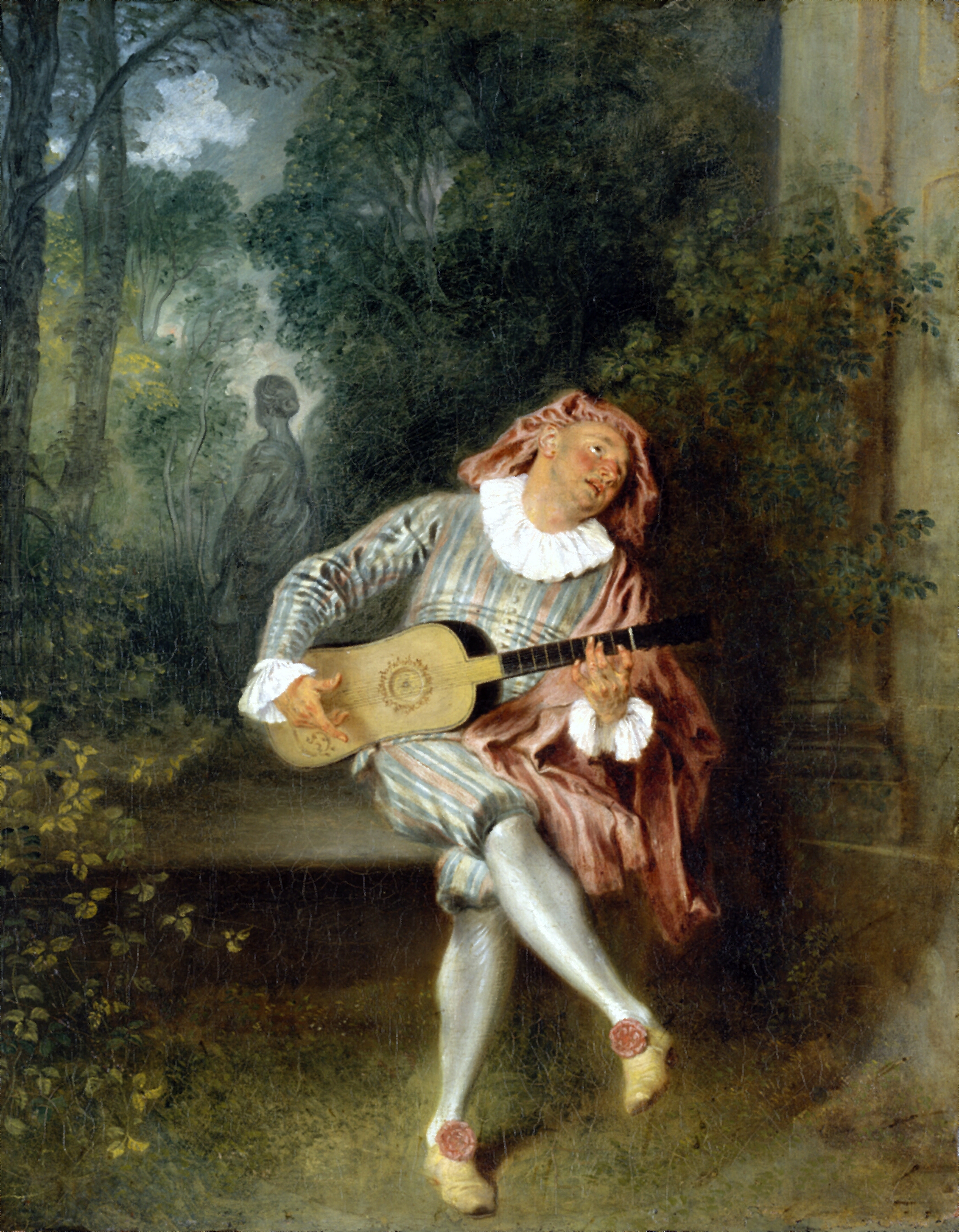 |
| Watteau: Mezzetin |
Boucher, François

 |
| Boucher: Madame de Pompadour |
NAME SOME FAMOUS
HISTORICAL, SCIENTIFIC,
AND OR LITERARY HAPPENINGS
THAT TOOK PLACE DURING THIS
COMPOSER’S LIFETIME:
Stradivari, Antonio:


Violin Maker, 1700 (Cremona; Italy)
Violin Maker, 1700 (Cremona; Italy)
 |
| Hammer Violin made by Antonio Stradivari |

Fahrenheit, Daniel Gabriel:

Fahrenheit Mercury
Thermometer, 1714


Franklin Stove, 1740


Piano, 1710
 |
| Grand Piano, 1720 |
DESCRIBE WHAT YOU THINK
THIS COMPOSER’S OVERALL COMPOSITION
STYLE IS AND WHAT IS
DISTINCTIVE ABOUT IT.
THIS COMPOSER’S OVERALL COMPOSITION
STYLE IS AND WHAT IS
DISTINCTIVE ABOUT IT.
This music is from an era called the Baroque
(derived from the Italian barocco, meaning bizarre).
 |
| An example of Baroque art http://thebloggerandhisshadow.blogspot.com/2009/10/baroque-art-beauty-or-beast.html |
The music style is highly elaborated and decorated with many
notes in layered melodies that create harmony: counterpoint.

Much of Bach’s music is written for keyboard (organ)

as he worked for the Church.
His music is very precise and
imbued with symmetry, so much
so that it is at times called mathematical.
WRITE YOUR PERSONAL OPINION
ABOUT THE MUSICAL STYLE OF
THIS COMPOSER AND EXPLAIN.
ABOUT THE MUSICAL STYLE OF
THIS COMPOSER AND EXPLAIN.
MISCELLANEOUS COMMENTS:
J. S. Bach Singing and Bio with Madlips
For nearly two hundred years there had
been organists and composers in the
Bach family. It was the family profession.
Bach was married twice. He had 7
children with his first wife who died
 |
| Maria Barbara Bach |
and 13 with his second wife.
 |
| Anna Magdalena Wilcke |
Many of his sons also became famous composers:
 |
| Wilhelm Friedemann Bach c.1733 |
 |
| Carl Philipp Emanuel Bach |
 |
| Johann Christoph Friedrich Bach |

Painted by Thomas Gainsborough
1776
1776
Bach was employed by several courts (German kings and
princes) writing secular music for their private orchestras.
He was a church Cantor requiring him to write sacred, religious
music for the weekly services resulting in a prolific body of work.
All his music had to be copied by hand using a quill pen.

He often had his second wife, Anna Magdalena, help him with this
in the evenings by candlelight. At the time it was thought that the
strain on Bach’s eyes caused him to go blind by the end of his life.
Bach's reputation as a composer declined; his work was regarded
as old-fashioned compared to the emerging new classical style.
Almost 80 years after his death, the German composer and
conductor, Felix Mendelssohn,

arranged and conducted a performance of Bach’s music for a
concert in 1829.
His promotion and revival of the music helped make Bach one
of the most famous composers throughout all of music history.

Johann Sebastian Bach:
The Story of the Boy
who Sang in the Streets
from Stories of Great Composers for Children
By Thomas Tapper
Librivox Recording
https://www.youtube.com/watch?v=KDueycbXOu4

RAP BIOGRAPHY OF
JOHANN SEBASTIAN BACH
Subscribe to:
Posts (Atom)