Showing posts with label New World Symphony. Show all posts

Thursday, November 24, 2016

SOME MUSIC FOR THANKSGIVING


Georges Louis Leclerc, comte de Buffon, 
Histoire naturelle générale et particulière (Oiseaux), 
1799-1808
Since 1947, the National Turkey Federation (NTF) has
presented the President of the United States with a live
turkey and two dressed turkeys in celebration of 
Thanksgiving. The annual presentation of the National
Thanksgiving Turkey to the President has become a
traditional holiday ritual in the nation's capital, signaling
the unofficial beginning of the holiday season and providing
the President an opportunity to reflect publicly on the meaning
of the Thanksgiving season. After the ceremony, the live bird
retires to a historical farm to live out the rest of its years.
The Wild Turkey by Audubon
American Country Music and
Hymn and Fuguing Tune No. 2
by Henry Cowell
Henry Cowell
Chester Overture for Band
by William Schuman
William Schuman
Chester is the third movement of a piece
on a book of tunes written by William Billings
during the American Revolutionary War.
Chester begins with a march that was played by the
Continental Army and sung around the campfire:
Chester: America's first unofficial National Anthem
It was written in 1770 and revised in 1778 and was
 second in popularity only to "Yankee Doodle."
Let tyrants shake their iron rod,
And slavery clank her galling chains,
We fear them not, we trust in God,
New England’s God forever reigns.
The foe comes on with haughty stride,
Our troops advance with martial noise,
Their vet’rans flee before our youth,
And gen’rals yield to beardless boys.

Schuman then transports this hymn to the 20th
century, by altering its rhythmic and harmonic
structure until it is barely recognizable. In the
end, the musical battle is won by tonality as the
march reappears in its original form.

William Schuman: Composer Portrait
Grandma Moses: Catching the Thanksgiving Turkey, 1943
Johann Wenzel Peter (1745-1829)Turkey 
New World Symphony
By Antonin Dvořák
George Szell, Conductor
Cleveland Orchestra

http://www.youtube.com/watch?v=0MLvIGHCUAg#t=1173
Audubon's painting of a turkey hen with her poults
Variations on 'America'
"The President's Own" United States Marine Band
Timothy Foley, Director
Transcribed by William E. Rhoads
from William Schuman's orchestration of
E. Power Biggs's edition of
Ives's variations for organ, S140.
https://www.youtube.com/watch?v=hs0
VjhNWqn8&list=RDhs0VjhNWqn8#t=0
Symphony on a Hymn Tune
By Virgil Thomson
James Sedares, Conductor
New Zealand Symphony Orchestra
The Symphony on a Hymn Tune was completed
in 1928. There are actually at least a couple of
hymns that surface throughout the piece, the main
one being a Scottish melody that is commonly
associated with the text for
You can also hear "Jesus Loves Me."
Jennie Augusta Brownscombe: The First Thanksgiving, 1914

Monday, September 28, 2015

MONDAY, SEPTEMBER 28, 2015

QUOTE FROM THE BOARD:
"One supreme fact which I have discovered is that it is not willpower, but fantasy
 -imagination that creates. Imagination is the creative force. Imagination creates reality."
AUTHOR: Richard Wagner
MEANING OF THE QUOTE:
"Creativity starts first in your imagination."


COMPOSER:
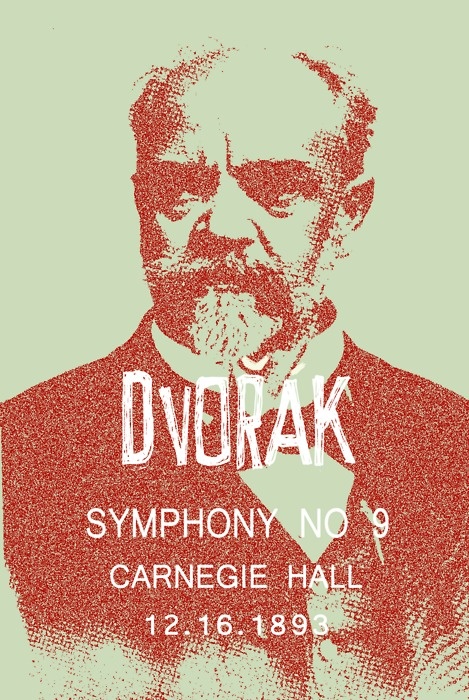
ANTONIN DVORAK
NEW WORLD SYMPHONY NO. 9
(Sometimes referred to as Symphony No. 5)

NEW WORLD SYMPHONY NO. 9
IN E MINOR OP. 95,
"From the New World"
London Symphony Orchestra
Carnegie Hall
New York City
I. Adagio 0:00
Introductory Passage
1st Theme Played by French Horn
2nd Theme Played by Oboes and Flutes
3rd Theme Played by Flutes
LISTENING GUIDE MOVEMENT I

NEW WORLD SYMPHONY NO. 9
IN E MINOR OP. 95,
"From the New World"
Movement 1
ANALYSIS BY GERARD SCHWARTZ
II. Largo 12:07
3rd Theme Played by Clarinets with Background of  Pizzicato Strings
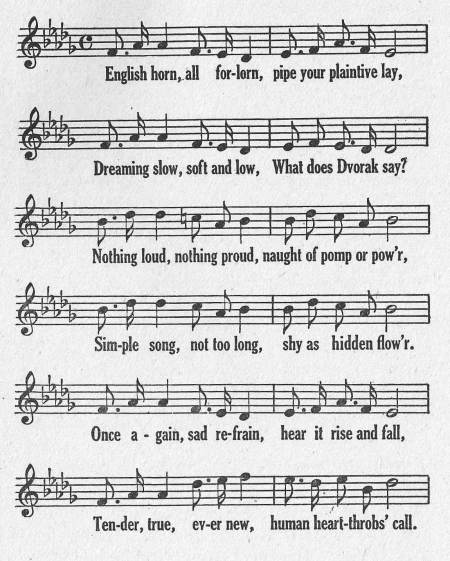
Main Theme Played by English Horn
2nd Theme Played by Flutes and Oboes
http://www.antonin-dvorak.cz/en/symphony9
Use this tip to try and remember the theme:
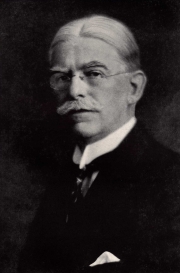
Spaeth - Dvorak
https://somewhereboy.wordpress.com/tag/sigmund-spaeth/
http://www.unz.org/Pub/SpaethSigmund-1936-00258

The principal theme of the Largo movement
of Dvorak's New World Symphony is im-
mensely famous. It sounds for all the world
like a folk song, and that is what generations
of listeners have taken it to be, especially once
the title "Goin' Home" was attached to it. How-
ever, this melody is an original creation of
Dvorak's, as are all of the melodies in the New
World Symphony. In fact, the song "Goin'

Home" followed the symphony by three

de
cades when, in 1922,
William Arms Fisher

(1861–1948), who had studied with Dvorak

at the National Conservatory and eventually

became his teaching assistant there, crafted

"dialect words" to fit Dvorak's tune:
GOIN' HOME
Sissel Kyrkjebø, Vocals

Goin' home, goin' home,
I'm a-goin' home,
Quiet like some still day,
I'm jes' goin' home.
It's not far, jes' close by,
Through an open door,
Work all done, care laid by,
Gwine to fear no more.
Mother's there 'spectin' me,
Father's waitin' too,
Lot's o' folk gathered there,
All the friends I knew.
Home, home, I'm goin' home.
Nothin' lost, all's gain.
No more stumblin' on the way,
No more longin' for the day,
Gwine to roam no more.
Mornin' star lights the way,
Res'less dreams all done, all done,
Shadow's gone, break o' day,
Real life's jes' begun.
Dere's no break, ain't no end,
Jes' a-livin' on,
Wide awake with a 
smile,

Goin' on and on.

Goin' home, goin' home,

I'm jes goin' home,

It's not far, Jes' close by,

Through an open door,

I'm jes' goin' home.
Movement II: Analysis
LISTENING MAP MOVEMENT II
LISTENING GUIDE MOVEMENT II

NEW WORLD SYMPHONY NO. 9
IN E MINOR OP. 95,
"From the New World"
Movement 2
ANALYSIS BY GERARD SCHWARTZ
III. Scherzo 24:14
After Introduction  Main Theme Played by Flutes and Oboes
2nd Theme Played by Flutes and Oboes with Background of Bassoons
3rd Theme
LISTENING GUIDE MOVEMENT III
NEW WORLD SYMPHONY NO. 9
IN E MINOR OP. 95,
"From the New World"
Movement 3
ANALYSIS BY GERARD SCHWARTZ
IV. Allegro con fuoco 31:29
Chromatic Introduction Played by Strings
1st Theme Played by Trumpets
2nd Theme Triplet Figures Played by the Violins
3rd Theme Played by Clarinets
LISTENING GUIDE MOVEMENT IV
NEW WORLD SYMPHONY NO. 9
IN E MINOR OP. 95,
"From the New World"
Movement 4
ANALYSIS BY GERARD SCHWARTZ
New York 1905
New York, 1905
NEW WORLD SYMPHONY NO. 9
IN E MINOR OP. 95,
"From the New World"
ANALYSIS BY LEONARD BERNSTEIN
CONDUCTOR ANALYSIS
Dvorák was intrigued by
Henry Wadsworth Longfellow
epic poem of 1854,
He had remarked that the Largo
from his 9th symphony grew from
a sketch for an operatic treatment
of the epic that was never realized,
while the Scherzo had been
inspired by a scene
"...a feast in the wood,
where the Indians dance."
Maria Louise Kirk:
Art Song Hiawatha Pau-Puk-Keewis Indian Dance, 1910
http://www.antonin-dvorak.cz/en/symphony9
Michael B. Beckerman,
(a biographer of Dvorak:
Dvořák scholar, Michael Beckerman,
speaks on the role of African-
American sources and Longfellow's
"Song of Hiawatha" in the
composer's conception of
American music.
extrapolated that Dvorak had pervaded
his musical score with many
images from Hiawatha;
Frances Anne Hopkins: Minnehaha Feeding Birds
from Longfellow's pastoral
evocations of the landscape to the tragic
passage of Minnehaha's forest funeral
("Funeral in the Forest").
The Death Of Minnehaha, c.1867
NEW WORLD SYMPHONY NO. 9
IN E MINOR OP. 95,
"From the New World"
Visual Presentation
TAKEN FROM THE YOU-TUBE SITE:
This is a visual presentation to accompany a live performance of the second and
third movements of Antonín Dvořák's Symphony No. 9, "From the New World."
It was created by Peter Bogdanoff and Joseph Horowitz. The presentation was
commissioned by the Brooklyn Philharmonic, and has since been used by the
New York Philharmonic, the Nashville Symphony, the Pacific Symphony,
and Berlin's Komische Opera orchestra, among others.

The purpose of the visual presentation is not to propose a program, but to reinstate
the cultural vocabulary shared by Dvořák and his audience of 1893, and so enable
present-day audiences to experience this music as it was experienced when new.
The visual ingredients include excerpts from Longfellow's The Song of Hiawatha
(acknowledged by Dvorak as a point of inspiration for both movements), renderings
of scenes from Hiawatha, and nineteenth century American paintings by Frederic
Church, Albert Bierstadt, George Catlin, and Frederic Remington, among others.
Albert Bierstadt: Minnehaha Falls
HIAWATHA MELODRAMA
Minnehaha: Tiffany Window-Duluth, Minnesota
(AFTER DVORAK)
THE HUNTING OF PAU-PUK-KEEWIS
Thomas Eakins:  Hiawatha, 1870
TAKEN FROM THE YOU-TUBE SITE:
(AFTER DVORAK)
THE HUNTING OF PAU-PUK-KEEWIS
Kevin Deas (narrator)
Post Classical Ensemble
Conducted by Angel Gil-Ordóñez
Composed by:
Joseph Horowitz and Michael Beckerman,
Adapting Dvořák's "New World" Symphony
Peter Bogdanoff, Visual Artist
Text: "The Song of Hiawatha"
By Henry Wadsworth Longfellow
This excerpt from the 2014 Naxos recording "Dvořák
and America" (Naxos 8.599777) samples the 32-minute
"Hiawatha Melodrama" created by Joseph Horowitz and
Michael Beckerman, in which Longfellow's "The Song of
Hiawatha" is aligned with music by Dvořák (drawn from
movements 2, 3, and 4 of the "New World" Symphony;
the Larghetto from the Violin Sonatina; and the third
movement of the "American" Suite, with orchestration --
where not by Dvořák -- by Angel Gil-Ordóñez).
Frederick Remington: Hiawatha's Friends, 1889

N.C. Wyeth: Hiawatha's Fishing by the Shore of Gitchie Gumee
The starting point of the Melodrama is Dvorak's testimony
that the middle movements of his symphony were inspired
by Longfellow's poem. Beckerman's research has establish-
ed a series of alignments between the poem and the
symphony. In effect, the Melodrama suggests what a Dvořák
"Hiawatha" cantata or tone poem might have sounded like
(and Dvořák aspired to compose such a work). It also
establishes some of the extra-musical imagery that fired
Dvořák's musical imagination. The "New World" Symphony,
being quasi-programmatic, marks a transition toward the tone
poems and operas Dvořák would compose upon returning
to Prague; he never composed another symphony.
Maxwell Parrish
"The Hunting of Pau-Puk-Keewis," the fifth of the Melodrama's
six movements, includes sung as well as spoken text.
Beckerman comments:
"While this at first may seem far-fetched, one must remember
that as soon as he returned to Bohemia in 1895, Dvořák
composed a series of tone poems based on the ballads of
Karel Jaromír Erben
(1811-1870)
In at least one of these, he set down the poem, line by line,
beneath the music -- so this process was not alien to him."
DVORAK MINI-LECTURE
ON THE NEW WORLD SYMPHONY
By Joseph Horowitz
NEW WORLD SYMPHONY NO. 9
BEYOND THE SCORE
HENRY T. BURLEIGH AND THE SPIRITUAL
LINKS

LESSON PLANS
New York Herald, 16 December 1893:
"Dr. Antonin Dvorak, the famous Bohemian composer and director of the National
Conservatory of Music, dowered American art with a great work yesterday, when
his new symphony in E minor, ‘From the New World,’ was played at the second
Philharmonic rehearsal in Carnegie Music Hall. The day was an important one in
the musical history of America. It witnessed the first public performance of a noble
composition. It saw a large audience of usually tranquil Americans enthusiastic to
the point of frenzy over a musical work and applauding like the most excitable
‘Italianissimi’ in the world. The work was one of heroic proportions. And it was
one cast in the art form which such poet-musicians as Beethoven, Schubert,
Schumann, Mendelssohn, Brahms and many another ‘glorious one of the earth’
has enriched with the most precious outwellings of his musical imagination. And
this new symphony by Dr. Antonin Dvorak is worthy to rank with the best
creations of those musicians whom I have just mentioned. [...]"