Tuesday, May 7, 2013

STUDENT PROJECT: HOW TO MAKE AN INSTRUMENT PERIOD 3 SPRING 2013

==========================
HOW TO MAKE AN INSTRUMENT: 
DRUM and SHAKERS

Emily's & Spencer's Page 
Period 3

For our instrument you will need:
1) get a tube
2) a cloth
3) a big balloon
4) (if you want)paint
5) (if you want) markers
6) glue


How to get started:
First get the tube and around the edge put glue. After, get the cloth and balloon around the tube and let it dry.


That's how you make our project!!!!!!!

---------------------------------------------
LINKS!!!!


How to make the 2nd part of our  project

1) small water bottles
2) toilet paper rolls
3) beads
4) colorful tape
Ok, first you would need to get a small water
bottle then you get the roll.
------------------------------------------------
How to put it all together:
------------------------------------------------
Ok, so first you get the water bottle then you
put on the glitter and beads. Get the roll from
the toilet paper and cut the roll. Put it around
the top of the water bottle where the lid is.
Tape it with any color tape you chose then
wrap it around the roll.


That's how you do the second part 
of our project!


------------------------------------------------
LINKS

And that's our project!!

==========================

Alexis and Breana Period 3
How to make a percussion instrument!

MARACAS

Materials needed:
-Water bottles: two of them


-Rocks
-Tape
-Pipe Cleaners
What kinds of sounds does it make?
-It is like a maraca but a empty water bottle with rocks/pebbles/marbles inside


10 links
1) http://www.youtube.com/watch?feature=player_detailpage&v=RY6W5imTyAw
2) http://www.youtube.com/watch?feature=player_detailpage&v=NALaHRKJmSE
3) http://www.youtube.com/watch?feature=player_detailpage&v=qf9WRGD8E-k
4) http://www.youtube.com/watch?feature=player_detailpage&v=YHFqi5tXYLI
5) http://www.youtube.com/watch?feature=player_detailpage&v=MWXrN3nIZyI
6) http://www.youtube.com/watch?feature=player_detailpage&v=XCd-7qYEA1c
7) http://www.youtube.com/watch?feature=player_detailpage&v=hInZ_Y4vfnQ
8) http://www.youtube.com/watch?feature=player_detailpage&v=qrORONaIKzE
9) http://www.youtube.com/watch?feature=player_detailpage&v=lnadB2AuDvE
10) http://www.youtube.com/watch?feature=player_detailpage&v=LhW31GjoQ2k


==========================

HOW  TO MAKE MARACAS   


BY: PAOLA AND SAMANTHA PERIOD 3


MATERIALS YOU NEED:
-2 plastic cups
-markers or paint
-masking tape
-noise makers (beans, beads, rice, etc.)


10 LINKS
http://www.youtube.com/watch?feature=player_detailpage&v=LML6kZrGPJM
http://www.youtube.com/watch?feature=player_detailpage&v=
ECnYUtKaTvo
http://www.youtube.com/watch?feature=player_detailpage&v=N6fO3ok3nTk
http://www.youtube.com/watch?feature=player_detailpage&v=FOvNxtMooiU
http://www.youtube.com/watch?feature=player_detailpage&v=P0xLx4MuyM8
http://www.youtube.com/watch?feature=player_detailpage&v=eK54m1Bvprg
http://www.youtube.com/watch?feature=player_detailpage&v=APUDprnfOIs
http://www.youtube.com/watch?feature=player_detailpage&v=zaVJ78R_67g
http://www.youtube.com/watch?feature=player_detailpage&v=rGauQcphkMc
http://www.youtube.com/watch?feature=player_detailpage&v=42GU3HE3vtc


 EXAMPLES:


STEPS:


1) GET 2 CUPS
2)PUT THE NOISE MAKERS IN ONE OF THE CUPS

3)TAKE THE OTHER CUP AND TAPE IT AROUND BOTH CUPS TO PUT IT TOGETHER
4)DECORATE/DESIGN THE MARACA
5)SHAKE SHAKE, SHAKE SHAKE SHAKE ,SHAKE YOUR CUPS

==========================

HOME MADE INSTRUMENTS 
BY ERNIE AND DAVID PERIOD 3
A WIND INSTRUMENT

INGREDIENTS: 
Glass Bottles 

First you have to have an empty glass bottle and then blow over it.
This is a blowing instrument that makes a whistle.


==========================


How To Make A Percussion Instrument

BY: BRYSEIDA, NIKKI, CESAR PERIOD 3


For this project we are going to make maracas


Things you will need for this project :

Mini water bottle 
Toilet paper stick 
Duct tape 
Beans


It should look like this:


1. Put beans in the mini water bottle

2. Open the toilet paper stick and put it around the water bottle

3. Secure the stick with duct tape and put duct tape on the bottom
4. Then decorate it any way you like or just leave it... its your choice 

Examples of how you can
decorate:


==========================


==========================


Sam and Melissa Period 3
BIEBER SHAKE ~


Ingredients
glue
dried beans or uncooked rice.
cardboard tube (toilet paper roll is what we used)
stickers, paint, markers, construction paper, etc to decorate
tape


==========================


Nicholas Period 3

HOW TO MAKE MARACAS


STEP 1: Find an empty plastic water bottle


STEP 2: Find some beans


STEP 3: Open the empty water bottle by unscrewing the lid


STEP 4: Insert beans into the open water bottle


STEP 5: Close water bottle by screwing the lid

STEP 6: ENJOY  YOUR MARACAS =D

==========================


KEVIN PERIOD 3

Cardboard Guitar


Supplies:


colored file folder 
rubber bands
utility knife
pencil (or wooden dowel)
hot glue gun
cardboard
drill


Steps


Trace 3 of the full size guitar shape right onto the cardboard.

Then cut off the top part of the guitar and trace 2 of the shortened guitar piece onto 
the cardboard as well.

Then use a utility (or exacto) knife to cut out the 5 guitar shapes.

Then, use a hot glue gun to attach two of the bigger guitar pieces together.

Next, cut up a pencil (or wooden dowel) to create a bridge at each end of the guitar 
strings. Cut a piece that is 1 1/2 inches and the other one 2 3/4 inches.

Then, draw a 2 3/4 inch line that is 1 inch below the circle opening on the front side of 
the 2 guitar pieces that you just glued together. Then draw 4 dots below the line that are about a 1/2 inch apart and about a 1/3 inch below the line.

Then use a utility knife to make a shallow cut into the cardboard, right along that line.

Then use your finger to push a dent down along that line, to create a little divot for 
the pencil bridge to lay.

Then hot glue the bigger pencil piece right down into the dented crease, securing the bottom bridge in place.

Next, drill some holes through the 2 layers of cardboard, right where your 4 marks are.

For the bridge at the top of the guitar neck, make a 1 1/2 inch long line right below where the neck curves out at the top. Then make 4 dots about a 1/2 inch above the line, about 
a 1/3 inch apart. Make a shallow cut along the line, dent it in with your finger, and then 
hot glue the smaller pencil piece right into the crease……..just like you did above.

Now, use your utility knife to cut out little dents in the pencil, to help keep each of the guitar strings in place.

For the guitar strings, I found some colored file folder rubber bands at Staples. They 
are jumbo size (7 inch rubber bands) and are the perfect size to use for this project. 
I cut 4 rubber bands open for the guitar.

Then, tie one end of each of the rubber bands along the long edge of a sturdy 1 inch (or similar) paper clip

From the back side of the guitar, thread each of the other ends of the rubber bands 
through the 4 holes at the top of the guitar neck……..and pull them all the way through until the paper clip is flush with the backside of the guitar.

Then, one rubber band at a time, pull them along the front of the guitar and through 
the drilled holes towards the bottom of the guitar. Tie the other end of each rubber 
band to a 1 1/2 inch (or similar) paper clip that is on the back side of the guitar.

Thread each rubber band through each hole and tie into a knot along the long end of 
the paper clip.

Then trim off each rubber band but don’t cut it too close to the paper clip. Then place 
a bit of glue on the other long edge of the paper clip, just to secure it down. But don’t 
let the hot glue touch the rubber band or it will melt it and break it.

Then, place a good amount of glue along the backside of the guitar with the strings (but don’t get any glue on the rubber bands) and then place the 3rd full size guitar piece onto 
the back……covering everything up.

Then glue the 2 smaller guitar pieces to the very back of the guitar……giving the guitar more thickness and durability……plus it gives the body of the guitar that fullness like 
a real one has.

Press the layers together firmly.

Trim off any uneven edges with your utility knife if needed.

Period 3 Instruments Made By Students (Spring 2013)

PERIOD 3


SHAKER
SHAKER
TUBE DRUM
SHAKER
SHAKER WITH PENNIES
SHAKER
SHAKER/GUIRO
SHAKER
CARDBOARD GUITAR
NATIVE AMERICAN DRUM WITH BALLOON HEAD
BOTTLE FLUTE

TUESDAY, MAY 7, 2013

QUOTE:
"Music is the universal language of mankind."
AUTHOR: Henry Wadsworth Longfellow

MEANING OF THE QUOTE:
“Music is a form of communication that everyone can understand.”


\
COMPOSER
The opera Il Signor Bruschino (pronounced “Eel SEENyore Broo-SKEE-no”)[actually Il signor Bruschino, ossia Il figlio per azzardo ("Mr. Bruschino", or "Son by Accident")] has gained considerable importance in the modern concert repertoire, where its lighthearted, energetic overture  is more often performed than the opera itself. This opera, which Rossini wrote in eleven days (according to a newspaper account) in 1812 when he was 20, was his ninth opera. Its overture shows off Rossini's great wit and gift for melody and innovation.  Almost immediately, in this overture,  after a slow introduction, he generates the simple rhythm that the second violins periodically and solemnly tap out with the wood of their bows on their music stands lending a percussive series of rhythms or exclamation points to the music. (In Rossini's time, as electric lights did not exist yet, the score indicated the violinists were to tap the tin metal-reflector shades covering the candle holders attached to their stands.) Rossini left no clue as to the possible meaning of this tapping but because it was repeated several times throughout the piece it became the musical centerpiece, the most distinctive characteristic, of this five-minute overture. His exciting crescendo technique, in which lively figures repeat again and again, growing ever louder and more boisterous is another one of his innovative musical creations.

The libretto of this one-act comic operatic farce in fifteen scenes was written by the Venetian poet Giuseppe Maria Foppa and was based on a French comedy play,“Le Fils par Hazard" by Alisson de Chazet and E.T.M. Ourry with the story concerning the mistaken identity of the title character with added elements of masquerade and family quarrels with true love winning out in the end. 

The story takes place in 18th Century France with the main characters, Sofia and Florville, in love and wanting to marry. Sofia's guardian, Gaudenzio (who has never met Florville and does not know what he looks like), opposes the match because Florville's father and Gaudenzio are old enemies plus Sofia had already been promised in marriage to the son of his old friend Signor Bruschino, someone Sofia had never met as they were betrothed by correspondence. On his way to meet Sofia, young Bruschino stops at a tavern, runs up a huge debt and is detained when he is unable to pay. Seizing the opportunity so that he can marry Sofia, Florville impersonates Bruschino junior (the legitimate groom) convincing Gaudenzio that he is Bruschino’s son. The complications that arise when Bruschino senior appears are eventually solved when Signor Bruschino is induced to accept Florville as his son, for the present purposes, although well aware of the whole situation.


http://rrcs-24-103-233-97.nyc.biz.rr.com/Programnotes/notes19b.htm


TODAY WAS STATE TESTING DAY
GENERAL MUSIC PERIOD 1: 
1.  WORKED ON WRITING THE CRITIQUE FOR "MY FAIR LADY" and PASSED IN FOR GRADING
2.  STARTED VIOLIN PARTS (TO BE CONTINUED ON FRIDAY)
GENERAL MUSIC PERIOD 2:
1.  FINISHED A PAGE OF MUSIC THEORY (STEP-WISE MOTION and NOTE READING) and PASSED LAST THREE ASSIGNMENTS 
     IN FOR GRADING
2.  FINISHED "MY FAIR LADY"
3.  STARTED DISCUSSION FOR WRITING THE CRITIQUE OF THE MUSICAL

Monday, May 6, 2013

MONDAY, MAY 6, 2013

QUOTE:
"Music is to the soul as food is to the body."
AUTHOR: Rita Mae Brown
MEANING OF THE QUOTE:
“You need food to nourish your body and music to feed your soul."


COMPOSER
ROSSINI

The Italian Woman in Algiers Overture


L'italiana in Algeri - Emanuele Luzzati & Giulio Gianini (1968)
 http://nmas2.blogspot.com/2012/03/l-italiana-in-algeri-emanuele-luzzati.html#ixzz2RuolOiT3


The Italian Girl in Algiers (L’italiana in Algeri) was Rossini’s fifth opera (his first comic opera) written in in 1813 when he was 21 years old which took him just twenty-seven days to write. The plot is introduced with a lively overture. This famous overture, something of a tribute to Haydn’s Surprise Symphony, has light pizzicato passages contrasted by huge orchestral segments showing off Rossini’s flair for melodic invention.

The story of the opera revolves around the Bey of Algiers and his desire to add an Italian woman to his harem. The Italian girl, Isabella, is searching for her lost love, Lindoro, who has been kidnapped by the Bey of Algiers. In her search for Lindero she is shipwrecked in Algiers 


and taken captive by Mustafa (the Bey) who falls in love with her. While herself being held captive, Isabella surprisingly finds Lindoro among the Bey’s prisoners. Isabella hatches a plot of escape that involves flirtation and stealth to outwit the Bey. At the end,  she and Lindoro sail away together.

http://nmas2.blogspot.com/2012/03/l-italiana-in-algeri-emanuele-luzzati.html


GENERAL MUSIC
01. THEORY: STEP-WISE MOTION and THE MUSICAL ALPHABET IN NOTE READING
.......a.  CLASS WORKED TOGETHER ON NAMING NOTES THAT MOVE UP and DOWN IN STEP-WISE MOTION
.......b.  STUDENTS TURNED IN THE LAST 3 WORKSHEETS FOR GRADING
02.  WRITING A CRITIQUE FOR THE MUSICAL "MY FAIR LADY"
.......a.  DISCUSSION OF HOW TO WRITE THE CRITIQUE
............1)  STUDENTS TO WRITE A PARAGRAPH ON THEIR PERSONAL ENJOYMENT FACTOR and EXPLAIN
                  WHY (TRYING TO CONVINCE THE READER OF THE POINT OF VIEW BEING GIVEN)
............2)  STUDENTS TO WRITE A PARAGRAPH ON THEIR OPINION REGARDING THE ARTISTRY and EXPLAIN
                  WHY (TRYING TO CONVINCE THE READER OF THE POINT OF VIEW BEING GIVEN)
............3)  ARTISTRY IS ABOUT THE QUALITY OF THE ART WHICH DOES NOT ALWAYS EQUATE TO 
                  ENJOYMENT
..................a)  THERE ARE MANY ASPECTS TO APPRECIATING ART; A PERSON CAN RECOGNIZE THE TALENT                             IT TAKES TO PRODUCE THE ART BUT STILL NOT LIKE IT or VICE-VERSA THAT IS WHY THE 
                        CRITIQUE IS BEING WRITTEN IN TWO SECTIONS 

ADV. STRINGS
SPRING CONCERT (THURSDAY; MAY 30TH) PREPARATION
JUNE 5th 5:00 PM (4:30 CALL TIME) DEDICATION FOR PATRICK'S GARDEN 
VOLUNTARY PARTICIPATION TO PLAY "STAIRWAY TO HEAVEN"

BEG. STRINGS
SPRING CONCERT (THURSDAY; MAY 30TH) PREPARATION]

Friday, May 3, 2013

FRIDAY, MAY 3, 2013

QUOTE:
"A verbal art like poetry is reflective; it stops to think. Music is immediate, it goes on to become."
AUTHOR: W.H.Auden
MEANING OF THE QUOTE:
"You do not need to think all the time to enjoy music; you can just enjoy the feelings.”


COMPOSER
ROSSINI
http://blossomboots.blogspot.com/2012/07/singing-cats.html#.UX4Tt6IskTM
Duetto Buffo di Due Gatti (Cat Duet), 
For 2 Voices and Piano
"Meow"

THIS ARTICLE IS FROM:
by James Manheim
Many are the vocal recitals and opera galas that have ended with the Cat Duet as an encore. Though scored for two sopranos and piano, the work exists in orchestral versions and has been sung by male-female pairs and even as a tomcat duet. The text consists in its entirety of the single word "meow," and singers treat the melodies basically however they want to. The origins of this work are cloudy, but historians agree that it is not an authentic work by Rossini. It does, however, contain a good deal ofRossini's music, so the attribution is not completely off the mark. The Cat Duet contains elements of 1) the aria "Ah, come mai non senti," from the second act of Rossini's opera Otello (1816), 2) a nearby duet between the characters Otello and Iago, and 3) an earlier work in the same vein, the "Cat Cavatina" of Danish opera and song composer C.E.F. Weyse. The compiler was probably Robert Lucas Pearsall, a British composer better known for his output of hymns. In 1973, the Schott publishing house issued a facsimile of an 1825 edition of the Cat Duet, published by Ewer & Johanning and credited to Pearsall, but bearing the pseudonym G. Berthold. From Rossini's day down to ours, the piece has never lost its appeal for singers, concertgoers, and cat lovers; it often appears, of course, on compilations of classical music pertaining to felines.


MUSIC SCORE:  http://www.free-scores.com/download-sheet-music.php?pdf=14680


GENERAL MUSIC
01. NET CART COMPUTER PROJECT: HOW TO MAKE AN INSTRUMENT
.......a.  MANY STUDENTS COMPLETED THE COMPUTER PORTION OF THE PROJECT
.......b.  STUDENTS LEARNED HOW TO E-MAIL SHARE) THEIR DOCUMENTS THROUGH GOOGLE DOCS
.......c.  WE WILL HAVE THE COMPUTERS FOR ONE MORE SESSION TO COMPLETE THE PROJECT
.......d.  STUDENTS WHO ARE COMPLETED GO TO THE KEYBOARDS TO PRACTICE "ODE TO JOY" 
            (HARMONY and MELODY)

ADV. STRINGS
SPRING CONCERT (THURSDAY; MAY 30TH) PREPARATION
JUNE 5th 5:00 PM (4:30 CALL TIME) DEDICATION FOR PATRICK'S GARDEN 
VOLUNTARY PARTICIPATION TO PLAY "STAIRWAY TO HEAVEN"

BEG. STRINGS
SPRING CONCERT (THURSDAY; MAY 30TH) PREPARATION]

Thursday, May 2, 2013

THURSDAY, MAY 2, 2013

QUOTE:
"Music isn't just learning notes and playing them, you learn notes to play to the music of your soul."
AUTHOR: Katie Greenwood
MEANING OF THE QUOTE:
"There is no music in notes alone. It is the human, emotional element that makes notes into
   music.”


COMPOSER
ROSSINI

The Barber Of Seville Overture


The Barber of Seville, or The Futile Precaution (Il barbiere di Siviglia, ossia L'inutile precauzione) is an opera buffa in two acts by Gioachino Rossini with a libretto by Cesare Sterbini. The libretto was based on Pierre Beaumarchais's 
Pierre Beaumarchais
comedy Le Barbier de Séville (1775), which was originally an opéra comique, or a mixture of spoken play with music. 


Barber of Seville: Woody the Woodpecker 


Barber of Seville: Bugs Bunny


BARBER OF SEVILLE FOR CHILDREN
Barber of Seville: Opera Vox 1


Barber of Seville: Opera Vox 2


Figaro from "The Barber of Seville" 
GENERAL MUSIC
01. MUSICAL THEATER: MY FAIR LADY
.......a.  SHORT REVIEW
.......b.  MOST CLASSES FINISHED THE FILM
.......c.  AFTER FINISHING THE FILM STARTED TO DISCUSS HOW TO WRITE A CRITIQUE
(DISCUSSION, FINISHING THE REPORT ON THE MUSICAL, AND WRITING THE CRITIQUE TO CONTINUE NEXT WEEK)

ADV. STRINGS
[SPRING CONCERT (THURSDAY; MAY 30TH) PREPARATION]
01.  SABOR A MI
02.  CABALITO
03.  VOLVER VOLVER
04.  LOS MACHETES

BEG. STRINGS
[SPRING CONCERT (THURSDAY; MAY 30TH) PREPARATION]
01.  PIRATES OF THE CARIBBEAN

02 . MY HEART WILL GO ON

Wednesday, May 1, 2013

WEDNESDAY, MAY 1, 2013

QUOTE:
"Music washes away from the soul the dust of everyday life."
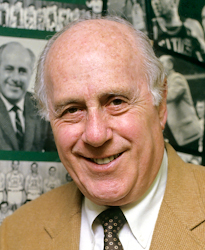
AUTHOR: Red Auerbach
MEANING OF THE QUOTE:
“When you listen to music your troubles often tend to disappear.”


COMPOSER
ROSSINI
http://www.dsokids.com/listen/by-composer/gioachino-rossini.aspx

William Tell Overture (full version)

http://www.classicfm.com/composers/rossini/music/barber-seville/


William Tell was a Swiss legendary hero who symbolized the struggle for political and individual freedom. According to popular legend, he was a late 13th and early 14th century peasant who defied Austrian authority, was forced to shoot an apple from his son’s head, was arrested for threatening the governor’s life, saved the same governor’s life en route to prison, escaped, and ultimately killed the governor in an ambush. These events supposedly helped spur the people to rise up against Austrian rule. 


Bronze statue of Wilhelm Tell and his son Walter
A mosaic of William Tell at the Swiss National Museum in Zürich
The Tell legend attained worldwide renown through the play Wilhelm Tell (1804) by the German dramatist Friedrich von Schiller. 
Friedrich von Schiller
That play was the inspiration for the four act opera "William Tell" composed by Rossini (withs its French libretto written by Ã‰tienne de Jouy and Hippolyte Bis).


The theme from this overture was used in an 
old TV series called "The Lone Ranger"


"The William Tell Overture" 
arranged by the comedian Spike Jones


GENERAL MUSIC
01. INTRODUCTION TO 16TH NOTES
.......a.  EXPLAINED THE FRACTIONS INVOLVED BY BREAKING DOWN THE QUARTER NOTE IN HALF TO 
            TWO 8THS THEN BREAKING EACH 8TH  INTO TWO 16THS
.......b.  EXPLAINED THE COUNTING USING BODY PERCUSSION 
............1) QUARTER NOTES ARE COMPLETE "PATSCHES" (A DOWN AND UP MOVEMENT OF THE HAND 
                 ON THE KNEE)
............2) 8TH NOTES ARE PERFORMED BY BREAKING THE BEAT (A COMPLETE "PATSCH") IN HALF 
                 BY PLACING THE NON-MOVING HAND (PALM DOWN) SO THAT THE BACK OF THE MOVING 
                 HAND HITS THE PALM OF THE NON-MOVING HAND AS THE HAND MOVES UP ON THE SECOND
                 HALF OF THE BEAT
.............3) 16TH NOTES ARE PERFORMED BY SNAPPING IN BETWEEN THE 8TH NOTE MOTIONS; SPLITTING
                  THE 8TH NOTES IN HALF
.............4)  EXPlAINED THE COUNTING USING SILLY WORDS:  
...................a)  QUARTER NOTES (ONE BEAT) USE THE WORD "ONE" AS THE WORD CONTAINS ONLY 
                        ONE SYLLABLE
...................b)  8TH NOTES IN PAIRS USE THE WORD "JELL-O" (ONE BEAT SPLIT IN TWO)  AS THE WORD 
                        CONTAINS TWO SYLLABLES
...................c)  16TH NOTES IN GROUPS OF FOUR USE THE WORD "HUCK-LE-BER-RY" (ONE BEAT SPLIT 
                         INTO FOUR EQUAL SECTIONS) AS THE WORD HAS FOUR SYLLABLES
.............4)  EXPLAINED THE COUNTING USING MUSICAL MATH
...................a)  EACH QUARTER BEAT GIVEN A NUMBER FROM ITS PLACEMENT IN THE MEASURE (BASED 
                        ON THE METER;  IE:   "1 / 2 / 3 /4 /" (IN 4-4 METER)
...................b) 8TH NOTES (A BEAT SPLIT IN HALF) TAKE THE NUMBER OF THE BEAT FOR THE FIRST 
                        HALF OF THE BEAT AND AN "and" FOR THE SECOND HALF OF THE BEAT; IE: "1 and / 
                        2 and / 3 and / 4 and /")
...................c)  16TH NOTES (A BEAT SPLIT INTO 4 EQUAL SECTIONS) TAKE THE NUMBER OF THE BEAT 
                         FOR THE FIRST 16TH NOTE AND AN "and" FOR THE THIRD 16TH NOTE WITH AN "e" FOR
                         THE SECOND 16TH NOTE AND AN "a" FOR THE LAST 16TH NOTE; IE:  "1 e and a / 2 e and a / 
                         3 e and a / 4 e and a /"
02. INTRODUCTION TO THE STRING FAMILY OF INSTRUMENTS
......a.  BRIEF OVERVIEW ABOUT WHAT A FAMILY OF INSTRUMENTS ARE AND THE VARIOUS SIZES 
           WHICH SOMEWHAT DICTATES THE ROLE EACH INSTRUMENT MUSICALLY TAKES ON IN 
           THE ORCHESTRA
......b.  STARTED A DEMONSTRATION OF ALL THE STRING INSTRUMENTS PLAYED IN THE ORCHESTRA 
           (TO BE CONTINUED TOMORROW)

ADV. STRINGS
[SPRING CONCERT (THURSDAY; MAY 30TH) PREPARATION]
01. PIRATES OF THE CARIBBEAN
02.  SOMEBODY I USED TO KNOW
03.  YOU'VE GOT A FRIEND IN ME
04.  PARADISE

BEG. STRINGS
[SPRING CONCERT (THURSDAY; MAY 30TH) PREPARATION]
01.  STAIRWAY TO HEAVEN
02 . PIRATES OF THE CARIBBEAN
03.  ORANGE BLOSSOM SPECIAL
........a.  WORKED ON A DIFFICULT FAST PASSAGE IN THE PIECE (PUTTING 2 FINGERS DOWN ON 2 
              DIFFERENT STRINGS AT THE SAME TIME THEN JUST MOVING THE BOW BACK AND FORTH)