Friday, October 25, 2013

FRIDAY, OCTOBER 25, 2013

QUOTE:
“An artist is never ahead of his time but most people are far behind theirs.”
AUTHOR: Edgard Varese
MEANING OF THE QUOTE:
“Sometimes artists create art which is not understood by the general public.”


COMPOSER
DVORAK
http://www.youtube.com/watch?v=IXf0DcX8lO8&feature=related


GRANADA ADV. STRINGS
1.  SUBIDIVISION BY 8TH NOTES
2.  SILENT NIGHT
3.  PACHELBEL/JOLLY

INTRO. TO INSTRUMENT
GRANADA
1.  VIOLIN
a.  Left hand Pizzicato
b.  Establishing left violin angle

HILLVIEW
1.  RECORDER TO KEYBOARD SONGS
a.  Note reading 
b.  Playing songs on the keyboard

GRANADA BEG. STRINGS
1.  OPEN STRINS
a.  7 Bow Levels
b.  UH of bow
c.  LH of bow
2.  GREENSLEEVES
a.  Fingering Concepts Part 2
b. Worked on playing Part 2
c.  Played entire piece with accompaniment
3.  JINGLE BELLS MELODY

HILLVIEW ORCHESTRA
1.  SILENT NIGHT
2.  PACHELBEL/JOLLY
3.  JINGLEBELL ROCK
4.  RUDOLPH

Thursday, October 24, 2013

GREENSLEEVES FOR THE BEGINNING VIOLIN CLASS (with added flute melody part)


GREENSLEEVES
http://fromparistolondon.blogs.france24.com/article/2011/01/10/greensleeves-d-henry-viii-nolwenn-leroy-0
http://www.oocities.org/brucelegs_2000/Song_Tabs/Greensleeves.htm

BEGINNING VIOLIN HARMONY


GREENSLEEVES 
FLUTE MELODY


Christmas Carol - Music Sheets
http://www.bluebonkers.com/song_sheets/christmas-carols/carol-music-sheet-015.htm

BEGINNING VIOLIN HAPPY BIRTHDAY

THURSDAY, OCTOBER 24, 2013

QUOTE:
“When I wished to sing of love, it turned to sorrow. And when I wished to sing of sorrow, 
  it was transformed for me into love.”
AUTHOR: Franz Schubert
MEANING OF THE QUOTE:
“Our emotions come out in our music. Many of these emotions 
  are closely related.”


COMPOSER
DVORAK

http://www.youtube.com/watch?v=unIMDYXdHIA&feature=related


LESSON PLAN
http://www.rpo.org/UserFiles/File/PDF/intermediate_05_06/Dvorak2.pdf

GRANADA ADV. STRINGS
1.  SUBDIVISION OF THE BEAT 
COUNTING ASSIGNMENT
2.  SCALE
a.  E Major 1st finger shifting on one string
b.  E Major 1st finger shifting in intervals on one string
3.  FELIZ NAVIDAD
4.  JINGLE BELL ROCK
5.  SILENT NIGHT

INTRO. TO INSTRUMENT
GRANADA
1.  VIOLIN
a.  Reviewed parts
b.  Quiz on parts
c.  Assignment of instruments
d.  Putting on shoulder rests and left violin hold

HILLVIEW
1.  VIOLIN
a.  Left pizzicato review
b.  Note reading open strings
b.  Left pizzicato song: CRIPPLE CREEK

GRANADA BEG. STRINGS
1.  FINGERING
a.  Do-Re-Mi/Do-Re-May each string
b.  Major (happy) versus Minor (sad)
2.  GREENSLEEVES (HARMONY)
a.  Fingering concepts
b.  Played first section
3.  JOY TO THE WORLD BY ROTE

HILLVIEW ORCHESTRA
1.  SUBDIVISION OF THE BEAT 
COUNTING ASSIGNMENT
2.  SCALE
a.  Concert G Major
b.  Played in 2 and 3 part rounds
3.  DOUBLE TONGUING DEMONSTRATION
4.  BELIEVE
5.  FELIZ NAVIDAD

Wednesday, October 23, 2013

MUSICAL THEATRE: WHAT IS A MUSICAL?

INTRODUCTION TO THE MUSICAL: 
WHAT IS A MUSICAL?

Musical theatre is a form of theatre or a story set to a combination of music, song, dance, and spoken dialogue. There are 3 main components that make up the musical. These components are: music, lyrics, and book (or story). Authors write fictional and non-fictional stories that are often based on historical backgrounds and events. History often provides the “setting” (background) or time period the story is set in. In the musical this is often shown in the costume, hair styles, and scenery as well as language usage (dialogue) such as that found in slang, old-fashioned words, etc. Some of the stories are taken from previously written novels; others are original, created just for the musical.

In a musical the person who writes the music is called the composer and the creator of the words to the songs is called the lyricist. Lyrics are words which are set to music and help in the telling of the story. Song lyrics are often set to poetry of some sort and sung by a singer and/or singers. The combination of lyrics and music are often used in the musical to convey deep feelings in the story that the dialogue cannot express. The dialogue is used to move the action of the story forward.

Dance is a planned organization of movement to beats and rhythms by a performer. It is used to set the mood and also convey strong emotional feelings when added to the music or song in a story. Choreographers are responsible for planning the organization of the dance steps that go with the music.

There are other important elements involved, provided by special technicians, in producing a musical to be performed. Some of them are costuming, lighting, staging (props), audio (amplification), and make-up/hair. A creative team of people are responsible for the overall interpretation of the musical. They oversee and coordinate all the technicians as well as the performers (actors, singers, dancers, musicians). The people who make up this creative team consist of the director, musical director (often the orchestra conductor), and the choreographer.


As in other art forms, the musical consists of an overall format having a beginning, middle, and end. The main body of the work is divided into sections (like the way chapters function in a book). In musical theatre the main sections of the musical are called acts and typically there are two of them with an intermission of approximately 20 minutes in length in-between. The first act of a musical is usually longer than the second act because the first act is where most of the music and main song tunes are first introduced to later be reprised or brought back in the telling of the story. Also, certain melodies in the music are often associated with particular characters so the music needs to be introduced as those characters enter the story.


INTRODUCTION TO THE MUSICAL: 
WHAT IS A MUSICAL? 
QUESTIONS


01. The main body of a work is divided into sections (like chapters function in a book). In 
       musical theater what are their main sections called?

02. Where does the music come from?

03. What is dance and why is it an important element of the musical format?

04. What are lyrics and who creates them?

05. What is a song?

06. The first act of a musical is usually longer than the second act. Why is that?

07. Where does the story for the musical come from?

08. What is the purpose of dialogue in the function of a musical?

09. What is a musical?

10. What is the name of the person who creates the dance movements for the musical?

11. There are 3 main components that make up the musical. What are they?

12. Songs are important in a musical play. What is their function?

13. A creative team of people are responsible for the overall interpretation of the
       musical. They oversee and coordinate all the technicians as well as the performers                    (actors, singers,dancers, musicians). Can you name who the people who make up this                creative team?

14. What is the role history plays in the creation of the story in a musical?

15. There are other important elements involved, provided by special technicians, in
      producing a musical to be performed. Can you name some?

WHAT IS A MUSICAL 2 (PEOPLE, PLACES, TERMS)


PEOPLE

Actors -
performers on stage who act out (or tell) the story
Assistant Stage Manager - 
person who is hired to help the Stage Manager
Box Office Manager - 
person who is in charge of ticket reservations and ticketing 
Cast - 
people who perform in a show
Choreographer - 
person who creates dances and arranges movements for a musical
Chorus -
1) in a musical, the company of dancers and singers 
2) the dancing, singing or songs performed by that company
Company - 
cast and crew of a show and any other staff who work on the show
Composer -
person who composes or writes the music
Conductor -
1) person who leads the orchestra that accompanies the songs and dances 
2) person who coordinates the orchestra with the stage performers
Costumer - 
person in charge of the costumes for a show
Crew - 
all the people who work together on a show except the cast
Dancers - (see Chorus)
Director - 
person who provides the vision of how a show should be presented, who works with the actors on their roles, 
develops the blocking, and is in charge of the rehearsals
Dramatist - 
person (writer) who creates plays
Dressers - 
people who help the actors get into and out of their costumes
Ensemble - 
group of actors, singers or dancers who perform together on stage
House Manager - 
person in charge of the theater auditorium and anything to do with the audience
Lighting Designer - 
person who designs the lighting for a show and works with the director to get desired effects
Lyricist -
person (writer) who creates the lyrics or words to songs
Make-Up/Hair Stylist -
person who creates the make-up and hair for the actors

Musical Director - 
person who works with the director, actors and orchestra to get the desired musical effects for a show

Novelist -
person (writer) who created the original idea in book form 

Prop Mistress/Master - 
person in charge of all the props and who usually works with them during a show
Producer -
person who financial backs the production
Set Designer - 
person who designs the sets for a show; in smaller theaters this person also builds the sets 
Sound Effects - 
noises (sounds) which are produced to accompany a scene in a show; these noises are mostly produced by a machine 
but can be produced by actors off stage
Sound Designer - 
person who designs the sound direction for the show 
Stage Manager - 
1) person who runs the show from opening curtain to closing curtain 
2) person who is in charge of everything on the stage and in the back of the stage 

Writer - 
person who conveys ideas or stories through the action of various forms of writing


PLACES


Aisle - 
passage which goes through two areas of seats. 
Backstage - 
part of a theater which is not seen by the audience, including the dressing rooms, wings and the green room 
Black Box - 
type of theater usually surrounded by black curtains where the audience and actors are in the same room 
Box Office - 
place that sells tickets to a performance 
Broadway - 
largest and most famous theatrical district in New York City 
Callboard - 
place backstage where the Stage Manager puts up important information for the cast and crew 
Catwalk - 
narrow walkway suspended from the ceiling of a theater from which sometimes lights and scenery are hung 
Control Booth - 
place in a theater from which all the sound and lights are controlled 
Downstage - 
part of the stage which is closest to the audience 
Dressing Rooms - 
rooms in a theater provided for the actors in which they change costumes and apply make-up
Front of House -
part of the theater known as the auditorium where the audience is seated, the lobby and the box office
Green Room -
place for the performers to relax while waiting to go on stage
House - 
used to describe the audience or as a short way of saying "Front of House"
Offstage - 
area of the stage which the audience cannot see 
Off Broadway - 
theaters in New York City which are not located on or near Broadway 
Orchestra Pit - 
area at the front of house, usually sunken, where the musicians and conductor work during a show 

Proscenium - 
arch that frames the front of a stage 

Rear of House - 
areas in the back of the stage and those places used for storage 

Repertory Theater - 
theater group that prepares several plays that they can perform over time; not just one 

Riser - 
platform placed on the stage to create different levels 

Set - 
setting of the stage for each act and all the physical things that are used to change the stage for the performance 
Stage Left - 
(these left/right directions are seen from the ACTORS point of view on the stage) this is when the actor standing 
in the center of the stage moves to his left 
Stage Right - 
(these left/right directions are seen from the ACTORS point of view on the stage) this is when the actor standing 
in the center of the stage moves to his right 
Trap - 
opening in the floor of a stage where a performer or prop can disappear(trap doors in the floor)
Upstage - 
1) area of the stage that is the farthest away from the audience 
2) when one actor moves to the back of the stage and causes another actor to turn away from the audience
     called "upstaging"
3) when an actor draws attention to himself and away from the main action of a play

Wings - 
areas of the stage that are to the sides of the acting area and are out of view usually masked by curtains


OTHER TERMS
Act -
1) the main sections of a musical or play
2) the thing which actors can do

Audition - 
a time when an actor goes before a group of people who are casting a play to show those people what he can do
Belt - 
in musical theater, a style of singing which uses a loud, full tone 
Black Out - 
quick shutting off of all the stage lights 
Blocking - 
instructions that actors use to know exactly where they are supposed to be on stage at all times 
Book - 
script of a play or libretto of a musical 
Break A Leg - 
something people tell actors to wish them "Good Luck" before a performance or audition 
Call - 
the time that an actor must report to the theater for either a performance or rehearsal. 
Callback - 
when an actor who has auditioned for a show is asked to come back for a second tryout 
Casting - 
when the director chooses actors to be characters in a play or musical 
Cue - 
signals that are given to both the actors, the crew, the musicians and any others working on a show 
Curtain - 
screen usually of cloth which separates the stage from the audience 
Curtain call - 
bows at the end of a performance 
Dialogue - 
words which are spoken in a play 
Dress Rehearsal - 
rehearsal, usually just before a show opens, to practice the show just how it will be on opening night, including 
costumes and make-up; a rehearsal for both cast and crew 
Exit - 
stage direction telling an actor to leave the stage 
Hand Props - 
those objects used to tell the story which are handled by actors in a production 
Historical Content -
all of the factors relevant to understanding and interpreting a piece of literature or a song at a given moment in history
House Lights - 
lights that are used to light up the auditorium where the audience sits 
Intermission - 
a recess between parts of a performance or production, such as for a theatrical play, opera, concert, or film screening
Libretto - 
term that describes the book or script of a musical or opera (literally "little book") 
Marking Out - 
when the stage is marked with tape to show where furniture and props should be placed during the performance
Matinee - 
an afternoon performance of a show 
Monologue - 
speech given by one actor on stage 
Notes - 
meeting a director usually has after a rehearsal or performance to tell the cast and crew how he felt about their performance and to make any changes he may think are necessary 
Overture - 
beginning music in musical theater which usually gives the audience an idea of the music to come and gets 
them into the feeling of the show 
Personal Props - 
props that are carried by an actor in his costume during a performance 
Playbill - 
1) a program (booklet) that contains information about a production 
2) posters used to advertise a production 
Preset - 
when either a prop, costume or something else used in a production is placed in or around the stage before the 
start of a performance 
Prompt - 
as actors move from using the script to no script the prompter follows the play in a book and gives a portion of 
a line to an actor, if needed, to help them remember the line 
Props - 
all the items used in a play to tell the story not including the scenery or costumes, the short forms of "Properties"
Rehearsal - 
period of practice before the beginning of a show in which the actors and director work on the development of 
the show 
Reprise - 
in musical theater, when either a whole song or part of a song is repeated 
Run - 
number of times a show is performed 
Run-through - 
rehearsal in which the actors perform the show from the very beginning to the very end; "Run the show" 
is another way of saying the same thing 
Running-Time - 
amount of time it takes to perform the play from beginning to end not including any intermissions; as theater is 
live performance, this can vary slightly for each performance
Song - 
combination of words (often poetry) set to music that is sung
Stage Directions - 
when a script contains information for the actors giving them specific entrances and exits
Standby - 
person who understudies a single role (or more) but is not part of the chorus or ensemble of a musical or play
Strike - 
to take the set apart when a show ends
Subtext - 
feelings behind the words a character speaks
Technical Rehearsal - 
usually the first time a play is rehearsed in the place where it is going to be seen by the audience and in which the scenery, sound and lighting are used; this rehearsal can be done with or without costumes; "Tech" is the slang 
for this process 
Timing - 
when an actor has the ability to say or do something at the best moment for the most effect 
Understudy - 
actor who studies the lines and blocking of a role, and is able to take over for the original cast member in a role
Wardrobe - 
stock of costumes and accessories which are owned by a theater group

WEDNESDAY, OCTOBER 23, 2013

QUOTE:
“Answer them [critics] with silence and indifference. It works better, I assure you, than anger 
  and argument.”
AUTHOR: Gioacchino Rossini
MEANING OF THE QUOTE:
“Do not let critics stop you from creating your art. Ignore their negative 
  comments if the comments are not constructive ones.”


COMPOSER
DVORAK


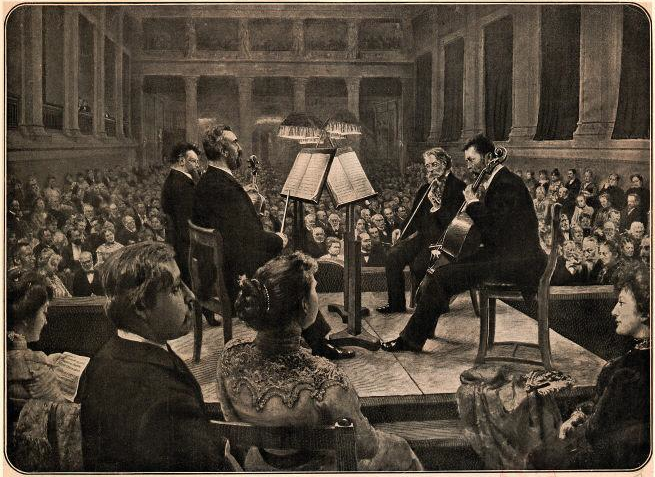
American Quartet
Prazak Quartet
http://www.youtube.com/watch?v=pV-kbAydcwk&feature=related


Joachim Quartet performing in the Berlin Singakademie.
Engraving after painting by Felix Possart, c. 1900 

I was absent today so I had the substitute play a musical film for all my classes:  "The King and I"

Tuesday, October 22, 2013

TUESDAY, OCTOBER 22, 2013

QUOTE:
“Art is a kind of illness.”
AUTHOR: Giacomo Puccini
MEANING OF THE QUOTE:
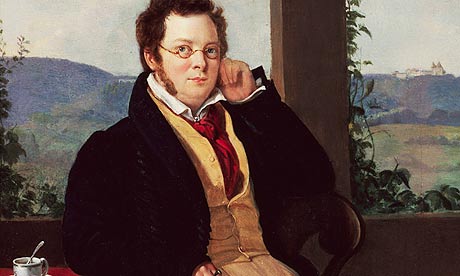
“A true artist is addicted to his art.”


COMPOSER
DVORAK

Cello Concerto
Thomas Eakins: The Cello Player

Complete with Orchestra Adam Liu, Cello
http://www.youtube.com/watch?v=rnbHRChpYXE&feature=related

Howard Everett Smith: The Cello Recital

GRANADA ADV. STRINGS
1.  TUBALALAIKA

INTRO. TO INSTRUMENT
GRANADA
1.  KEYBAORD
a.  Pentatonic Song Quiz
b.  Students at Keyboards
1)  Practice for quiz
2) Practice recorder songs to be played on the keyboard worked on yesterday
HILLVIEW
1.  THEORY: Lines and Spaces
a.  Completed theory packets

GRANADA BEG. STRINGS
1.  OPEN STRINGS
a.  Lifted UP bows at the tip
b.  7 Bow levels
2.  JINGLE BELLS
a.  Worked on note reading
b.  Worked on concept of fingering
c.  Played song on the violin while singing the note names out loud

HILLVIEW ORCHESTRA
SECTIONALS FIRST 20 MINUTES
1.  Bb Instruments practicing Believe and Tumbalalaika
2.  Flutes practicing Greensleeves
3.  Saxophones practicing as needed in a practice room
4.  Everyone else working on keyboard booklets at keyboards
EVERYONE TOGETHER LAST 20 MINUTES
1.  BELIEVE

Monday, October 21, 2013

MONDAY, OCTOBER 21, 2013

QUOTE FROM THE BOARD:
“One supreme fact which I have discovered is that it is not willpower, but fantasy-imagination 
  that creates. Imagination is the creative force. Imagination creates reality.”
AUTHOR: Richard Wagner
MEANING OF THE QUOTE:
"Creativity starts first in your imagination."


COMPOSER 
DVORAK


NEW WORLD SYMPHONY
http://www.youtube.com/watch?v=ETNoPqYAIPI


NEW WORLD SYMPHONY
ANALYSIS BY LEONARD BERNSTEIN
http://www.youtube.com/watch?v=79D5sOD5duE


GRANADA ADV. STRINGS
1.  8TH NOTE SUBDIVISION
2.  SCALE
a.  G Major in rounds
3.  BELIEVE

INTRO. TO INSTRUMENT
GRANADA
1.  RECORDER TO KEYBOARD SONGS
a.  Wrote in names of notes
b.  Practiced at keyboards
2.  PENTATONIC SONGS
a.  Practice for tomorrows quiz
HILLVIEW
1.  VIOLIN
a.  Practice putting on shoulder rests
b.  Worked on holding instruments on shoulders without hand
c.  Started left hand pizzicato of open strings in 5th position

GRANADA BEG. STRINGS
1.  SCALES
a.  Open string scales G, D, and A Major UH bow
2.  JOY TO THE WORLD
a.  Played by rote
b.  Worked on all the passages and put together

HILLVIEW ORCHESTRA
1.  8TH NOTE SUBDIVISION
2.  SCALE
a.  D Major with 1st finger shifiting in strings/separate for winds
3.  TUMBALALAIKA
3.  BELIEVE