Saturday, January 3, 2015

Thursday, January 1, 2015

THE DAWNING OF A NEW YEAR

http://www.uh.edu/engines/epi2353.htm
ALSO SPRACH ZARATHUSTRA
OP. 30
By Richard Strauss
Introduction: Sunrise
Edvard Munch: The Sun, 1916
ALSO SPRACH ZARATHUSTRA
OP. 30
Complete
Georg Solti, Conductor
Chicago Symphony Orchestra

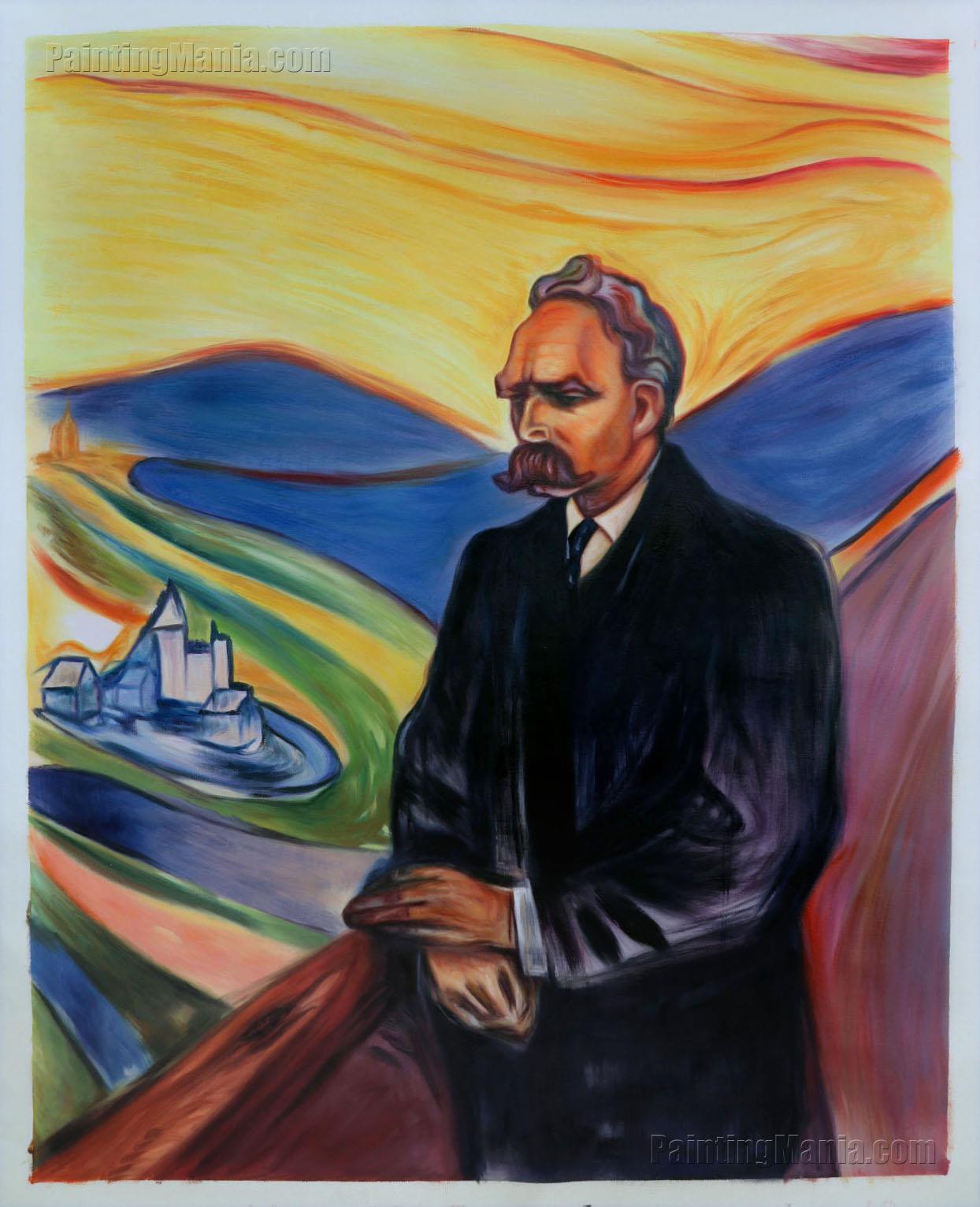
Edvard Munch: Friedrich Nietzsche (1844-1900 ), 1906
Introductory Speech:
"Having attained the age of thirty, Zarathustra left his
home and the lake of his home and went into the
mountains. There he rejoiced in his spirit and his
loneliness, and for ten years did not grow weary of it.
But at last his heart turned one morning he got up
with the dawn, stepped into the presence of the Sun
and thus spake unto him: 'Thou great star! What
would be thy happiness, were it not for those for
whom thou shinest?"
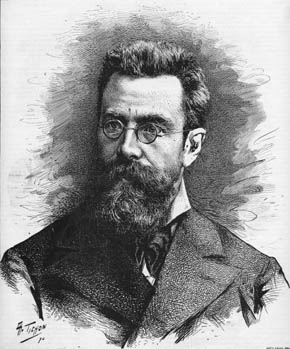
Nietzsche's imagery of Zarathustra retreating into
the wilderness may have been borrowed from
"The Allegory of the Cave" in Plato's Republic. In
it Plato says that an enlightened thinker is like a
man who gradually struggles free of the chains of
illusion in an underground cave and who learns by
ascending to the world above and viewing things
in the light of day, finally discovering the essence
of truth by gazing at the sun itself
(http://public.wsu.edu/~brians/hum_303/zarathustra.html)
sunrise
The introduction to the story (symbolized by the
dawning of a "Sunrise") is musically portrayed by
the German composer Richard Strauss (1864-1949)
http://www.richardstrauss.at/strauss-und-wagner-ein-lebensthema.html
in his tone poem composition of the same name,
with a simple but impressive fanfare introduction
in which there is a solemn trumpet motive [based on
the first three notes of natural overtone series
(called the Nature-motif in intervals of a fifth
and octave, as C-G-C)] which leads to a great climax
(the rising of the sun) for full orchestra and organ
on the chord of C major.

This initial fanfare (also entitled "Sunrise") became
particularly well known to the general public due to
its use in Stanley Kubrick's 1968 film
2001: A Space Odyssey,

https://www.youtube.com/watch?v=3XyS7uCtnq0
and as the theme music of the Apollo program.
The fanfare has also been used in many other
productions like at the beginning of Toy Story 2.

https://www.youtube.com/watch?v=fT1PBwY_Gvw
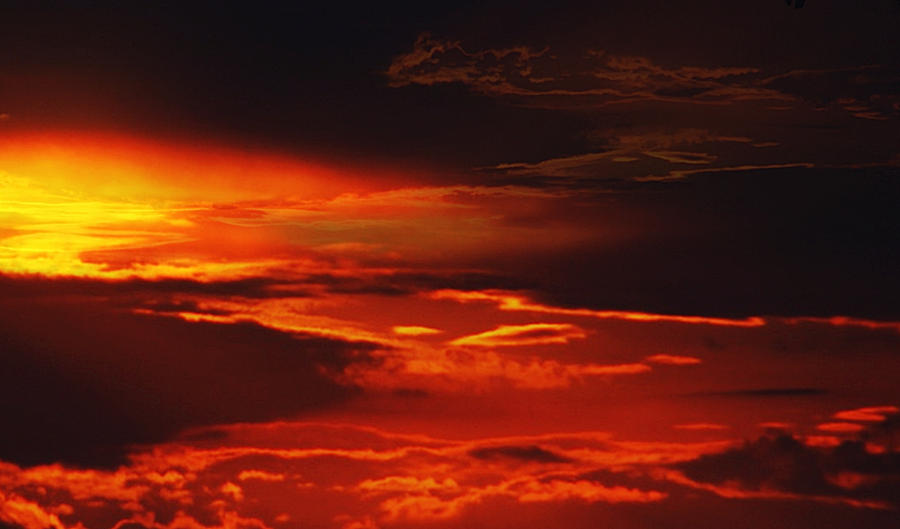
http://www.deviantart.com/art/Background-sky-3-288185040
I imagined what it might have looked like
if I saw a sunrise for the first time in a long
while and this picture came to mind
(even though it is about a sunset):

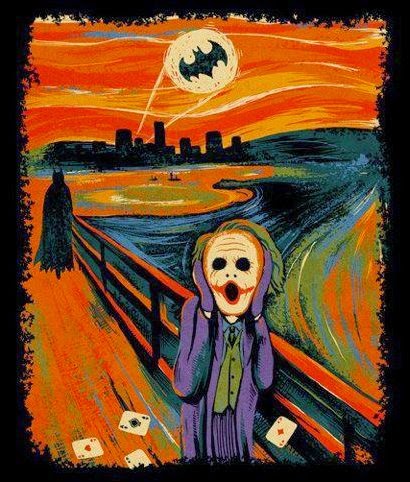
Edvard Munch: Scream
Here are some other takes on "The Scream"
that I found interesting and amusing:


Arnold Schoenberg,
Composer (1874-1951):

Self Portrait
Andy Warhol - The Scream (After Munch), 1984
Andy Warhol: The Sream (After Munch). 1984
LESSON PLANS

THURSDAY, JANUARY 1, 2015

QUOTE:
"No man is complete without a feeling for music
 and an understanding of what it can do for him."
AUTHOR: Zoltan Kodaly


MEANING OF THE QUOTE:
"Complete fulfillment in life is not possible
  unless you have some music appreciation."

COMPOSER
DEBUSSY

SARABANDE II
From: Pour le Piano

Fil:Sarabande Roybet.jpeg
Roybet: Sarabande 
Sarabande II
From: Pour le Piano
(Impressionistic Art)

Debussy’s Sarabande, which dates

from the winter of 1894, progresses
"with a solemn and slow elegance"
that mirrors the stately pace of the
Baroque dance for which it was
named. Originally written for piano,
it was later orchestrated by

Maurice Ravel
in 1923, five years
after Debussy’s death.
Sarabande II
From: Pour le Piano
Maurice Ravel, Orchestral Arrangement
http://www.pianostreet.com/smf/index.php?topic=52890.0
Sarabande II
From: Pour le Piano
Analysis Through Added Lyrics

https://www.youtube.com/watch?v=LaSS4JzvGQg
http://www.musicteachers.co.uk/resources/debsara.pdf
Sarabande
(Spanish: Zarabanda)
Originally this was a Latin American dance
form from the 17th and 18th centuries. The
dance was banned by Philip II in 1583
Phillip II of Spain
because it was regarded as loose and ugly,
'exciting bad emotions.' Introduced to France
and England in the early 17th centuries, this
dance transformed into a more stately version
in a slower triple time. Sarabandes became a
standard movement of the suite form in the
instrumental works by Henry Purcell,
Sarabande from "Dioclesian"
By Henry Purcell
Dr. Ricardo Barros, Choreography
J. S. Bach, and G. F. Handel. In the
20th century it was revived by Debussy,
Satie, Vaughan Williams (in "Job"),
Ralph Vaughan Williams
JOB, A MASQUE
FOR DANCING(1931)
By Ralph Vaughan Williams
I. Introduction - Saraband of the sons of God
II. Satan's dance of triumph / Minuet of the sons of Job and their wives
III. Job's dream 
IV. Dance of the three messengers
V. Dance of Job's comforters 
VI. Elihu's dance of youth and beauty - Pavane of the sons of the morning
VII. Galliard of the sons of the morning - Altar dance 
IX. Epilogue
and Benjamin Britten
Benjamin Britten
(in "Simple Symphony").
Simple Symphony Op. 4
By Benjamin Britten
Chuhei Iwasaki, Conductor
Iwasaki Philharmonic Orchestra Prague

https://www.youtube.com/
watch?v=sAtwt0-oB6E#t=10

1. Boisterous Bourree 0:00
2. Playful Pizzicato 3:17
3. Sentimental Saraband 6:45
4. Frolicsome Finale 13:07
Nicolas Lancret: La Camargo Dancing