"Nothing right can be accomplished
in art without enthusiasm."
AUTHOR: Robert Schumann

"Art starts out in the artists soul inwardly.
The art can not be expressed outwardly
without the willingness of the artist
to work hard."
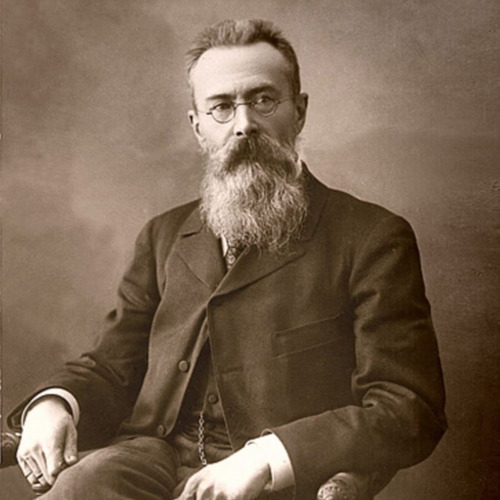
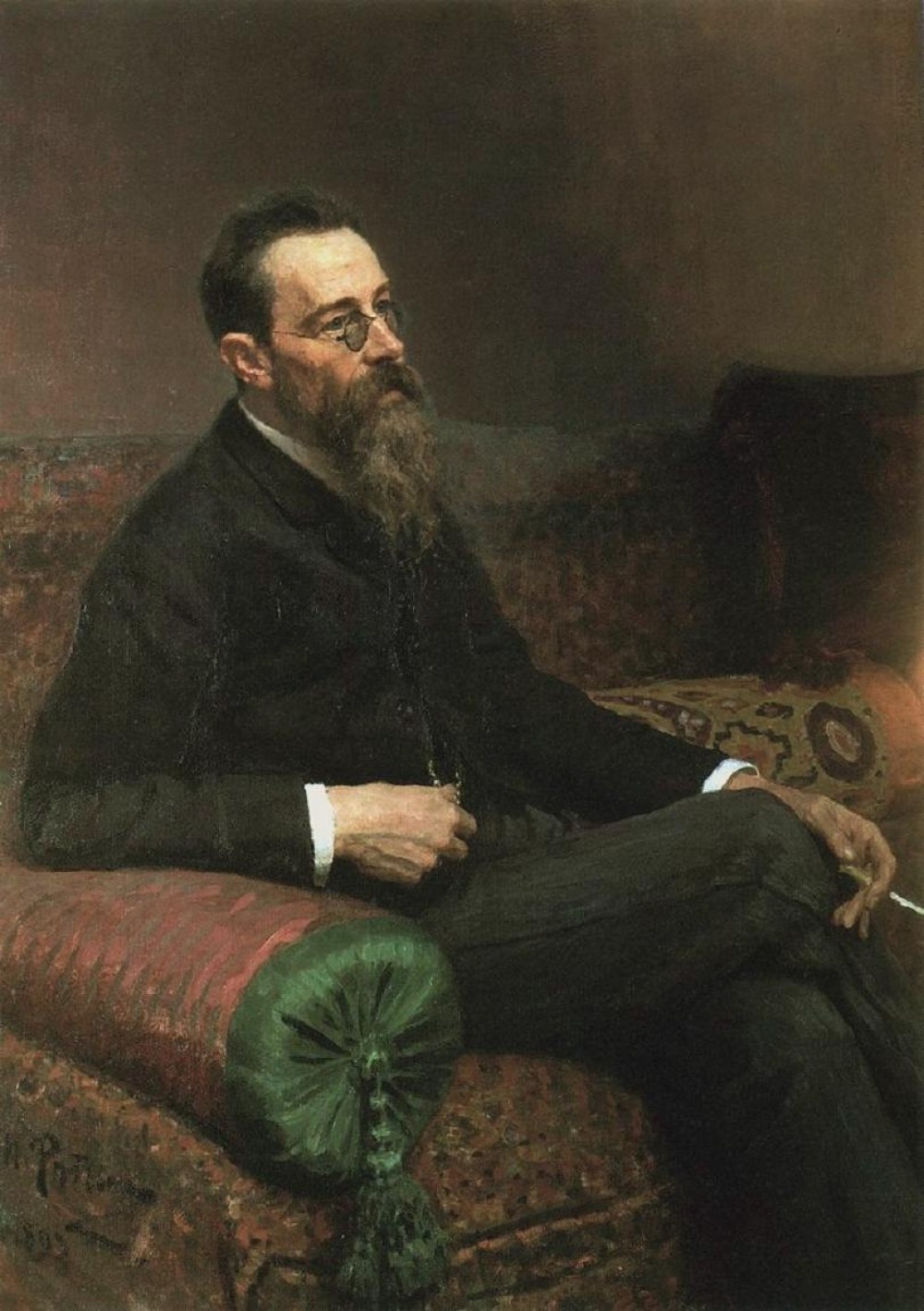
COMPOSER
RIMSKY-KORSAKOV


 |
| http://www.momh.org.uk/exhibitions-detail-photo.php?cat_id=1&prod_id=75&type=main&id=75 |
 |
| Leon Bakst: Scheherazade |
Scheherazade Op. 35
Valery Gergiev, Conductor
Vienna Phiharmonic
Salzburg Festival, 2005
https://www.youtube.com/watch?v=SQNymNaTr-Y
Valery Gergiev, Conductor
Vienna Phiharmonic
Salzburg Festival, 2005
https://www.youtube.com/watch?v=SQNymNaTr-Y
 |
| http://en.wikipedia.org/wiki/Scheherazade_(Rimsky-Korsakov) |
 |
| Leon Bakst: Set Design for Scheherazade, 1910 |
Scheherazade is in four separate sections:
Scheherazade Op. 35
1: "The Sea and Sinbad's Ship"
Fritz Reiner, Conductor
Chicago Symphony Orchestra
Scheherazade Op. 35
2: "The Kalendar Prince"
Fritz Reiner, Conductor
Chicago Symphony Orchestra
Scheherazade Op. 35
3: "The Young Prince and Young Princess"
Fritz Reiner, Conductor
Chicago Symphony Orchestra
Scheherazade Op. 35
4: "Festival At Baghdad"
"The Sea"
"The Ship Breaks Against A Cliff
Surmounted By A Bronze Horseman"
Fritz Reiner, Conductor
Chicago Symphony Orchestra

Rimsky-Korsakov was very sparse in his
explanation of the movements and the
tales depicted. In later editions of the
work he did away with even the titles of
the movements, expressing his hope
that the listener would hear the music
as Oriental-themed work that evoked
the sense of a fairy tale adventure.
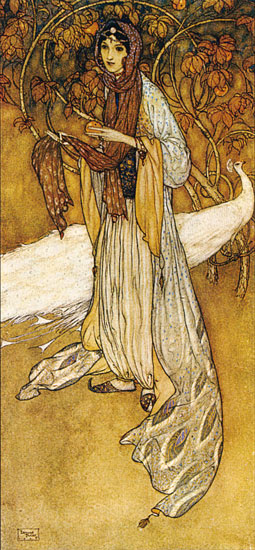 |
| Dulac: Princess Scheherazade |
Chanson Arabe
Fritz Kreisler, Violin
(Arranged for Violin from
Rimsky-Korsakov's Scheherazade)
Fritz Kreisler, Violin
(Arranged for Violin from
Rimsky-Korsakov's Scheherazade)
 |
| Erte: Calyph's Concubine |
Scheherazade
Peter Cetera
Featuring Madonna
SONG LYRICS

He was the sultan of Samarcand
He had a harem of dancing girls at his command
He owned all the eye could see
Something was wrong, he wasn't happy
And then it happened much to his surprise
The loveliest woman he'd ever seen
He asked her name and she replied

She was the daughter of the grand vizier
A real beauty with a heart of gold, she was so sincere
She made a date with destiny
Marry the king, make him happy
He was enchanted on their wedding night
He was enchanted on their wedding night
Just a captive under her spell
Spending a thousand and one Arabian nights
Scheherazade
 |
| Erte: Scheherazade Suite I One Thousand and Second Night |
All of his body tingled with delight
Hearing the stories she loved to tell
She was a vision, such a lovely sight
Scheherazade

He made a promise on the morning star
He would change, throw away his scimitar
So she came to stay
And that's the way the story goes
Until this very day
Scheherazade

He was enchanted on their wedding night
Just a captive under her spell
Spending a thousand and one Arabian nights
Scheherazade
 |
| Erte: Scheherazade Suite II Beauty of Bahgdad |
All of his body tingled with delight
Hearing the stories she loved to tell
She was a vision, such a lovely sight


Rene Magritte: Sheherazade
The story of Scheherazade was
also placed into music as a song
cycle (and later as an orchestral
version) by the famous French
also placed into music as a song
cycle (and later as an orchestral
version) by the famous French
composer Maurice Ravel:
 |
| Maurice Ravel |
Shéhérazade,
Ouverture de Féerie
By Maurice Ravel
(1 of 2)
Ouverture de Féerie
By Maurice Ravel
(1 of 2)
 |
| Chagall: Scheherazade |
Shéhérazade,
Ouverture de Féerie
By Maurice Ravel
(2 of 2)
Ouverture de Féerie
By Maurice Ravel
(2 of 2)
Ravel's 'Shéhérazade, ouverture de féerie,'
written in 1898 but unpublished, is a work
for orchestra intended as the overture for
an opera of the same name. It was first
performed at a concert of the Société
Nationale on 27 May 1899.
 |
| Virginia Frances Sterrett: Painting of Scheherazade, 1928 |
Scheherazade is the young bride of the Sultan.
After one of his wives cheats on him, he
decides to take a new wife every day and
have her executed the next morning. But it all
stops with Scheherazade. She marries the
Sultan in order to save all future young women
from this fate. She tells the Sultan fascinating
stories, leaving him in such suspense each
night that he can't execute her the next morning
for fear of not hearing the end of the story. After
1,001 of these well-told tales, the Sultan relents.

(This story is based on tales taken from
One Thousand and One Nights, an
Arabian compilation of ancient Middle-
Eastern, Asian, and African folk stories.)
After one of his wives cheats on him, he
decides to take a new wife every day and
have her executed the next morning. But it all
stops with Scheherazade. She marries the
Sultan in order to save all future young women
from this fate. She tells the Sultan fascinating
stories, leaving him in such suspense each
night that he can't execute her the next morning
for fear of not hearing the end of the story. After
1,001 of these well-told tales, the Sultan relents.
(This story is based on tales taken from
One Thousand and One Nights, an
Arabian compilation of ancient Middle-
Eastern, Asian, and African folk stories.)

 |
| Alberto Vargas: Scheherazade |
LINKS
 |
| George Barbier: Scheherazade |
LESSON PLANS

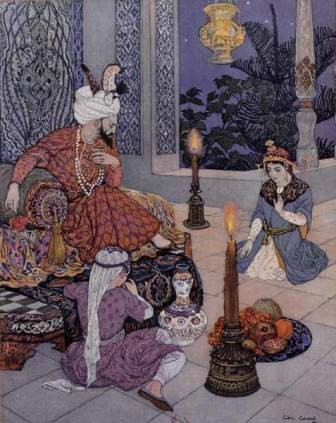


Rene Bull: Scheherazade